How to Grow Momordica cochinchinensis? A Detailed Explanation of Planting Methods and Key Technical Points
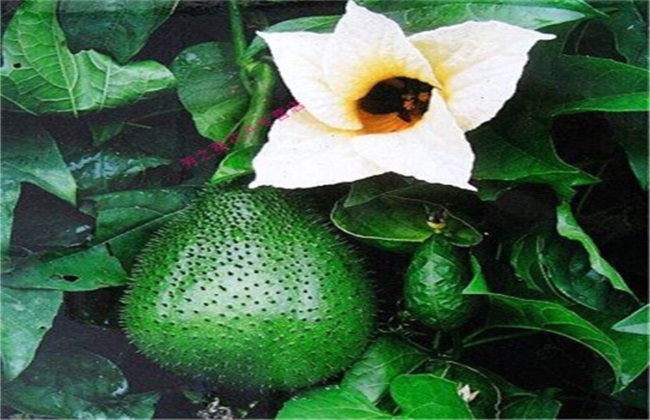
Momordica cochinchinensis is also known as fanmubie, mouse-pulling-winter-melon, and other names. It is a perennial herbaceous vine, and its main medicinal part is its mature seeds, which have the effects of reducing swelling and dispersing nodules, and removing toxins. In China it is mainly distributed in Jiangsu, Taiwan, China, Guangdong, Guizhou, Yunnan, and other places. So do you know how Momordica cochinchinensis is grown? What are the key points of planting? Today let us learn together about the artificial cultivation techniques of Momordica cochinchinensis.
1. Field Selection and Preparation
Momordica cochinchinensis has low soil requirements. Generally, as long as it is well-drained, fertile, and moderately clayey sandy loam or clay soil, it can be planted. Before sowing, the land must be selected and prepared. First, add 35010 kg of farmyard manure, 100 jin of phosphate fertilizer, and 2000 kg of stable manure per mu; then carry out land preparation, mixing the soil and base fertilizer evenly; then break up the soil clods and make beds about one meter wide, with drainage ditches opened around them and connected to each other; finally, level the bed surface and it is ready for planting.
2. Sowing and Seedling Raising
Before planting, Momordica cochinchinensis needs to be raised as seedlings, generally through hotbed seedling raising or nutrient pot seedling raising. The sowing time is from late February to early March each year. Before sowing, soak the seeds in warm water, remove them after twenty-four hours, then place them in an environment with a temperature of about 28 to 32 degrees for germination, and finally sow them in batches to raise seedlings. During the seedling raising process, maintain the humidity of the seedbed or nutrient pots. It is best to build an arched shed, which can play a role in keeping warm and moist. After the Momordica cochinchinensis seedlings emerge, ventilate and cool them in time, and remove the arched shed about one week after emergence. When the Momordica cochinchinensis seedlings grow their first true leaf, apply additional fertilizer appropriately, generally watering with dilute manure and urine water.
3. Transplanting and Field Planting
Generally, after the Momordica cochinchinensis seedlings grow three or four true leaves, we can carry out transplanting and field planting, which is around late March to early April. When pulling up the seedlings, be careful not to damage the plants, otherwise it will affect the survival rate of the seedlings. It is best to keep some base soil attached, as seedlings planted this way are more likely to survive. When planting, generally set them out at a row spacing of 60 cm and a plant spacing of 40 cm.
4. Field Management
During the growth process of Momordica cochinchinensis, its water demand and fertilizer demand are both relatively large, so reasonable additional fertilization, watering, and even drainage are needed. This is especially true during the flowering and fruiting stages of Momordica cochinchinensis growth, where we must pay even more attention. During the seedling stage, additional fertilizer is usually applied by watering with manure and urine water, or with urea; then after each harvest of tender shoots, apply phosphate and potassium fertilizer once; after flowering, apply potassium fertilizer once or twice; finally, in order to let Momordica cochinchinensis overwinter safely, overwintering fertilizer also needs to be applied, generally mainly farmyard manure; remember to water after each additional fertilization. About half a month after field planting of Momordica cochinchinensis, carry out intertillage and weeding; when Momordica cochinchinensis grows to about 30 cm, build supports or trellises; when Momordica cochinchinensis grows to about 50 cm, carry out pruning and pinching to increase the fruit-setting rate.
5. Pest and Disease Control
During the growth process, Momordica cochinchinensis is also harmed by pests and diseases, the most important of which are powdery mildew, yellow squash beetle, melon fruit fly, and others. First of all, we must do a good job in field management, which is very effective in preventing the occurrence of pests and diseases. After pests and diseases occur, we can use triadimefon, trichlorfon, and fenvalerate respectively for control.
The process of artificial cultivation of Momordica cochinchinensis is basically like this, and I believe everyone now has a basically clear understanding. Due to limited time and energy, its field management techniques have not been explained to everyone in detail. If you need them, you can follow us or leave a message below for consultation.