How to grow the Qianlixue cauliflower? A detailed guide to its cultivation techniques
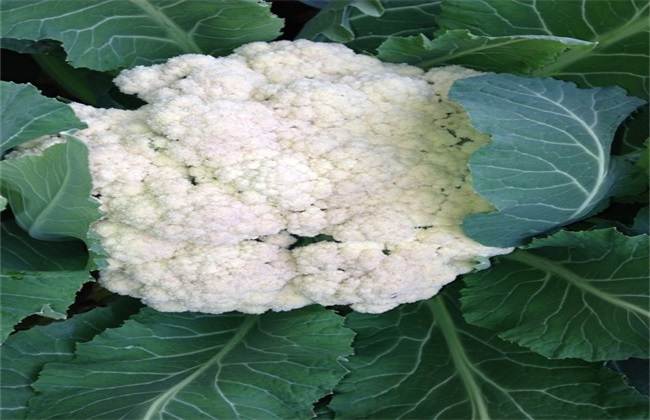
Cauliflower is actually what is called huacai, also known as cauliflower (Brassica oleracea var. botrytis), and Qianlixue is a new variety of cauliflower. It is currently grown in many parts of our country, and its yield and quality are much better than those of other cauliflower varieties, and its adaptability to the environment is also stronger than that of other cauliflowers, so it has won unanimous praise from the vast number of growers. So today, the editor wants to share with you the cultivation techniques for the Qianlixue cauliflower. Let's take a look together.
1. Seedbed preparation
For the cauliflower seedling-raising site, we generally choose a place with convenient irrigation, good drainage, relatively good soil fertility, and strong permeability. Then we need to prepare nutrient soil, which is mainly composed of fully decomposed farmyard manure, followed by soil manure, a small amount of phosphate and potassium fertilizer, calcium fertilizer, etc., fully mixed, and then sifted, and that is done. Then spread the prepared nutrient soil in the seedling-raising site at a thickness of about 20 cm, and finally level the seedbed and you can sow.
2. Sowing time
Different cauliflower varieties also differ in sowing time, and when grown in different places, their sowing times also differ to some extent. For example, when the Qianlixue cauliflower is grown in the Hubei region, it is generally sown in autumn, around the beginning of August each year, and the seedling-raising period is one month, that is, transplanting and field planting are carried out in early September, and harvesting is carried out in December. But in some regions, it is sown in autumn and winter and then brought to market in spring, so we must decide the sowing time according to the specific conditions of the location.
3. Sowing methods
There are generally three ways to sow the Qianlixue cauliflower, namely direct sowing, drilling, and dibbling. Direct sowing is to evenly scatter the seeds on the seedbed, and then scatter a layer of fine soil to cover the seeds. Drilling is generally done by opening shallow furrows at a row spacing of about 10 cm and a furrow depth of about 3 cm, then evenly scattering the seeds and covering with soil to hide the seeds. Dibbling is sowing at a distance of about 5 cm per hole, with a sowing amount of 3 to 4 seeds per hole, and then covering with soil to hide the seeds. One point we must note when sowing is that we must water once before sowing.
4. Seedling-stage management
After the seeds are sown, in order to prevent underground pests from affecting the growth of the seeds, we usually spray pesticide around the seedbed after sowing. After the cauliflower seeds emerge, it is necessary to spray the seedbed with pesticides such as Manlike, Jianzhibao, and Fengshou, which can prevent the occurrence of pests and diseases such as leafminer and damping-off. Finally, in seedling-stage management, we must pay attention to watering and drainage to maintain reasonable humidity in the field.
5. Field planting management
When the cauliflower seedlings grow to about 15 cm, transplant them, with a row spacing of generally 50 cm and a plant spacing of 40 cm. After field planting, pay attention to observing the survival of the seedlings in the field, and replant in time when dead seedlings are found. Finally, after field planting and survival, carry out scientific field management, which can promote the cauliflower to form flower buds early and increase the yield of the cauliflower.
The cultivation techniques for the Qianlixue cauliflower are actually similar to general cauliflower cultivation, except that it is easier to manage than other cauliflowers, has stronger resistance, and is more attractive to grow. That is all for the cultivation techniques of the Qianlixue cauliflower that the editor wants to introduce to you today. If there is anything else you want to know, remember to leave a comment below.