How to increase the yield of sweet pepper cultivation? These few methods are key
Sweet pepper, also called bell pepper or lantern pepper, compared with ordinary chili peppers, has a very mild spiciness and also a certain sweetness, making it a vegetable very suitable for eating raw. It is rich in vitamins and carotene, which are greatly beneficial to the body. Now sweet peppers are grown in all parts of our country, so do you know how to achieve high yield and high quality in sweet pepper cultivation? And how should you plant them to increase the yield of sweet peppers? Below let us take a look at how they handle it.
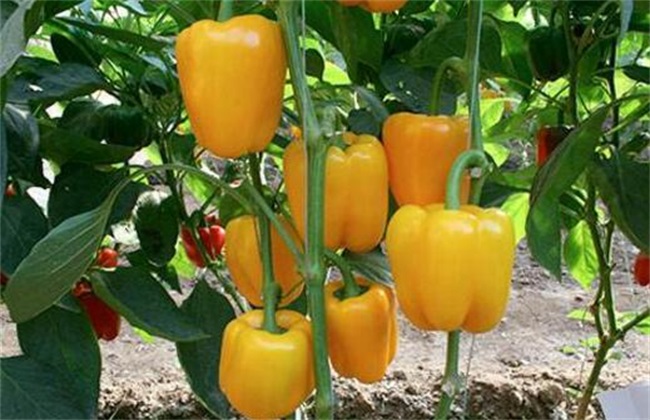
1. Select excellent varieties
Currently, sweet pepper varieties are not limited to just one; there are many different varieties, but not all sweet pepper varieties are suitable for cultivation in all parts of the country. In this case, if we want high sweet pepper yield, then we need to choose suitable sweet pepper varieties for planting according to the local growing environment. At present, the three varieties with relatively strong adaptability and very good yield and quality on the market are Zilong, Yellow Angel, and Orange Angel. You can also consider these when planting.
2. Pay attention to sowing time
There are certain differences in climate between the north and south of our country, so the sowing time of sweet peppers is also different; in addition, using different cultivation methods also means the planting time is different. Scientific planting time is also very helpful for increasing sweet pepper yield. Generally, it is divided into two types: first, early spring planting, and second, late autumn planting. Early spring planting generally involves raising seedlings at the end of October, transplanting in mid-to-late December, and harvesting in early March of the following year. Late autumn planting generally involves sowing and raising seedlings in mid-August and transplanting in mid-to-late October, so that harvesting can be done in January of the following year.
3. Soil selection and preparation
Sweet pepper cultivation does not have high soil requirements, but choosing suitable soil and carrying out scientific land preparation is also helpful for increasing sweet pepper yield. The soil for planting sweet peppers is best in a place with good water source conditions, good drainage, deep soil layer, strong water and fertilizer retention, and convenient transportation. Generally, the previous crop must not be of the same botanical nature as sweet peppers; secondly, planting land with excessively heavy clay is also unsuitable for sweet pepper cultivation. Land preparation for sweet pepper planting generally requires deep plowing, and the soil clods should be broken up relatively fine. Sufficient fertilizer should be applied into the soil, such as decomposed barnyard manure, cow dung, etc.
4. Planting density
Reasonable planting density is also beneficial for increasing sweet pepper yield. We must ensure good ventilation and light transmission between sweet pepper plants; otherwise, sweet peppers are very prone to diseases, such as anthracnose and rot, which have a very large impact on the yield and quality of sweet peppers. The planting density is generally about 60 cm between rows and about 50 cm between plants.
5. Scientific water and fertilizer management
Scientific water and fertilizer management is the most critical point for increasing sweet pepper yield. Sweet peppers have different requirements for nitrogen, phosphorus, and potassium fertilizers at different growth stages. Topdressing needs to be carried out in three stages. The first stage is the growth fertilizer, mainly nitrogen fertilizer, supplemented by phosphorus fertilizer; the second stage is the flower fertilizer, mainly phosphorus and potassium fertilizers, supplemented by nitrogen fertilizer; the third stage is the fruit-strengthening fertilizer, mainly potassium fertilizer, followed by phosphorus fertilizer, and nitrogen fertilizer last. At the same time, we also need to pay attention to the use of micronutrient fertilizers, such as appropriately supplementing calcium, magnesium, and boron. Sweet pepper growth requires sufficient water, especially during the flowering and fruiting period, but it should not be excessive either, otherwise fruit rot may occur.
To increase the yield of planted sweet peppers, besides the above points, there are actually many other aspects that can also play a role in increasing yield. For example, summer pruning, temperature management, light regulation, pest and disease control, etc. Doing these tasks well can also provide a certain guarantee for sweet pepper yield.