What to Do When Wheat Emerges Unevenly? Cause Analysis and Remedial Measures
After sowing wheat, you have to deal with the issue of emergence. In previous years, many growers reported the problem of uneven emergence and asked what causes uneven wheat emergence and how to remedy it. Let's take a look at the detailed information together below.
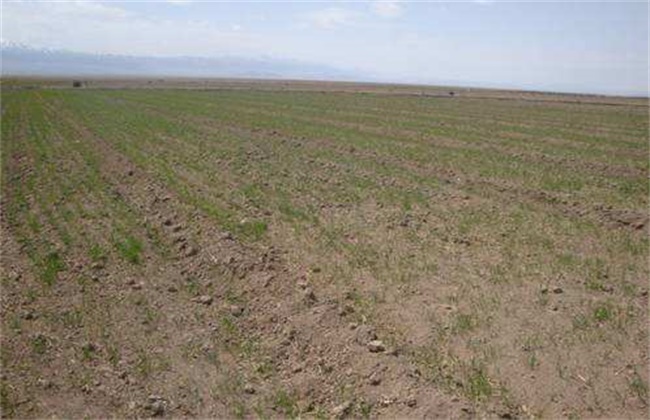
I. Causes of Uneven Emergence
1. Seed-related causes
When wheat seeds are stored improperly, the germination rate decreases, and this is even more serious with home-saved seed. Another factor is that when the seeds are harvested, adverse weather affects how plump the seeds are, resulting in poorer seed germination vigor and weak ability to push through the soil, so emergence is uneven. Many farmers mixing new seed with old seed when sowing is also one of the factors leading to uneven emergence.
2. Poor soil
Wheat soil management is rather extensive, and moisture in the soil dissipates quickly, making it hard for seeds to emerge or slowing emergence. In addition, during tillage, large clods are reduced, making the soil looser, and after watering, exposed-seed seedlings and needle-like seedlings form, seriously affecting the wheat's normal overwintering.
3. Insufficient nutrients
In fields where wheat has no base fertilizer applied or only a small amount of base fertilizer, the lack of nutrients in the soil causes the wheat to turn yellow and grow poorly. If undecomposed organic fertilizer is applied as base fertilizer, or if the fertilizer rate is too low, it easily causes seedling burn and seed damage.
4. Weather-related causes
Wheat seed germination and seedling emergence have certain requirements for soil temperature and moisture. If sowing is too late and the temperature is low, the emergence rate decreases and the emergence time is prolonged. Drought at sowing, or heavy rain on clay soil causing soil crusting, can also affect emergence.
5. Pests and diseases
If seeds are not coated or treated with chemicals before sowing, they are vulnerable after sowing to underground pests such as white grubs, cutworms, wireworms and mole crickets, causing missing seedlings and broken rows. If wheat is sown too late, under low-temperature and high-humidity conditions it is highly susceptible to infection by pathogens, leading to disease and seedling death. Or when herbicides are used, pesticide residues may cause phytotoxicity, which also affects normal emergence.
II. Remedial Measures
For fields with uneven emergence and missing seedlings or broken rows, after emergence is complete you can replant with seed of one variety. For wheat fields with missing seedlings in a few spots, you can take the measure of moving seedlings from dense areas to fill in sparse areas. For late sowing, if low-temperature weather occurs, hoe to conserve soil moisture and raise temperature to promote the seeds to emerge as quickly as possible. For fields with soil crusting, cultivate and loosen the soil in time to break up the crust. Pest and disease control must be done carefully. For phytotoxicity caused by herbicides, you can spray brassinolide and foliar fertilizer to alleviate the phytotoxicity and help weak plants become strong.
The above is an introduction to the causes of uneven wheat emergence and remedial measures. We hope it helps you. To learn more related knowledge, please stay tuned to us.