Sea buckthorn planting precautions and cultivation management key points
Sea buckthorn is a plant with extremely strong resistance. As we all know, it can be planted in wasteland and saline-alkali land. At present, sea buckthorn is mainly planted in some protected areas, and its main purpose is to protect against soil erosion and beautify the environment, but its fruit also has high nutritional value, and its market price is also very attractive. So what issues need attention when planting sea buckthorn? Let's take a look below.
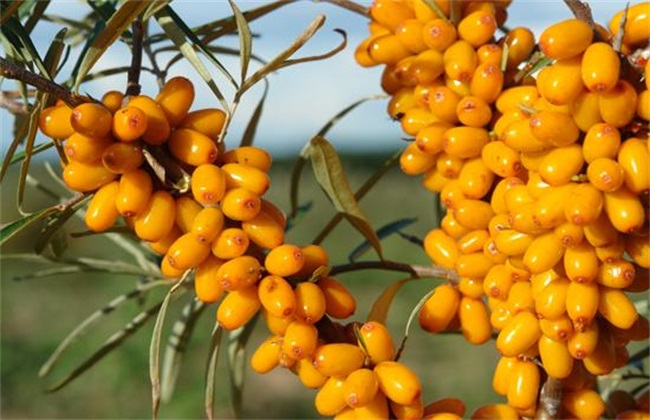
1. Soil
Sea buckthorn does not have strict requirements for soil, and general planting land can be used to grow sea buckthorn; however, when choosing planting land, we still need to consider the permeability of the soil, and it is best not to choose plots with excessively heavy soil viscosity for planting. Also, although sea buckthorn has the characteristic of tolerating saline-alkali conditions, heavily saline-alkali land is still not very suitable for sea buckthorn to survive.
2. Water
Sea buckthorn has the characteristic of being drought-tolerant, but it still has certain requirements for water. Under normal circumstances, the rainfall in the planting land must reach at least 400 mm. If there is insufficient rainfall, the planted sea buckthorn will still be affected. Of course, if rainfall is insufficient, then it is necessary to choose to plant in areas close to water sources, which is acceptable. There is also one more point to note: there must be no standing water in the planting land, otherwise root rot is very likely to occur and trigger other diseases.
3. Light
Sea buckthorn has the characteristic of being light-loving, so the light in the planting land must be sufficient. Under normal circumstances, we should maintain at least 6 to 8 hours of sunshine per day. Of course, sometimes insufficient light may still occur, so it is necessary to ensure that the annual light duration can reach about 1,500 to 3,300 hours, so as to maintain the normal growth of sea buckthorn. Here the editor wants to remind everyone of one point: sea buckthorn has extremely strong cold resistance and heat resistance, and can grow in environments from minus 50 degrees to 50 degrees.
4. Fertilization
Sea buckthorn has a strong ability to tolerate poor soil, so when planting, under normal circumstances, after applying base fertilizer, we mainly need to supplement fertilization appropriately later according to its growth conditions. However, during the flowering or fruiting period of sea buckthorn, we should appropriately spray foliar fertilizer, and at the same time also need to spray Zhuangguodiling in a timely manner to protect flowers and fruits, increase the fruit-setting rate, promote fruit enlargement, and improve the yield and quality of sea buckthorn fruit.
5. Pruning
Sea buckthorn planting also requires branch and leaf pruning and shaping. Scientific pruning can also improve the yield and quality of sea buckthorn. First, we need to promote the formation of the sea buckthorn canopy, mainly by expanding the tree shape, so that it can bear more fruit. After sea buckthorn bears fruit, promptly clean up diseased branches, insect-damaged branches, dead branches, dense branches, etc., and at the same time cultivate new fruiting branches.
6. Density
Planting density is also one point we need to pay attention to during the planting process. In order to rationally use land resources while also ensuring the yield and quality of sea buckthorn, when planting we plan the density according to the fertility of the soil, the topography of the planting land, and the growth habits of sea buckthorn. Generally, 220 sea buckthorn plants can be planted per mu, that is, the row spacing is about 2 m and the plant spacing is 1.5 m.
Although sea buckthorn is very easy to plant and has a high survival rate, there are still many places that need attention when planting. The above issues are the most common in our ordinary planting process, so everyone must pay attention to them in future planting.