What are the key points to note when growing horseradish? Master these essentials
Horseradish, also called mountain radish or wasabi radish, is a plant in the Brassicaceae family with a very long history of cultivation. The earliest places where horseradish was introduced for cultivation in China were Qingdao and Shanghai; currently the main horseradish production areas in China are Heilongjiang, Jilin, Liaoning and Beijing, among others. If you want to increase horseradish yield and quality, then the first thing you need to do is improve horseradish cultivation techniques. So today we will mainly learn about some key points to note during horseradish cultivation. Please read the excellent content below.
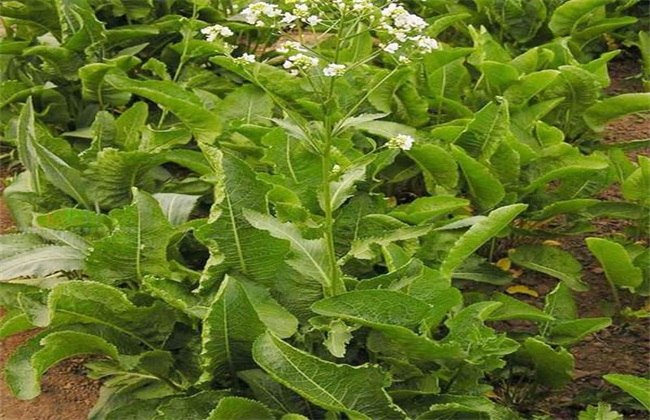
1. Seed selection
Horseradish seeds are relatively small and flat-round, but when selecting seeds we first consider the horseradish variety, then choose plump seeds with no other damage for sowing. However, when growing horseradish we usually use root propagation, so we need to choose one-year-old seed roots with no external damage. For seed root planting, the seed roots need to be stored in a relatively suitable environment, avoiding heat and cold.
2. Soil
Horseradish is drought-tolerant but afraid of waterlogging and standing water, so the soil at the planting site should not be too clayey, nor too sandy. Also, the soil at the planting site must have good drainage, a deep soil layer and sufficient fertility, and ideally be slightly acidic soil. The last point to note is that continuous cropping is not allowed; the previous crop must not be a Brassicaceae plant, and ideally should be a legume, as horseradish will grow better in such soil.
3. Planting time
Horseradish generally has no special requirements for planting time and can be planted in spring and autumn, but spring planting is the main method. The planting time is generally between November each year and April of the following year, which means it cannot be planted in summer, otherwise it will affect the germination rate of horseradish as well as the later yield and quality. The best time to transplant horseradish is from late March to early April each year, when the survival rate of transplanted seedlings is highest.
4. Planting density
When planting, we need to maintain good field ventilation, as this has a great impact on horseradish yield. A reasonable planting density can not only improve horseradish yield and quality, but is also beneficial for later field management. A reasonable planting density is generally 2,500 to 3,000 horseradish plants per mu, which means the row spacing for horseradish planting is 70 to 80 cm and the plant spacing is 30 to 35 cm.
5. Punching holes
Horseradish cultivation has a very distinctive feature, which is punching holes. When planting horseradish, we generally punch holes in the planting site in advance at a plant spacing of 30 to 35 cm, with a hole depth of about 20 cm. The holes should be at a certain angle to the ground, generally 45 degrees.
6. Covering with film
After planting horseradish, cover it with soil, and after forming the ridges, spray herbicide and cover with film at the same time. When covering with film, we must note that the film must be pulled tight and the edges pressed down firmly, otherwise it can easily be blown away by wind. After the film is covered, there is one more thing we must remember to do, which is to punch a round hole at the top hole of each horseradish plant, and then press the surrounding area firmly with soil again.
If you can pay attention to these issues when growing horseradish, then basically there will not be any major problems with cultivation. So in the later planting process, we must be extremely careful and increase the economic benefits of horseradish cultivation as much as possible.