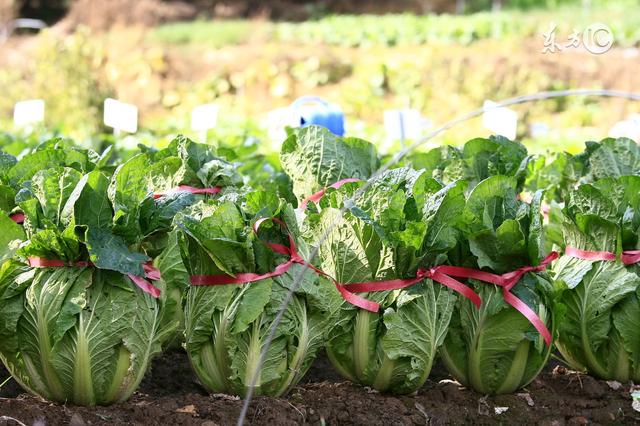
High-yield vegetable cultivation techniques: grow them this way for a better harvest
By Xu Xuebing, Deng Wenlong. Agriculture and Technology
1 Requirements of high-yield vegetable cultivation techniques
1.1 Soil selection
The quality of the soil directly affects the growth of vegetables, so efficient vegetable cultivation requires suitable soil. Soil selection should take into account the growth characteristics of the vegetables and comprehensively consider their needs for sunlight, wind, water and other factors. The fertility of the soil should be improved to ensure efficient vegetable production.
1.2 Choosing high-quality vegetable varieties
For high-yield vegetable cultivation, high-quality vegetable varieties should be chosen. The choice of vegetable varieties should suit the climate and soil of the cultivation area. High-quality vegetable varieties have a relatively short growing cycle, relatively strong resistance to natural disasters, pests and diseases, as well as strong market demand and economic benefits.
1.3 Raising strong seedlings
Raising strong seedlings helps achieve high-yield vegetable cultivation. With improvements in vegetable growing techniques, seedling raising has promoted high-yield vegetable cultivation. The seedling-raising process is complex, demanding both advanced skills and a high level of technical expertise. The key technical points of seedling raising mainly consist of 5 parts: before cultivation, the seeds should be prepared by soaking them in trace elements, treating them at low temperature and other methods for disinfection and basic treatment, followed by sprouting the seeds; the seedbed soil should be well prepared, with the seedbed soil and nutrient-cup soil being highly nutritious and containing large amounts of decomposed organic matter, and with field soil, livestock manure, plant ash and sand mixed in reasonable proportions; humidity and temperature management in the greenhouse should be strengthened to ensure the seedbed soil is suitable for seed development; during seedling raising, nitrogen, phosphorus and potassium fertilizers should be used in combination, spraying 2 to 3 times with potassium dihydrogen phosphate and 2 times with a mixture of boric acid and zinc sulfate; hardening off the seedlings should begin 7 to 10 d before transplanting.
1.4 Scientific application of fertilizers
During the growth of vegetables, fertilizers should be applied scientifically. A scientific amount of fertilizer can promote vegetable growth, but applying too much fertilizer will affect the quality of the vegetables. In high-yield cultivation, fertilizers should be used scientifically and rationally, with scientific fertilizer ratios and applications based on factors such as the growth condition of the vegetables and the fertility of the soil.
1.5 Plant adjustment
During the growth of vegetables, plant adjustment should be carried out in a timely manner, improving the growth of the vegetables by adjusting the temporal and spatial distribution of the stems, leaves and fruits as well as the plant structure. The main contents of plant adjustment include: staking, pruning, pinching out growing tips, fruit thinning, leaf removal and vine pressing.
2 Rationally regulating irrigation frequency and irrigation amount
Scientific irrigation helps vegetables grow quickly, especially in modern agricultural production, where people increasingly value the importance of irrigation. During vegetable growth, the amount and frequency of irrigation should be determined according to the characteristics of the climate. If the climate in a given year is relatively dry, the amount and frequency of irrigation can be increased; otherwise, the amount and frequency of irrigation should be reduced to prevent the death of vegetable seedlings.
3 Regulation of temperature and humidity for the growth of high-quality vegetables
The efficient growth of high-quality vegetables depends on scientific temperature and humidity, so during vegetable growth the humidity and temperature of the vegetable environment should be well controlled. Vegetable growers can set up temperature and humidity monitoring points according to factors such as the size of the vegetable plot and the environment, to monitor the temperature and humidity of the plot in real time. When the temperature is too high or the humidity is too low, atomized water spraying can be carried out to lower the field temperature, raise the soil humidity and promote vegetable growth.
4 Pest and disease control
4.1 Agricultural control
High-quality green vegetable varieties with strong stress resistance should be selected, and pest-free seed-production fields and seed-production areas should be established in the vegetable park to prevent green vegetable seedlings from spreading diseases, pests and weed seeds. At the same time, growers should establish rational tillage, crop rotation and fertilization systems during green vegetable cultivation, and strengthen the management of vegetable fields, regularly cleaning the vegetable garden, and choose grafting techniques such as eggplant, melon, cucumber and watermelon as much as possible to effectively control the harm of infectious diseases.
4.2 Biological control
In the process of biological control, growers should first choose agents that are pollution-free and residue-free and do not harm crops or the human body, so that the agents can promptly and effectively deal with pests and diseases occurring in vegetable fields and play a good preventive role, effectively guaranteeing the safe production of green food. Biological control work mainly targets pests and pathogenic bacteria, so in practice more targeted agents should be chosen for prevention and treatment.
4.3 Physical and mechanical control
In the process of physical and mechanical control, growers should scientifically control seed selection, the selection and treatment of chemical agents, soil treatment methods, greenhouse cultivation and treatment methods, and pest capturing and trapping methods. When capturing pests, high-pressure pump lamps should be used, or sugar-vinegar trapping, yellow sticky board trapping and poison bait trapping should be adopted, so as to truly ensure that green vegetables are not disturbed by pests and diseases.
4.4 Chemical control
Chemical control has the advantages of a wide range of applications, quick results and remarkable control effects. In the implementation of chemical control, growers should control the dosage of chemical pesticides. After pesticides have been used for a long time, continuously and in large amounts, the affected and contaminated environmental areas should be cleared and disinfected to avoid crops in the fields suffering from pesticide harm.
5 Conclusion
In short, in modern technologically based cultivation of high-value green vegetables, scientific cultivation techniques must be strictly followed. Attention should be paid to high-tech green vegetables. The safety of vegetable food should be guaranteed. The edible value of vegetables should be comprehensively improved.