How to Grow Hydroponic Vegetables with Soilless Culture on a Balcony
These days, growing vegetables on balconies is winning favor with more and more urban dwellers, who harvest healthy ingredients while also relieving the fatigue of stressful work. Recently, a post shared an experience of growing hydroponic vegetables on a balcony, which made many netizens who are used to growing vegetables in flower pots curious. For beginners, hydroponics is more difficult than soil culture, but it can be a fresh attempt that adds a distinctive sight to the balcony.
Leafy vegetables are more suitable for trying soilless hydroponics
Constantly seeing some people online share their experiences of growing vegetables on balconies, I was also touched by that ease and joy. This year, \ began using self-mixed nutrient solution (for plant growth) and used lettuce seedlings, tomato seedlings and others for hydroponic experiments. When the fruits ripened, I could not wait to share it online.
According to the introduction, the steps for growing hydroponic vegetables on the balcony are as follows: buy vegetable seedlings and nutrient solution online, find a few small foam boards (with holes dug in them, through which the seedlings stick out, serving to hold them in place), prepare transparent containers such as plastic lunch boxes, add some tap water, and the hydroponic attempt on the balcony can begin.
It was emphasized that the tools are very simple, but the details are the key to determining whether the seedlings can grow vigorously. "The first step of hydroponics is raising seedlings." He first let the seedlings grow in sandy soil for about 3 weeks, then moved the seedlings into containers filled with water and nutrient solution for growing. "After being rinsed with water, sandy soil easily breaks apart, which makes transplanting the seedlings convenient. If it were replaced with mud, it would easily damage the roots during washing."
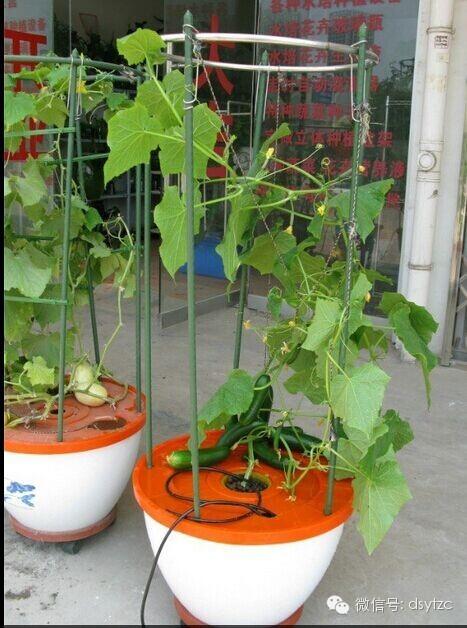
After a period of practice, it was found that when growing hydroponic vegetables on a balcony, leafy vegetables are the easiest to grow, such as lettuce, bok choy, rapeseed, water spinach and so on; cucumbers and tomatoes can also be grown, but fixing their vines is rather troublesome.
The container should preferably be transparent to ensure the water gets sunlight
Several precautions for balcony hydroponics. For city dwellers who have difficulty getting soil, hydroponics is a good attempt. The cost is not high, and it can also prevent heavy metals in the soil from entering the vegetables. However, this method is harder to control than growing in soil. There are no various elements from soil in the water, so it can only be replenished by nutrient solution, and the mixing of the nutrient solution needs to be measured accurately.
Searching online, hydroponic fertilizers are of all kinds, mainly liquid ones. A small bottle costs only a few yuan, and most shops mark the mixing ratio with water in the instructions for reference. Different vegetable varieties have different nutritional preferences for fertilizer. For example, rapeseed needs fertilizer containing more sulfur. How to cater to each of them separately requires exploration and learning. "The water must be exposed to sunlight, and it is best to use transparent containers." Unlike soil culture, the roots of plants in hydroponics absorb dissolved oxygen in the water, and sunlight can cause green algae to grow in the water. The oxygen released by an appropriate amount of green algae is beneficial to plant growth. At the same time, the larger the container holding the nutrient solution, the better, also to increase the oxygen in the water. You can also stir the nutrient solution in the container at intervals to increase the oxygen content.
Of course, too much green algae is also not good. The nutrient solution should be changed about every 10 days. "Evaporation in summer is also an issue I need to remind myself to pay attention to every day." When growing vegetables in a 1.5-liter cola bottle, one-third of the water in the bottle evaporates in a single day, so timely replenishment of water is very important.
(Caiba editor: caiba_org)