How to Grow Vegetables in Greenhouses: Key Cultivation Techniques and Pest and Disease Control Measures
Summary:Greenhouse vegetablesAfter the application of cultivation techniques, people can consume the vegetables they need regardless of the season. With the development of market demand, the research focus of greenhouse vegetable cultivation techniques is no longer how to increase vegetable yield, but how to improve vegetable quality, such as organic and inorganic vegetable cultivation techniques. This paper analyzes greenhouse vegetable cultivation techniques and discusses pest and disease control measures, aiming to promote the development of the greenhouse vegetable industry.
With the development of science and technology in China and the improvement of people's living standards, greenhouse vegetable cultivation techniques have been widely used, which can not only ensure that people can eat off-season vegetables, but also effectively improve the yield and quality of vegetables. However, in greenhouse vegetable cultivation, pests and diseases still exist and are the primary threat. Therefore, effective control measures must be adopted to reduce or avoid the damage of pests and diseases to greenhouse vegetables.
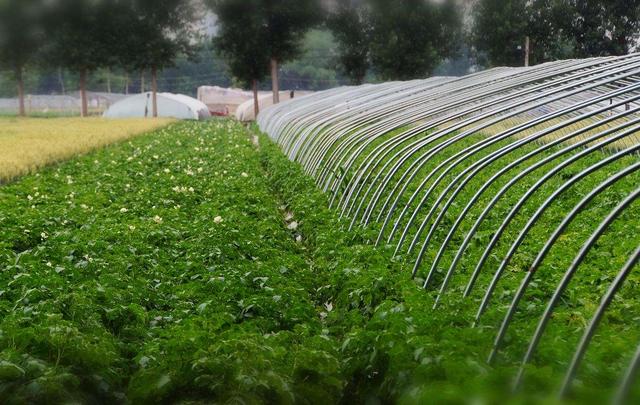
1 Greenhouse Vegetable Cultivation Techniques
1.1 Pollution-free Greenhouse Vegetable Cultivation Techniques
At present, one of the hot topics in the research of greenhouse vegetable cultivation techniques is the use of greenhouses to cultivate pollution-free vegetables. Before cultivating pollution-free vegetables in greenhouses, first, the varieties of pollution-free vegetables to be planted need to be selected according to the geological conditions of the cultivation site, and the issue of pest and disease control must also be fully considered. It is best to select vegetable varieties with strong insect resistance, for example, the tomato variety Zhongza No. 9. Second, the land for building the greenhouse should be as flat as possible and given basic treatment, such as flood irrigation. Third, after the greenhouse is built, it needs to be effectively disinfected, and the land should be rotary-tilled and leveled, with a rotary tillage depth of more than 1 m, to ensure good air permeability. In addition, sun exposure and high-temperature greenhouse sealing are also required. Finally, the fertilizers selected are generally organic fertilizers and important plant nutrient gel, and the use of chemical fertilizers must be strictly controlled.
1.2 Organic Greenhouse Vegetable Cultivation Techniques
Organic greenhouse vegetable cultivation techniques are based on natural ecological principles, use advanced agricultural techniques, completely prohibit the use of pesticides and chemical fertilizers, and carry out cultivation in a harmonious and balanced manner. They also require certification by an organic organization before the vegetables can enter the market. When selecting vegetable seedlings, it is necessary to ensure that the seedlings contain no genetically modified components, have not been treated with any prohibited substances, and have relatively strong resistance to pests and diseases.
There are also very strict requirements when selecting the location of the greenhouse. The land for an organic vegetable cultivation greenhouse must be an intact plot and must be separated from conventional cultivation plots. If a conventional cultivation plot is to be converted into organic cultivation land, it needs at least 2 years of treatment.
During planting, cleaning work and crop rotation should be carried out, and natural conditions as well as advanced cultivation techniques should be fully utilized to improve the yield and quality of vegetables. The fertilizers selected are generally organic fertilizers.
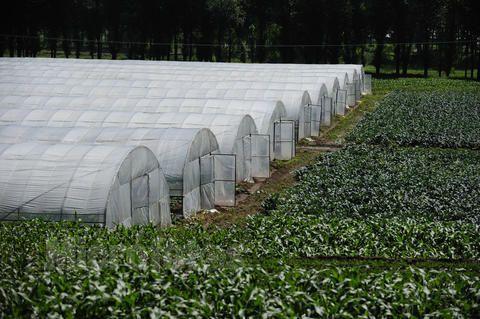
2 Pest and Disease Control for Greenhouse Vegetables
2.1 Ecological Control
Influenced by the geographical location and climate of Xinjiang, the process of cultivating greenhouse vegetables easily leads to problems such as high humidity and high temperature inside the greenhouse, which promotes the massive growth of pests such as aphids and whiteflies. Generally speaking, an acidic environment is conducive to the survival of most pathogenic bacteria and viruses. Therefore, pests and diseases can be controlled through ecological regulation. Alkaline substances can be sprayed on the leaves of greenhouse vegetables; for example, plant ash helps control aphids. In addition, the greenhouse should be kept sealed for a certain period of time, especially by making use of the high temperature at noon in Xinjiang to keep the greenhouse sealed, thereby greatly increasing the temperature inside the greenhouse. After a period of time, the greenhouse is opened, which effectively improves the sterilization effect.
2.2 Agricultural Control
First, select excellent varieties with strong disease resistance. Second, strengthen the cultivation of pest-free strong seedlings. Before cultivating vegetables, the seeds should be sun-dried and disinfected, and grafting seedling techniques should be used. Third, raise seedlings in foreign soil in another location. On fields where vegetables have not been cultivated, adopt foreign soil seedling raising in another location to avoid the occurrence of pests and diseases during the seedling stage. Fourth, plant with pesticide treatment. Before the seedlings of greenhouse vegetables are planted, spray the seedlings once with pesticide, and discard weak and diseased seedlings to ensure that all seedlings planted in the greenhouse are healthy and disease-free, thereby improving the control effect on pests and diseases.
2.3 Physical Control
Adopting reasonable and scientific physical control methods can effectively prevent and control the occurrence of pests and diseases in the greenhouse. Color boards, insect-killing lamps, and colored paper can be used, and microwave insect killing and ozone can also be combined, making full use of electronic pest and disease control devices to kill various pests and pathogens in the greenhouse.
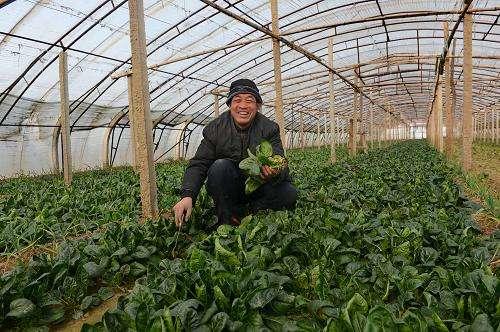
24 Biological Control
Biological control mainly refers to, on the premise of protecting natural enemies, using constructed oxidative biological coexistence to protect vegetables in the greenhouse, using the natural enemies of pests to resist pests, and maintaining the ecological balance in the greenhouse. For example, when cultivating greenhouse vegetables, fertilizers are applied, and natural enemies of pests and diseases such as Trichogramma are used to provide a good growing environment for greenhouse vegetables. Of course, it is forbidden to kill protected animals in nature. In addition, some copper-containing materials can be used, and the amount used must be controlled, such as vinegar and plant preparations, so as to effectively control vegetable pests and diseases.
In summary, with the development of science and technology, greenhouse vegetable cultivation techniques are constantly being researched, practiced, and updated. With the widespread application and promotion of greenhouse vegetable cultivation techniques, the yield and quality of vegetables in the Xinjiang region have been greatly improved. In order to better leverage greenhouse techniques in vegetable cultivation, cultivators need to fully consider the situation of greenhouse vegetable cultivation in Xinjiang, pay attention to all aspects of greenhouse vegetable cultivation, effectively control pests and diseases, and provide a good growing environment for greenhouse vegetables.