For gout patients, eating the right vegetables is crucial - remember these three principles

For gout patients, although staple foods provide the bulk of energy, in terms of the amount eaten, vegetables should make up the largest share. Gout patients, like healthy people, should eat one serving of vegetables every day. That sounds like not much - you still need several servings of meat, and only one serving of vegetables. But one serving is not the same as another: one serving of meat is only a few dozen grams, while one serving of vegetables is a whole 500 grams (one jin).
So here comes the question: how should gout patients eat vegetables? There are three principles here that you need to remember firmly!
Principle One: Vegetables are "double low" - eat whatever you like
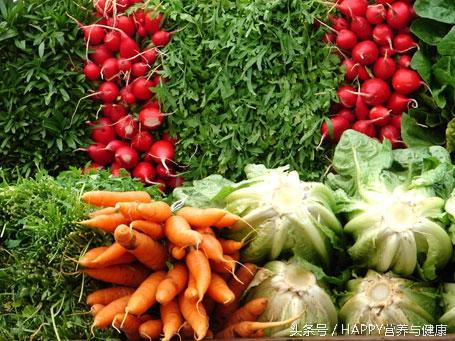
If gout patients want to eat their fill, enjoy variety and eat deliciously, they should focus more on vegetables. This is because vegetables are generally "double low" foods, meaning low in purines and low in energy. They are filling in large amounts, provide plenty of vitamins and minerals, and place no burden on the body's metabolism - truly natural and healthy foods.
We say gout patients need to be careful about what they eat, but when it comes to vegetables, they can relax a bit.Apart from some vegetables with high starch content (potatoes, Chinese yam, lotus root, carrots, etc.) and some vegetables with relatively high purine content (legume pods, mushrooms and fungi), whose portions should be watched, everything else can be eaten freely to your heart's content.
Vegetables should appear at breakfast, lunch and dinner every day. If you are too busy in the morning to eat them, then lunch and dinner must still ensure vegetable intake - especially at dinner, where vegetables should play the leading role.
Principle Two: Cook vegetables by cold dressing, steaming or boiling
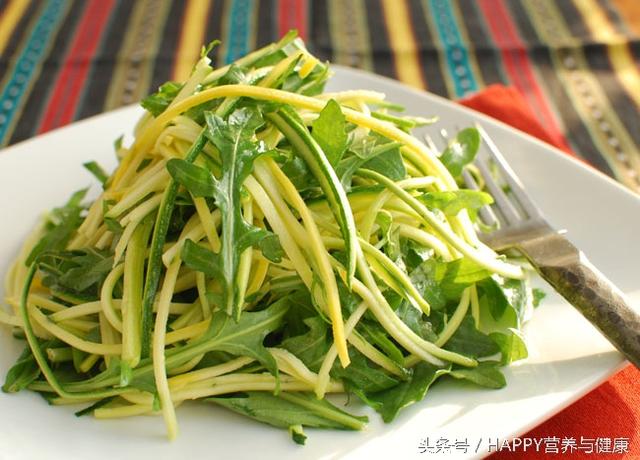
We say vegetables have many advantages - high in vitamins, high in dietary fiber, low in fat, low in purines. These are all measured on raw vegetables. Once vegetables are cooked, the dietary fiber is still high and the purines are still low, but the other two may change.
I had a patient who was overweight and had not only gout but also hyperlipidemia. I told him, you must control your energy intake and eat according to the daily required food servings. But several months passed, and the patient's weight and blood lipids had not improved, and his complexion was poor, showing signs of vitamin deficiency.
I asked him, "Did you not control your diet as I told you?" The patient felt wronged: "Doctor, I eat very vegetarian - I basically don't eat meat." I was puzzled and asked again, "So what dishes do you usually eat?" The patient thought for a moment and said to me, "I love eggplant - braised eggplant, disanxian (potato, eggplant and green pepper stir-fry), and such." As soon as I heard that, I understood where his problem lay.
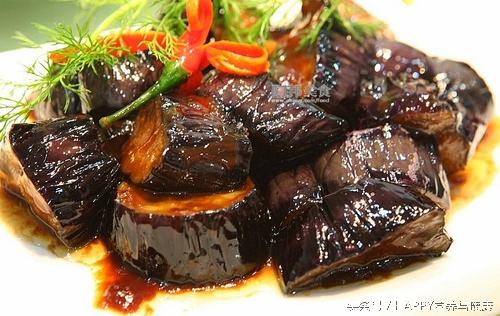
Eggplant is originally very nutritious and not high in energy, but anyone who cooks knows that eggplant "drinks oil" - eggplant dishes often need deep-frying to taste good. When eggplant is cooked at high temperatures, vitamins are lost, especially vitamins that are easily destroyed, such as vitamin C, whose content drops greatly.
In addition, we eat vegetarian dishes precisely for their low-energy feature. Once deep-fried in oil, the eggplant becomes soaked with oil, and the energy goes way up. If this patient likes eating such dishes, how can his blood lipids and weight be well controlled?
To preserve the "plain" nature of vegetables, we generally recommend that vegetables suitable for eating raw be eaten raw as much as possible, tossed with a little seasoning and just a few drops of sesame oil. This preserves the nutrients in the vegetables to the greatest extent while being low in fat and healthy.Vegetables not suitable for eating raw can be cooked by steaming or boiling, which also uses relatively little oil. Vegetables like carrots and tomatoes can also be stewed with meat - no extra oil is needed, it tastes good, and it helps the absorption of fat-soluble vitamins.
Vegetables with high oxalic acid content should be blanched before eating
From the introduction above, we know that when uric acid concentration in the body is too high, urate crystals precipitate out and easily form stones in the urinary tract. In fact, among kidney stones, the most common are not uric acid stones, but stones caused by another acid - oxalic acid.
Oxalic acid mainly comes from the diet, and many vegetables and fruits contain it. Among them, spinach, amaranth and various wild vegetables have the highest content.If a vegetable tastes somewhat "astringent" when we eat it, that is because of its relatively high oxalic acid content.
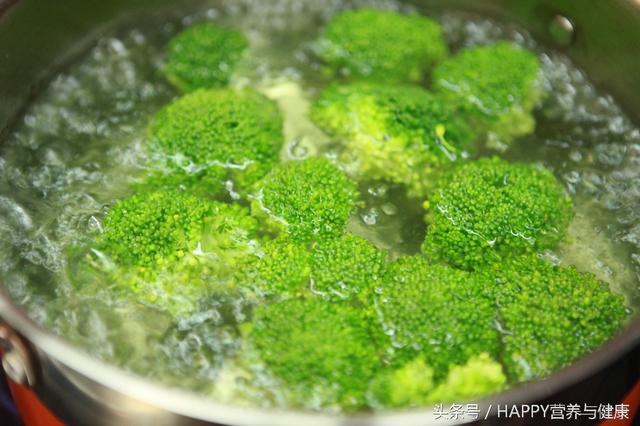
Because gout patients are already at higher risk of developing kidney stones, and if they additionally take in large amounts of oxalic acid, the risk becomes even higher, so oxalic acid should be avoided as much as possible in the diet. Does this mean gout patients cannot eat spinach? There is no need for that. As long as you blanch it in water before cooking, most of the oxalic acid can be removed, and then it is fine to eat.

HYPPY Nutrition and Health
Expert Health Talk No.1Its public nutrition publishing platform
Only to spread more professional nutrition and health knowledge for you
WeChat ID:yihaojiankang
Follow us and gain more!
(Unauthorized reproduction prohibited)