This common vegetable on the dinner table is especially delicious, fights aging, nourishes the stomach and also tonifies the kidneys

TCM Yang Run
In summer, with sustained high temperatures, every time I walk on the road after work, I do not know what I should eat; the sustained high heat even takes away my appetite. But occasionally when I think of the braised noodles my mother made in summer when I was a child, I cannot help swallowing a few mouthfuls of saliva. Speaking of these braised noodles, it really is only green bean braised noodles that suit my appetite best. No matter how hot the day is, a bowl of green bean braised noodles not only gives me an appetite but also fills me with strength. Now, I have gradually gained a new understanding of food, including those green beans that haunt my dreams.
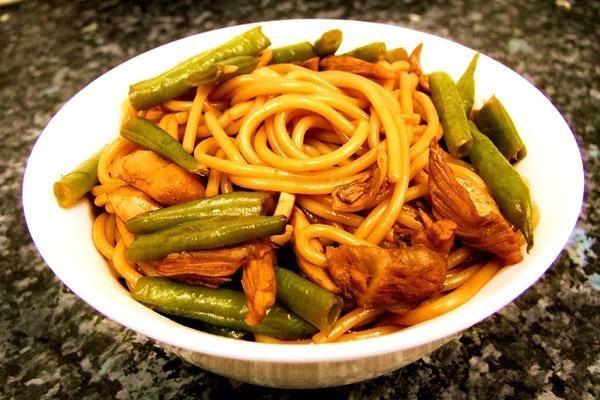
Green bean braised noodles
Green beans, also called cowpeas, are a vegetable abundantly produced in summer. Traditional Chinese medicine holds that green beans are sweet, bland and slightly warm in nature, and enter the spleen and stomach meridians. They have the effects of resolving dampness and tonifying the spleen, regulating the digestive system, tonifying the kidneys and stopping diarrhea, and boosting qi and promoting fluid production. They are especially suitable for people with weak spleen and stomach.
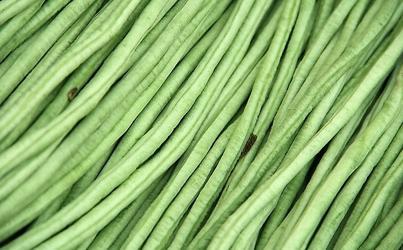
Green beans
Green beans resolve dampness without being harsh and dry, and strengthen the spleen without being cloying or greasy, making them a commonly used item for spleen deficiency with retained dampness; they are often used to treat spleen deficiency with dampness, poor appetite and loose stools, damp turbidity pouring downward, and excessive vaginal discharge in women. They can also be used for summerheat-dampness damaging the middle burner, and for vomiting, diarrhea and muscle cramps. Modern nutritional data show that their protein content is higher than that of ordinary vegetables, and their content of various vitamins and minerals is also relatively rich, so green beans are also praised as "meat among vegetables."
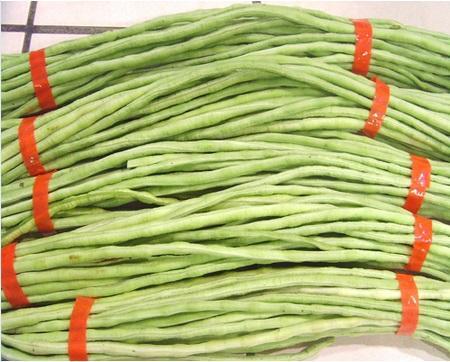
Green beans
The benefits of green beans for our bodies
1 Anti-aging
When the body produces too many free radicals or clears them too slowly, it accelerates aging and induces many diseases. Studies show that green beans have a strong scavenging effect on hydroxyl free radicals, which may be related to their relatively rich content of carotene, vitamin E, ascorbic acid and the trace element selenium.
2 Strengthening the spleen, harmonizing the stomach, and tonifying the kidneys
In addition to strengthening the spleen and harmonizing the stomach, the most important thing about green beans is that they can tonify the kidneys. Li Shizhen once praised them for being able to "regulate the middle and boost qi, tonify the kidneys and strengthen the stomach, harmonize the five viscera, regulate the ying and wei, and generate essential essence"; the so-called "ying and wei" are the two qi known in traditional Chinese medicine as ying and wei. When properly regulated, they can fully ensure a person's sleep quality; in addition, eating more green beans can also treat discomforts such as vomiting and hiccups; when children have food accumulation and abdominal bloating, an appropriate amount of raw green beans, chewed carefully and then swallowed, can provide a certain relieving effect. The fiber in green beans helps lower cholesterol in the human body and is suitable for people with high blood lipids; it can also strengthen gastrointestinal peristalsis and help prevent constipation. Green beans have relatively high nutritional value and multiple functions, so they are deeply loved by people.
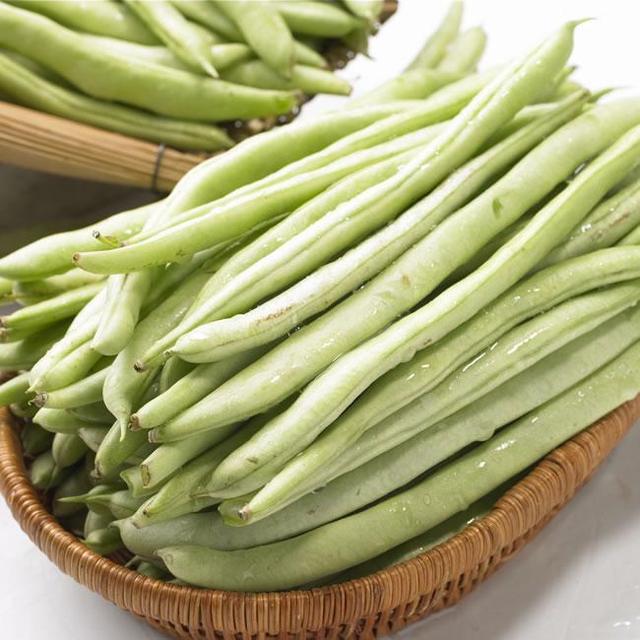
Green beans
Note
1 Before cooking, the strings of the green beans should be removed, otherwise it affects both the texture and digestion.
2 If they are not thoroughly cooked when eaten, poisoning can occur.
Medicinal meal - green bean braised noodles
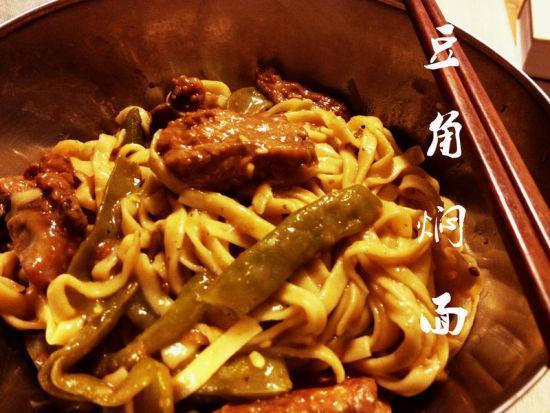
Green bean braised noodles
Main ingredients: green beans, fresh noodles, sliced pork belly
Auxiliary ingredients: light soy sauce, dark soy sauce, cooking wine, pickled peppers, chopped scallions, clear water
[Steps] 1. Marinate the sliced pork belly with cooking wine for 10 minutes. For the green beans, it is recommended to choose hyacinth beans, as the texture and flavor are the most traditional. After washing the green beans, break them into segments of equal size and put them on a plate.
2. Put them in the microwave and heat on high for 4 minutes. Take them out, stir them with chopsticks, then continue on high for another 4 minutes. At this point the green beans are already half-cooked, and you can see they are slightly dry and wilted. Pour an appropriate amount of cooking oil into the wok, add the pickled peppers, chopped scallions and pork belly, and stir-fry until the meat slices change color.
3. Add the microwaved green beans, add light soy sauce and dark soy sauce, and stir-fry evenly. Add a relatively wide amount of hot water and stir-fry until the seasonings and ingredients merge.
4. At this point, pour out the broth in the wok, leaving only a small amount of broth in the wok. Put the fresh noodles on top of the green beans, without touching the bottom of the wok, otherwise they are easily soaked by the broth or stuck to the bottom of the wok. Cover with the wok lid and braise over medium-low heat for about 15 minutes, using the steam to cook the noodles through.
5. In the middle, if you see the broth in the wok has decreased and is almost gone, add an appropriate amount of broth along the edge of the wok; the amount of broth should just barely cover about half of the green beans. Note: do not pour the broth onto the noodles. Repeat multiple times until the noodles are cooked through, then finally stir-fry, and stir the noodles and green beans evenly.