Does good-looking vegetables mean more pesticides were sprayed?
When shopping for vegetables, people habitually reach for the good-looking ones, then suddenly recall reports on TV: good-looking vegetables have more pesticides sprayed on them!
So which vegetables actually have the highest pesticide residues?
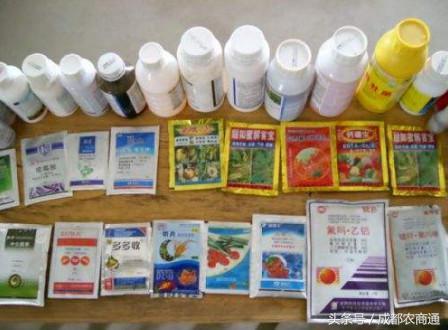
There are many types of pesticides; any chemical or biological product used to control harmful organisms in agriculture, forestry, animal husbandry and fisheries, or to regulate the growth of animals and plants, can be counted as a pesticide.
For vegetables, classified by target of control, they can be divided into insecticides, acaricides, fungicides, herbicides and rodenticides. Among them, insecticides are the most widely used, have the largest application volume, and are also relatively more toxic.
If detection is carried out using a non-destructive method based on near-infrared-visible spectroscopy, the vegetables found to have relatively high pesticide residues are the various leafy greens: for example, Chinese cabbage, celery, Chinese chives, and rapeseed greens.
If a rapid pesticide detector is used to test for organophosphates and carbamates, the rate of vegetables exceeding pesticide limits is also not low for other vegetables.
According to sample survey data from southern regions: the 5 vegetables with the highest rate of pesticide residue exceeding limits are: Chinese kale, bitter melon, cucumber, A-choy, and baby bok choy.
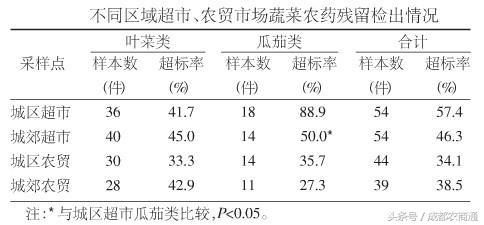
(Sample data, for reference only! Conditions vary from place to place, so differences are certain to exist)
Pesticide residues in vegetables in urban areas, suburbs, farmers' markets and supermarkets show the following situation.