Never eat these two vegetables carelessly, or you may put your life at risk
As family circumstances improve, many families no longer envy big fish and meat during the Spring Festival, and instead have a special fondness for vegetables. Of course, eating more vegetables is also good for your health. But these two vegetables must never be eaten carelessly; eating too much of them does great harm to the body, and may even carry a risk of cancer.
Gynura bicolor: carries a risk of liver damage
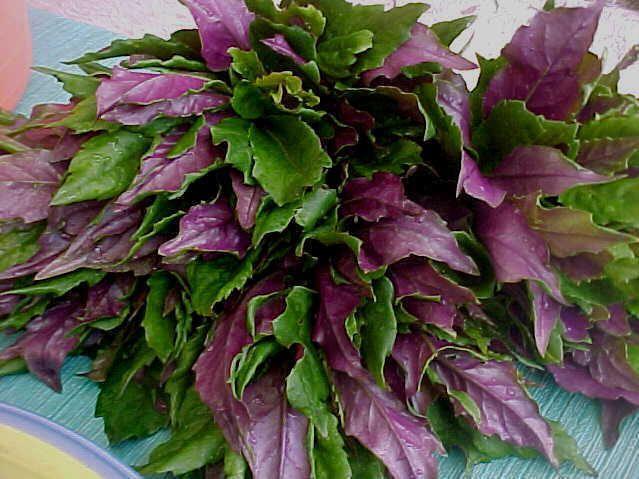
Among the three toxic vegetables, Gynura bicolor became popular most recently and has the most alternative names, such as red-backed (shell) vegetable, purple-backed (shell) vegetable, blood (snow) skin vegetable, Guanyin vegetable, red-backed Panax notoginseng, purple-backed Panax notoginseng, and so on.
Because of its bright red color, some people even call it "blood-nourishing vegetable."
In fact, Gynura bicolor contains "pyrrolizidine alkaloids" (PA for short), which have potential liver toxicity and are a very great health hazard.
Like aristolactam, PA is not one substance but a class of substances, with many kinds; more than 660 are known so far, and some of them are strongly liver-toxic to humans or have shown carcinogenicity in animal experiments.
In addition, Gynura japonica (tu sanqi), a close relative in the same genus as Gynura bicolor, can cause hepatic veno-occlusive disease and liver fibrosis, and in severe cases can cause acute liver failure or even death.
Therefore, Gynura bicolor may also have potential liver toxicity and carcinogenicity, and may act synergistically with aflatoxin and hepatitis B virus, increasing the risk of primary liver cancer.
Eating Gynura bicolor may carry a risk of liver damage.
Bracken fern: the relatively strongest evidence for carcinogenicity
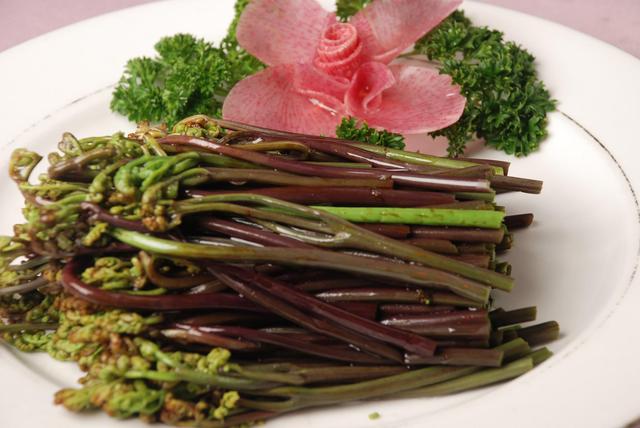
Animal experiments already provide fairly solid evidence that bracken fern is carcinogenic;
Epidemiological studies conducted in Japan and South Wales in the United Kingdom and other regions have also found a clear correlation between eating bracken fern and the occurrence of esophageal cancer, gastric cancer and other upper gastrointestinal cancers;
The carcinogen in bracken fern has been identified as "ptaquiloside," and the academic community has already discovered its carcinogenic mechanism - after several steps of metabolism in the human body, it can form an intermediate metabolite that damages DNA molecules and induces cancer.
Cancer in humans is a complex process affected by many factors; it is not that eating bracken fern causes cancer 100 percent of the time, but judging from the current evidence:
Scientific research has shown that bracken fern contains cancer-related substances including shikimic acid, pterolactam, flavanol compounds, quercetin and some substances similar to quercetin, and these substances are related to gastrointestinal cancer.
Of course, eating bracken fern once or twice will not cause cancer immediately; this is related to the amount of carcinogenic substances ingested, but eating bracken fern over the long term will harm health
Regularly eating bracken fern carries a clear cancer risk, and everyone must understand this risk.
If you do not have the habit of eating these vegetables, then it is recommended that you do not eat them.
If there is no special reason, avoiding them as much as possible is simply the best choice.