Minerals Are Good Medicine Too: Get to Know Mineral-Based Chinese Materia Medica
How do stones become medicine? "When decocting medicine, you just need to add the mineral medicine half an hour in advance," said Huang Haichang, a traditional Chinese medicine physician at Nanning Yiganzhao Pharmaceutical Co., Ltd. For home decoction, you can generally crush the stone first; if using it in food therapy, you can simply put the stone pieces directly into the soup and steam or stew them. Gypsum and dragon bone are the mineral medicines most commonly used by the public. What stories do these stone medicines have? And what should you watch out for when taking them?
Gypsum
Drop it into hot pot to prevent internal heat”
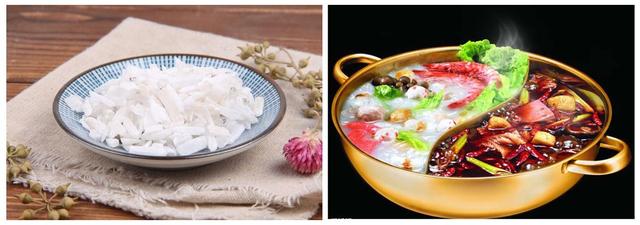
So, is the gypsum mentioned in Chinese and Western medicine the same thing? In fact, the two come from the same root; it is just that the gypsum used for bone fractures has been calcined, making it calcined gypsum, while the gypsum used in Chinese materia medica is raw gypsum, which only needs to have impurities and soil removed from the raw material. So what are the effects of raw gypsum, and how is it used in daily life?
Almost every large pharmacy carries this medicinal material, and in daily life the public can also use it in food therapy. For example, when having hot pot, if you are worried about getting internal heat from eating, you can toss a piece of gypsum into the hot pot, which can help reduce internal heat, mainly because gypsum is an extremely cold-natured substance.
Although gypsum is easy to use, there are some precautions. People with deficient cold of the spleen and stomach, blood deficiency, or yin deficiency with fever are not suited to take it. Because blood deficiency and yin deficiency are relatively common in women, female consumers should especially consult a doctor before taking it. If taken internally, the dosage is generally kept within one or two liang; taking too much will "turn a golden elixir into poison."
Dragon Bone
A fossil that can calm the mind and soothe the nerves
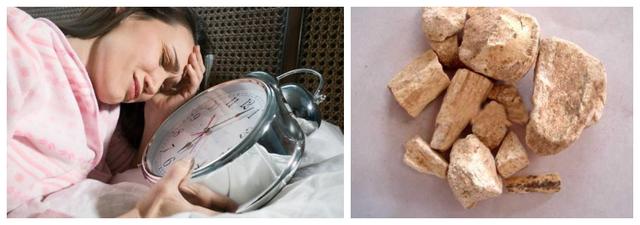
The fossils of the teeth of ancient mammals such as elephants, rhinoceroses, and three-toed horses are called dragon bone. Many people are not entirely unfamiliar with this. Two years ago at a pharmacy in Beijing, a pharmacist discovered some writing on a piece of dragon bone while dispensing medicine, and after appraisal it turned out to be oracle bone script. Dragon bone is a common clinical medicine; taken internally it can calm the mind and soothe the nerves, and applied externally it can stop bleeding and arrest metrorrhagia. "In Western medicine, dragon bone has the effect of promoting blood coagulation, reducing the permeability of blood vessel walls, and inhibiting skeletal muscle excitement," said Huang Haichang. Some people who are irritable and restless, or those with insomnia and frequent dreams, as well as psychiatric patients, are suited to take dragon bone to ease their emotions.
However, dragon bone is divided into raw dragon bone and prepared dragon bone, and the two have different emphases in function. Raw dragon bone is simply the raw material washed clean, sun-dried, and then ground into powder; it emphasizes the effect of restraining floating qi, can calm the mind and soothe the nerves, and is especially good at treating dizziness, insomnia, frequent dreams, and other symptoms. For example, in Treatise on Cold Damage, raw dragon bone is used to treat mental disturbance, and Cinnamon Twig, Licorice, Dragon Bone and Oyster Shell Decoction is used to treat palpitations and restlessness. Prepared dragon bone is raw dragon bone that has been calcined; it is good at restraining sweating and stopping bleeding, and is often used to treat nosebleeds and vomiting blood, metrorrhagia and metrostaxis, excessive vaginal discharge, enuresis, and other symptoms.
Questions
How to take mineral medicines
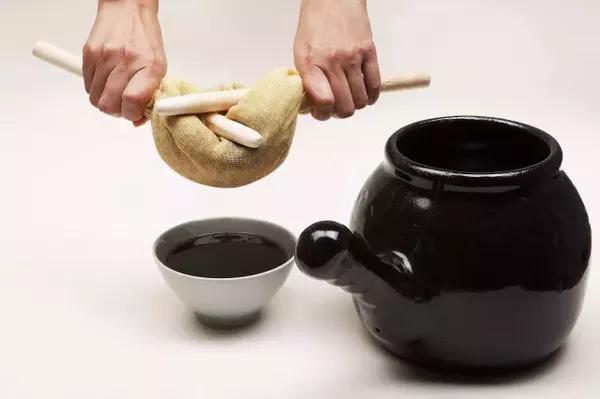
Unlike the mineral components in chemistry, mineral medicines in traditional Chinese medicine are actual stones or fossils. But how are these stones taken? Experts say that many pharmacies now offer powdering services, or when pharmacies sell mineral medicines, they have already ground the mineral medicines into powder. When decocting medicine, the public can decoct the powder, or directly decoct the stone pieces; compared with other medicines, if heated half an hour to an hour in advance, the stones will also break apart. If you find the taste of mineral medicines unpleasant, you can control the dosage, or when drinking the medicinal soup, do not shake it, and eat less of the sediment inside.
Do mineral medicines have side effects?
It is understood that there are many kinds of mineral medicines, and the several common ones we see are relatively safe. But if they are mineral medicines containing arsenic, mercury, or lead, they should be used with caution. For example, arsenic-containing medicines include arsenolite, white arsenic, red orpiment, and realgar; mercury-containing medicines include cinnabar, calomel, and others, which are toxic to the kidneys and can cause acute and chronic kidney damage and kidney failure. Therefore, they need to be taken under a doctor's guidance.