The Kuok family behind Arawana and the global grain and oil giant Wilmar International
Although the brand "Arawana" has long been widely known in China, many people may not know the company behind it, "Wilmar International." As Asia's largest grain and oil enterprise and one of the world's five major grain and oil giants, Wilmar International entered Fortune magazine's "Global 500" list of companies very early on. The Malaysian Kuok family, which founded "Wilmar International," also controls the Hong Kong, China-headquartered Shangri-La Hotels group and the Kerry Group.
The Kuok family
From "Sugar King of Asia" to "Shangri-La" hotels
Robert Kuok was born in 1923 in Johor Bahru, Johor, Malaya. His father, Kuok Keng Kian, was of ancestral origin in Fujian, China. At the time, the Kuok family had founded a company in Malaya called "Tong Seng Company," specializing in the business of rice, soybeans and sugar, and was already part of the locally wealthy class. All three Kuok brothers received a good education and graduated from the Johor Bahru English School and the famous Raffles Institution in Singapore.
In 1942, the Japanese army occupied Malaya, and Tong Seng Company was forced to close. With the end of the war, Tong Seng Company got back on track. In the early post-war period, consumer goods were extremely scarce in Malaya, and the authorities implemented a system of controlled goods. Because the official in charge of rice and grain was a close, inseparable friend of Kuok Keng Kian, the local procurement of rice and grain was handed over to Kuok Keng Kian to handle. Kuok Keng Kian seized the opportunity and, within a very short time, gained control of the grain business in Johor, and his business prospered day by day. By the late 1940s, Kuok Keng Kian had become a well-known wealthy merchant in Johor Bahru.
In 1947, 24-year-old Robert Kuok went alone to Singapore and founded his first company, dealing in commerce, shipping brokerage, general merchandise and so on. In 1948, Kuok Keng Kian passed away, and Robert Kuok returned to Johor Bahru, Malaya. On the advice of his mother, Chew Geok Loo, he established Kuok Brothers Limited in 1949. The company combined the assets of the Kuok brothers, inherited the traditional business of Tong Seng Company, and dealt in rice, flour, beans, sugar and so on. Robert Kuok was elected chairman of the board of the company.
In 1957, Malaya became independent from Britain. In 1963, the Federation of Malaysia was established. In 1959, Robert Kuok formed a joint venture with the Federal Land Development Authority of Malaya and founded the country's first sugar refinery in Penang, namely Malayan Sugar Manufacturing. He purchased raw sugar from Thailand, processed it in his own sugar refinery and then shipped it for sale to various places, and sold it to China through a commodity brokerage company based in Hong Kong, China. He also bought cane sugar from Cuba and resold it to Indonesia and other Southeast Asian countries. Within just a few years, he controlled Malaysia's cane sugar industry, obtained enormous profits, and was hailed by people as Malaysia's "Sugar King." Thereafter, Robert Kuok also pioneered large-scale sugarcane cultivation in Malaysia, enabling Malaysia to take the first step toward self-sufficiency in the sugar industry. In the 1970s, Robert Kuok controlled 80% of Malaysia's raw sugar market and 20% of the world sugar market, ascending to the throne of "Sugar King of Asia."
At the same time, Robert Kuok also entered other fields and pursued diversified development. He founded a wood processing enterprise, set foot in the shipping industry, and entered the real estate market.
In 1971, Robert Kuok formed a joint venture with the Singapore Economic Development Board and created Singapore's first luxury hotel, named "Shangri-La," meaning "a hidden paradise beyond the world," and began expanding in the Asia-Pacific region, building the Shangri-La hotel brand. In the early 1980s, the Shangri-La hotel group began a comprehensive layout in the Chinese mainland market. Through continuous expansion, the Shangri-La hotel group, headquartered in Hong Kong, China, became Asia's largest luxury hotel group.
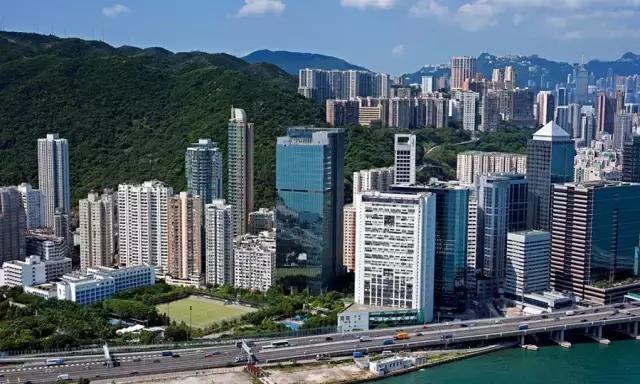
In 1974, the Kuok Group established Kerry Holdings Limited in Hong Kong, China. Thereafter, Hong Kong, China and the Chinese mainland gradually became the focus of the group's development. The largest portion of Robert Kuok's assets are in Hong Kong, China, including a large number of Hong Kong, China luxury homes, shopping malls and hotels. Robert Kuok has long resided in Hong Kong, China, and has actively expanded his corporate footprint in the Chinese mainland. Robert Kuok's eldest son, Kuok Khoon Chen (born 1947), is mainly responsible for managing the Kuok Group's business in the Hong Kong, China region and the Chinese mainland. "Kerry" has also become the hallmark of the Kuok family's extensive business in Hong Kong, China and the Chinese mainland, with operations involving grain and oil processing, hotels, real estate and beverages.
Wilmar International
Conquering China's grain and oil market, becoming a Global 500 company
Since 1988, the Kuok Group began entering the Chinese mainland grain and oil market. In 1991, Nanhai Oils and Fats, a joint venture between the Kerry Group and a company under COFCO, launched "Arawana" small-package edible oil, leading China's consumption revolution from bulk oil to small-package oil, but the "Arawana" trademark belongs to Kuok (Singapore) Limited. Kerry Oils & Grains' business was handled by Kuok Khoon Chen, and thereafter production bases were successively established in Shanghai, Qingdao, Xi'an, Chengdu, Tianjin and other cities, but it no longer cooperated with COFCO. In 1992, COFCO created its own brand and in 1995 launched "Fortune" small-package edible oil.
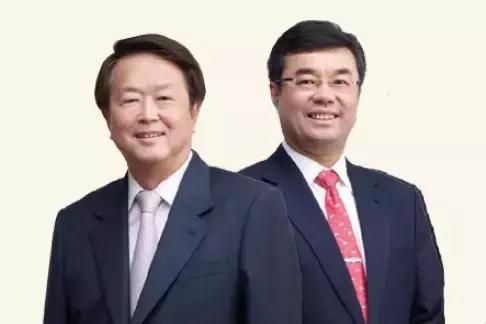
Wilmar's two founders, Kuok Khoon Hong (left) and Martua Sitorus (right)
In 1991, Robert Kuok's nephew Kuok Khoon Hong (born 1951) and Indonesian businessman Martua Sitorus (Thio Seng Hap, born 1960) founded Wilmar in Singapore, initially mainly engaged in palm oil trading. Thereafter, it began acquiring large numbers of palm oil plantations in Southeast Asia and set up palm oil crushing plants.
In 2000, Wilmar Holdings and the American company ADM, one of the world's four major grain traders, formed the Yihai Group as a joint venture in China. Using its unique advantage in palm oil raw materials, Yihai Group became a partner of COFCO and held a certain stake in COFCO's "Fortune" edible oil business.
The well-known Shandong Luhua Fragrant Peanut Oil Co., Ltd. is also an enterprise jointly established by Laiyang Luhua, Yihai and COFCO.
In 2006, Wilmar International Limited listed its shares in Singapore.
In December 2006, Wilmar International Limited announced a merger and acquisition plan worth as much as 4.3 billion US dollars. The plan was divided into two parts: first, the acquisition of the Kuok Group's palm plantations, edible oil, grains and related businesses, namely Kerry Oils & Grains, for 2.7 billion US dollars; second, the acquisition of the edible oil, grains and related businesses of its parent company Wilmar Holdings, including the equity held by the ADM Asia-Pacific group, for about 1.6 billion US dollars. After the acquisition was completed, Wilmar International remained listed in Singapore, with Wilmar Holdings, the Kuok Group and ADM holding 48.5%, 31% and 6.7% of Wilmar International's equity respectively.
In 2009, Wilmar International entered Fortune magazine's list of the world's 500 largest companies in one stroke, and also became one of the world's top three grain enterprises. Wilmar International is also one of the largest companies by market value on the Singapore Exchange. In 2016, Wilmar International ranked 254th among Fortune magazine's Global 500 enterprises, and ranked 5th in the global grain and oil industry.
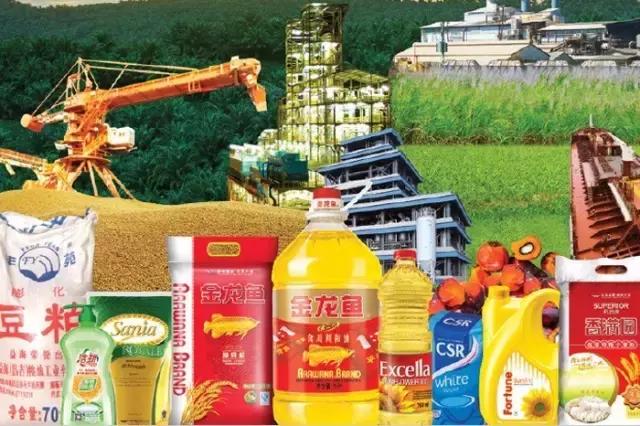
Wilmar International's business scope includes the green palm industry, oilseed crushing, edible oil refining, sugar refining and manufacturing, specialty fats, oleochemicals, biodiesel and fertilizer manufacturing, as well as grain processing and so on. It is a world-renowned palm oil producer and trader. Wilmar International has set up more than 500 factories in 15 countries around the world, with an operating network spanning 50 countries including China, India, Russia, the United States, Australia and Ghana. More than 90,000 employees from different countries work for Wilmar International. At present, Kuok Khoon Hong is chairman and CEO of Wilmar International.
Yihai Kerry
A giant enterprise in China's grain and oil market
After the merger and acquisition, the Kuok Group's two important platforms in the Chinese mainland, Yihai Group and Kerry Oils & Grains, merged to become the massive Yihai Kerry Group, headquartered in Shanghai. Yihai Kerry Group became a subsidiary of Wilmar International engaged in Chinese mainland business, and is also China's largest group company for soybean crushing, oil refining and small-package sales.
Yihai Kerry currently has 23,000 employees and has established a total of 61 production bases and more than 130 production-type entity enterprises in 23 provinces, autonomous regions and municipalities directly under the central government in China. It is mainly involved in industries such as oilseed crushing, edible oil refining, specialty fats, oleochemicals, corn deep processing, soybean deep processing, rice circular economy, wheat deep processing, food and beverages, and grain and oil technology research and development.
Yihai Kerry owns famous brands such as "Arawana," "OliVera," "Orchid," "Xiangmanyuan," "Sea Emperor," "Fengyuan," "Jinwei," "Ruilong" and "Jiejing 100," with products covering many fields such as small-package edible oil, rice, flour, dried noodles, rice noodles, soy milk, grain and oil dedicated to catering, food raw and auxiliary materials, and oleochemicals.
It turns out that all three of China's major edible oil brands have the shadow of "Wilmar International" behind them.