Cargill launches non-GMO high-oleic canola oil with the lowest saturated fat content
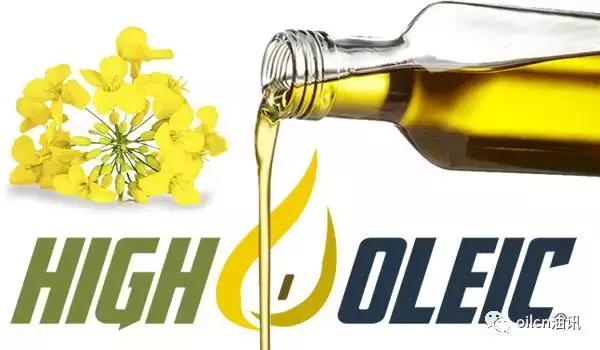
The reason olive oil and camellia oil are so highly favored by consumers is that they are rich in the nutritious and healthy "high oleic acid." One of the main battlegrounds in the global oils and fats industry today is the battle over high oleic acid.
In China, for example, one of Luhua's major moves this year was to launch "high-oleic peanut oil"; in the United States, high-oleic soybean oil is entering restaurants, cafeterias and the food industry, and high-oleic soybeans have already reached their third generation and will become the fourth-largest crop after corn, conventional soybeans and wheat.
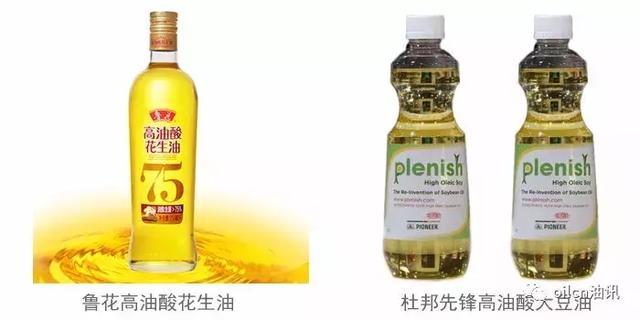
"High-oleic oils" are usually compared by their oleic acid content, which is basically above 75%-80%. However, the new oil recently launched by the international grain and oil giant Cargill has shifted the high-oleic battle in a new direction.

On December 19, the international grain and oil giant Cargill announced to the world that it is launching high-oleic canola oil with the lowest saturated fat content to commercial food customers worldwide.
This oil has a saturated fat content of only 4.5% or even lower, a reduction of 35% compared with before, and is said to be the oil with the lowest saturated fat content currently on the market; at the same time, it maintains taste, frying durability, freshness and stability.
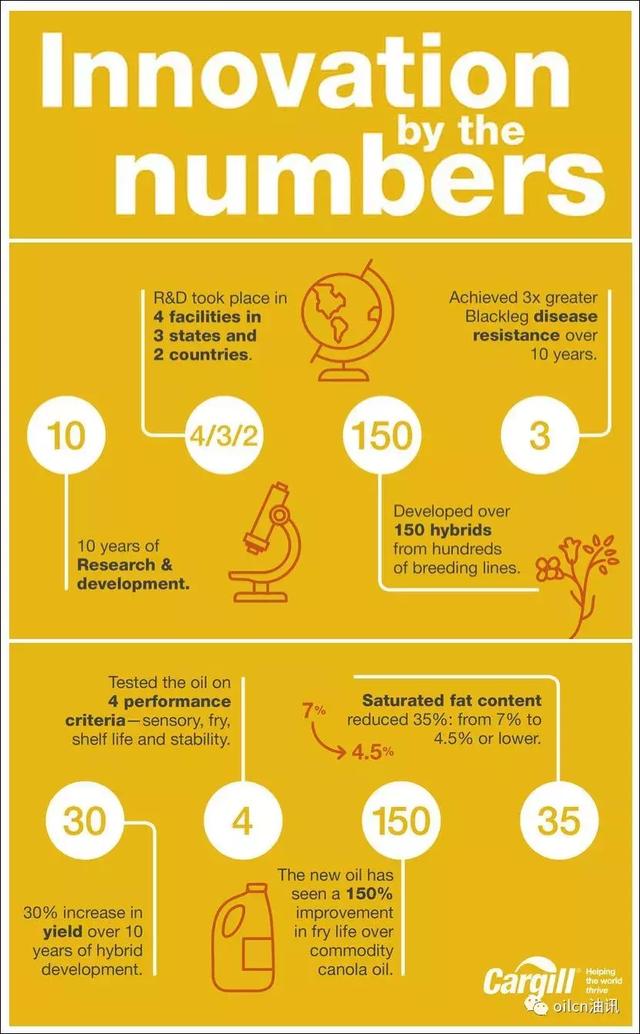
Cargill also emphasized that this oil is a non-GMO product, and that Cargill's researchers spent ten years developing this canola through traditional cross-breeding methods.

In early 2018, the first batches of the oil will be delivered to customers.
Why is "low saturated fat" so important?
Because the U.S. Department of Agriculture and the country's Dietary Guidelines recommend that Americans limit their daily saturated fat intake to within 10% of total calories.
At the same time, the United States mandates that restaurant menus and nutrition labels on retail foods must indicate ingredient content, including "saturated fat" and "trans fat."
Therefore, Cargill's new canola oil provides consumers with a healthier choice.
For a long time, Cargill has been keenly attuned to market demand and has always been the first to provide canola oil products that meet the food industry's nutritional and performance needs. In 1992, Cargill first launched low-linolenic double-low canola oil; in 1993, it first launched high-oleic canola oil; in 2011, it first launched a commercialized 80% high-oleic canola oil.
Compared with foreign countries, research on high-oleic rapeseed in China started relatively late but has also developed. Institutions such as Hunan Agricultural University, Huazhong Agricultural University and the Zhejiang Academy of Agricultural Sciences have all carried out variety breeding and research.
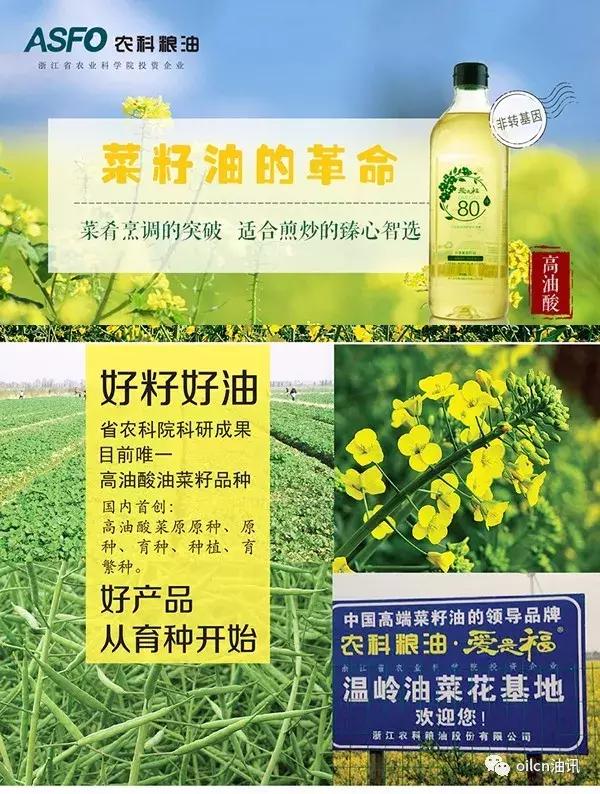
The Zhejiang Academy of Agricultural Sciences bred a new line 'Zheyou 20' with an oleic acid content close to 80%, and launched "Aishifu" high-oleic healthy canola oil.
Huazhong Agricultural University, together with Hubei Jingmen Minfeng Oil Co., Ltd., jointly developed and established a high-oleic quality rapeseed experimental demonstration base, and this year's harvested area has reached 1,200 mu, with high-oleic canola oil expected to sell for double the price of ordinary canola oil.
The new oil product from the grain and oil giant Cargill once again confirms the market trend of "high oleic acid."
China's oils and fats industry should pay attention to the international market trend of high oleic acid and fully recognize that high-oleic rapeseed is another new opportunity for the rapeseed industry after double-low rapeseed; it should accelerate the breeding, approval and promotion of new varieties.
When nutrition and health become important criteria for consumers in choosing edible oil, in the next high-oleic feast, it is hard to say who will be the final winner.