How to water and fertilize cucumbers after transplanting? Key points of water and fertilizer management
After cucumbers are transplanted, growth and development accelerate, and the growth of the plant's stems and leaves, the development of the fruit, and harvesting all take place at the same time. Therefore, the demand for water and fertilizer is relatively large. Cucumber roots are relatively shallow, and their ability to absorb nutrients and water is relatively weak. Therefore, only continuous topdressing and watering can ensure the robust growth of the vegetative plant and the normal development of the fruit...
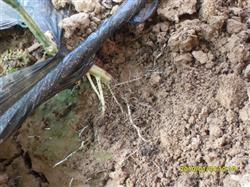
After cucumbers are transplanted, growth and development accelerate, and the growth of the plant's stems and leaves, the development of the fruit, and harvesting all take place at the same time. Therefore, the demand for water and fertilizer is relatively large. Cucumber roots are relatively shallow, and their ability to absorb nutrients and water is relatively weak. Therefore, only continuous topdressing and watering can ensure the robust growth of the vegetative plant and the normal development of the fruit.
Before harvesting the first cucumber, the plant's root system has basically formed, a large number of young ovaries have also formed, and some fruits have already begun to develop. At this time, the plant is about to enter the full fruiting period, so topdressing and watering should begin. For a yield of more than 5,000 kg of cucumbers per mu, from transplanting to the end of harvest, a total of 8-10 topdressings and waterings are needed. The principle of small amounts and frequent applications should be grasped; diluted human manure and urine should be applied frequently and lightly. Generally, the first topdressing is carried out when the cucumbers have recovered from transplanting and started to grow. Slow-release organic fertilizer is the main type, applied in furrows or in rings, at 100-200 kg per mu. Subsequent topdressings should mainly use quick-acting fertilizers, alternating chemical fertilizers and human manure and urine. After entering the full fruiting period, the number of topdressings should be increased and the interval shortened. Topdressing should be done on sunny days. In the rainy season, when soil nutrients are easily lost, the method of applying chemical fertilizer in holes and then covering with soil is more effective than topdressing with human manure and urine, applying 15-20 kg of ammonium sulfate per mu.