How to fertilize cucumbers as a top dressing? Master these key fertilizing points
Cucumbers are very sensitive to fertilizer. When applying top dressing, pay attention to the following points: 1. From transplanting until the first fruit sets, fertilize according to the condition of the seedlings and control the amount. In the early stage of cucumber growth (generally within one month after transplanting), the soil temperature is still low. If too much fertilizer or water is applied, "root rot" will occur. This is because the root system has weak activity and cannot fully...
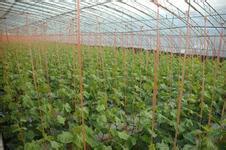
Cucumbers are very sensitive to fertilizer. When applying top dressing, pay attention to the following points:
1. From transplanting until the first fruit sets, fertilize according to the condition of the seedlings and control the amount. In the early stage of cucumber growth (generally within one month after transplanting), the soil temperature is still low. If too much fertilizer or water is applied, "root rot" will occur. This is because the root system has weak activity and cannot absorb nutrients fully, causing excessive water accumulation in the soil and reduced air, which suffocates and rots the roots; above ground, it shows as thin leaf flesh, dull leaf color, and easy wilting. Therefore, cucumbers must not be given too much fertilizer or water at one time. Instead, use the top-dressing method of "apply thin fertilizer frequently, small amounts but many meals."
2. In addition to applying enough organic fertilizer, a large amount of chemical fertilizer should also be applied as top dressing. Cucumber is a vegetable with shallow roots and a relatively high fertilizer requirement. During production, from the young fruit stage of the root cucumber to the harvest stage, top dressing should be increased to promote its growth and development and meet nutrient needs during the fruit expansion stage. For cucumbers grown in greenhouses, do not apply top dressing by digging ridges or opening dry furrows; it must be applied in furrows with water. Generally, the amount of each top dressing should not be too much. An average of 1.5 grams per cucumber plant is appropriate. During the peak cucumber-picking period, each watering should be mixed with fertilizer water. This way, no fertilizer damage occurs and high yield can be achieved. In the middle and late stages of cucumber growth, if leaves are found to be thin and yellow, use 50 grams of urea mixed with 15 kg of water, stir fully until dissolved, and spray on the leaves, once every 5-7 days, for 3-5 consecutive times. When severe fruit abortion or many deformed fruits are found, use 50 grams of monopotassium phosphate mixed with 15 kg of water and spray on the leaf surface, once every 3-5 days. In the late production stage, as the roots age, urea can also be used at the same time.
3. Foliar top dressing is an economical and effective top-dressing method. Cucumbers not only absorb nutrient elements from the soil through the roots, but can also absorb mineral nutrients through the leaves to promote fruit development. Generally, in the middle and late stages of production, when leaves are found to be thin and yellow, apply nitrogen fertilizer as top dressing: use 50 grams of urea mixed with 15 kg of water, stir fully until dissolved, and spray on the leaf surface, once every 5-7 days, for 3-5 consecutive times, with very good results. When severe fruit abortion, oversized fruit leaves, and many deformed fruits are found, use 50 grams of monopotassium phosphate mixed with 15 kg of water, stir until dissolved, and spray on the leaf surface once every 3-5 days, which can also achieve certain results. In the late production stage, as the roots age, use 50 grams each of urea and monopotassium phosphate mixed with 15 kg of water, then add half a bottle of Pen Shi Bao, stir until dissolved, and spray on the leaves. This can replace root top dressing, increase cucumber disease resistance, delay senescence, and strive for high yield. However, under normal circumstances, pesticides must not be arbitrarily added to chemical fertilizers and sprayed at the same time, as this can easily cause pesticide damage or make the pesticide ineffective. If simultaneous spraying is needed, spray pesticide in the morning and fertilizer in the afternoon.
4. Avoid fertilizing when the soil is relatively wet or the temperature is high. Fertilizing when the soil is wet can easily cause female flower differentiation, the appearance of deformed fruits, and physiological diseases such as leaf drop, flower drop, and fruit abortion. Fertilizing under high-temperature conditions increases water evaporation from plant leaves and can affect the effectiveness of the fertilizer. In addition, the best time to fertilize is early morning or evening.