Spring marks the critical period for preventing and controlling celery heart rot
Celery heart rot is a common physiological disease in spring celery production. The tender tissue at the growing point of the celery turns black and dies. Subsequently, the root system and some stems and leaves of the celery also die one after another. The control methods are as follows: 1. Rational fertilization. Apply sufficient base fertilizer and increase the application of phosphorus, potassium and boron fertilizers to cultivate robust plants and improve disease resistance. Do not...
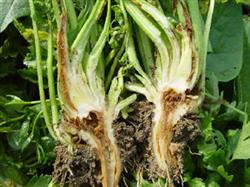
Celery heart rot is a common physiological disease in spring celery production. The tender tissue at the growing point of the celery turns black and dies. Subsequently, the root system and some stems and leaves of the celery also die one after another. The control methods are as follows:
1. Rational fertilization. Apply sufficient base fertilizer and increase the application of phosphorus, potassium and boron fertilizers to cultivate robust plants and improve disease resistance. Do not use too much nitrogen and potassium fertilizer, so as to avoid blocking the absorption of boron.
2. Do not let the bed surface become too dry. Irrigate rationally and avoid flood irrigation. In low temperatures, provide appropriate insulation and irrigation.
3. Remove diseased and residual plant material promptly, plant at a rational density, and increase ventilation and light penetration.
4. Apply an appropriate amount of additional boron fertilizer.
5. Chemical control. Once diseased plants are found, pull them out immediately and use chemicals to control the disease and prevent it from spreading.