How to grow scallions? Good autumn field management is key
The cultivation techniques are as follows: I. Preparation before sowing: (1) Variety selection: choose excellent varieties with strong growth vigor, disease resistance and high yield, such as Gaobai Dawutong, Gaobai Xinyidai and Texuan Gaobai. (2) Determination of sowing date: the autumn sowing date for scallions in the Shandong region is September 25 to October 5, when the 5 cm ground temperature in the ten-day period...
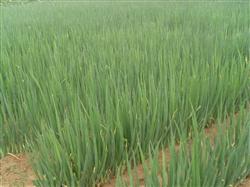 The focus of autumn field management for scallions is promoting root growth, strengthening the plants and earthing up for blanching, and strengthening fertilizer and water management to create suitable environmental conditions for the formation of the white pseudostem, thereby improving the yield and quality of scallions.
1. Watering: after planting, the focus of management for scallions is promoting root growth, so watering should be controlled, and drainage after rain should prevent waterlogging, to prevent root rot, yellow leaves and dead seedlings; at the same time, strengthen intertillage to promote root growth. From the Beginning of Autumn to White Dew, watering should follow the principle of light watering and watering in the morning and evening. After White Dew, scallions enter the peak growth period, and watering should follow the principle of frequent and heavy watering, watering once every 4-6 days. Along with watering, spray 800-fold diluted Xin Gao Zhi Mo to preserve warmth and moisture, prevent water evaporation, and isolate airborne pathogen invasion; after Frost's Descent, when the temperature drops, scallions have basically matured and their water requirement decreases, so the soil should be kept moist, and watering should be stopped 5-7 days before harvest to facilitate harvest, storage and transport.
2. Topdressing: on the basis of applying sufficient base fertilizer, scallions also need topdressing in stages. After the Beginning of Autumn, when plant growth accelerates, apply a "leaf-promoting fertilizer", applying 1500-2000 kg of decomposed farmyard manure and 20-25 kg of superphosphate per mu to promote leaf growth. After White Dew, scallions enter the peak growth period of the white pseudostem, which is the key period for yield formation, so a "plant-strengthening fertilizer" should be applied twice along with watering, each time applying 15-20 kg of urea and 10-15 kg of potassium sulfate per mu, broadcast between the rows, followed by shallow intertillage and watering, and at the same time spray Xin Gao Zhi Mo to improve the utilization rate of the effective components of the fertilizer.
3. Earthing up: earthing up is an important measure to soften the leaf sheaths, prevent lodging, and improve the yield and quality of the white pseudostem. From the Beginning of Autumn to before harvest, generally earth up three times; the first two times are combined with intertillage, pushing the ridge soil into the scallion furrows, and after the End of Heat the furrows are filled level; the height of each earthing up for scallions should be determined according to the growth height of the false stem, 3-4 cm each time, earthing up to the leaf emergence opening of the uppermost leaf, and never burying the heart leaf, to prevent leaf rot; along with earthing up, promptly spray Zhuang Jing Ling to make the garlic plant stems thick and strong, the leaves thick and tender, with a fresh leaf color, a rich natural taste and high commercial value.
4. Seed production. There are two seed production methods: from mature plants and from semi-mature plants. Seed production from mature plants: use fully grown scallions from autumn as seed plants, which facilitates strict seed selection but has high cost, and is used when propagating stock seed; seed production from semi-mature plants: sow in summer and grow semi-mature robust plants as seed plants, then plant them before winter, which has low cost and shortens the cycle by one year. Scallions are prone to cross-pollination, so isolation is required for seed production between varieties.
Scallions harvested in early winter should be dug up, dried in the air and then sorted into bundles, and arranged in shallow trenches in a shady place. Using low temperatures below 0°C, they can be stored for more than 100 days; during storage, the bundles should be kept slightly frozen, avoiding repeated thawing. The air humidity should be around 80%, and straw mats can be covered to retain moisture and prevent rain. Scallions have no natural dormancy characteristic. Although the false stem can be stored for a relatively long time at room temperature, the losses are very large.