Detailed Guide to High-Yield Cultivation Techniques for Hanzhong Winter Leek
Hanzhong Winter Leek is the dominant leek variety in Hanzhong, Shaanxi. Its leaves are broad and fleshy, its pseudostems are thick and sturdy, and it tillers abundantly. It has high yield, strong cold resistance, and a short dormancy period. It is suitable for open-field and protected cultivation in northern regions and can be marketed year-round. Winter leek is nutritious, with a relatively high carotene content, a mild pungent taste, and less fiber, making it deeply...
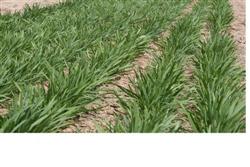
Hanzhong Winter Leek is the dominant leek variety in Hanzhong, Shaanxi. Its leaves are broad and fleshy, its pseudostems are thick and sturdy, and it tillers abundantly. It has high yield, strong cold resistance, and a short dormancy period. It is suitable for open-field and protected cultivation in northern regions and can be marketed year-round. Winter leek is nutritious, with a relatively high carotene content, a mild pungent taste, and less fiber, making it deeply popular with consumers. Its high-yield, high-quality cultivation techniques are introduced below for the reference of vegetable growers.
1. Raising Strong Seedlings
① Site selection and land preparation. Choose a plot that is loose and fertile, convenient for drainage and irrigation, and where allium vegetables have not been grown for 3 years. After the previous crop is harvested, apply 3000-3500 kg of high-quality organic fertilizer and 50 kg of NPK compound fertilizer per mu, plow and harrow finely, and form flat beds 1.5 m wide.
② Sowing at the right time. From late March to early April, when the soil temperature steadily passes 12°C, sowing and seedling raising can begin.
③ Seed treatment. Generally about 5 kg of seed is needed per mu. Before sowing, sun-dry the seed for 2-3 days. After sun-drying, soak the seed in 40°C warm water for 24 hours, remove, wash clean, drain, wrap in a damp cloth, and place at 20-25°C to germinate. When 80% of the seeds have sprouted, they can be sown.
④ Sowing method. Before sowing, water thoroughly to saturate the soil. After the water seeps down, first scatter a thin layer of fine soil to prevent the seeds from sticking to mud, then evenly scatter the seeds into the seedbed and cover with fine soil 1.5 cm thick. The next day, cover again with fine soil 1 cm thick to promote emergence.
⑤ Seedbed management. After emergence, keep the soil moist. When the seedlings grow to 4-6 cm tall, water once every 5-6 days; when the seedlings grow to 8-10 cm tall, apply 8-10 kg of urea per mu with irrigation water; when they grow to 12-15 cm tall, restrain growth to promote root development, controlling top growth and promoting bottom growth to cultivate strong multi-tillered seedlings. At the same time, do a good job of controlling diseases, pests, and weeds.
2. Transplanting
① Transplanting time. When leek seedlings grow to 15-18 cm tall with 1-2 tillers, begin transplanting. The time must not be later than early July.
② Land preparation and fertilization. After the previous crop is harvested, apply 4000-5000 kg of high-quality organic fertilizer and 60 kg of NPK compound fertilizer per mu, deep plow and harrow finely, and form flat beds 1.5-1.8 m wide.
③ Reasonable close planting. Generally transplant at a row spacing of 25-30 cm and a plant spacing of 15-20 cm, with about 5 seedlings per hole, ensuring 12,000 holes per mu.
④ Planting method. Seedlings should be planted immediately after being lifted. After lifting, first trim the tips of the fibrous roots, leaving only 2-3 cm, then cut off a portion of the leaves to reduce leaf evaporation, and then dig holes or open furrows on the bed according to the plant and row spacing for transplanting. The bulbs of the leek seedlings planted in each hole should be even, and the plants should be compact. When earthing up, bury the top of the bulb 3-4 cm deep into the soil (too deep results in poor growth, too shallow causes the roots to rise too quickly), and firm the soil around it. Water immediately after planting to help the seedlings recover.
3. Field Management
① Timely topdressing. When leek seedlings grow new leaves and new roots, apply 20-30 kg of urea per mu with irrigation water. In mid-August, apply 200 kg of cake fertilizer or 1000-1500 kg of decomposed organic fertilizer per mu. In mid-September, apply 25-30 kg of urea or 30-50 kg of NPK compound fertilizer per mu. In winter or early spring of the following year, to raise soil temperature and promote sprouting, apply 3000-5000 kg of decomposed organic fertilizer per mu. After new shoots emerge, water once with human and livestock manure. Thereafter, after each harvest, apply 20-25 kg of urea per mu with irrigation water.
② Scientific water management. Leek is intolerant of waterlogging and afraid of moisture. Drain promptly after rain. Normally, keep the soil alternately dry and moist. Water immediately after fertilizing. 2-3 days after harvest, water once along with fertilization. Before the soil freezes, water once thoroughly to facilitate overwintering and the sprouting of tender shoots the following spring.
③ Cultivation and weeding. After transplanting and establishment, carry out one shallow cultivation. After harvest and fertilization, carry out one cultivation and earthing up. After rain, cultivate as appropriate to drain moisture.
4. Disease, Pest, and Weed Control
① Diseases. Mainly downy mildew, gray mold, phytophthora blight, etc. Carbendazim, phosethyl-Al, metalaxyl, oxazole·cymoxanil, cymoxanil·mancozeb, and other agents can be used for control.
② Pests. Mainly leek maggot, thrips, diamondback moth, leafminer, etc. Phoxim, imidacloprid, and pyrethroid insecticides can be used for control.
③ Weeds. Pre-emergence, 50% acetochlor can be used; at the seedling stage, 48% trifluralin and other herbicides can be used for control.
5. Harvesting
① Harvest season. Spring is when leaves grow vigorously and is the main harvest period; summer has high temperatures and frequent rain, quality deteriorates, and harvesting is mostly not done; autumn sees vigorous leaf growth again, entering the peak harvest period. About 30 days before the leek withers, harvesting should stop, allowing it to wither naturally and transfer nutrients to the roots, laying a foundation for robust growth the following spring. If protected cultivation is practiced, it can also be supplied to the market in winter.
② Harvest frequency. Generally 5-6 harvests per year; if fertilizer and water conditions are good and management is proper, 7-8 harvests can be obtained. The general yield per mu reaches 4000-5000 kg, and high-yield fields can reach over 7000 kg.
③ Harvest method. When seedlings are 35-40 cm tall, they can be harvested. The best harvest time is on a sunny morning, leaving a stubble 2-3 cm high.