Detailed explanation of key eggplant cultivation techniques, a must-read for growers
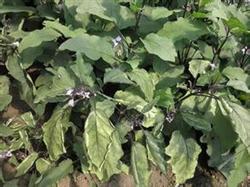
Bacterial wilt and Verticillium wilt 1 Symptom identification 1.1 Verticillium wilt Eggplant Verticillium wilt can occur at all growth stages, but it is most severe during the fruiting stage, and the symptoms develop from the bottom upward or from one side to the whole plant. In the early stage of the disease, the interveinal areas of the lower leaves turn yellow, and this gradually spreads to the entire leaf. In the early stage, diseased leaves wilt during the day and can recover in the morning and evening...
 1. Select high-quality seedlings: choose a seedling nursery with high reputation and good credibility to order strong seedlings.
2. Preparation before planting:
1. Greenhouse disinfection: after the previous crop is finished, promptly clean up the remaining plants, seal the greenhouse in advance, and use high temperature to heat the greenhouse.
2. Apply base fertilizer: in advance, apply 8-10 cubic meters of fully decomposed high-quality organic fertilizer per mu, together with 50-100 kg of superphosphate, 40-50 kg of potassium sulfate, and 3-5 kg of trace elements such as boron, iron, zinc, and molybdenum. After deep plowing, level and harrow the soil finely for later use.
3. High-ridge cultivation and rational close planting: ridge height about 20 cm, large row spacing 85-90 cm, small row spacing 60 cm, plant spacing 45-50 cm, about 2000 plants per mu.
3. Planting: hole planting, preferably carried out on a sunny afternoon or a cloudy day to help seedling recovery. After opening the holes, water thoroughly to establish the bottom water.
4. Management after planting:
1. Temperature management: seedling recovery stage: 28-30°C during the day, night temperature above 15°C, soil temperature 20°C. Before the first fruit harvest: on sunny days 25-30°C in the morning, 20-28°C in the afternoon, 13-20°C in the first half of the night, 10-13°C in the second half of the night. Fruit harvest period: on sunny days 26-32°C in the morning, 24-30°C in the afternoon, 18-24°C in the first half of the night, 15-18°C in the second half of the night; on cloudy and rainy days not exceeding 20°C during the day, 10-13°C at night. In winter, during continuous cloudy and cooling weather, strengthen cold protection and heat preservation; in spring and summer, ventilate to lower the temperature, ensuring the suitable temperature for growth.
2. Fertilizer and water management: 5-7 days after planting, when the seedlings begin to grow, water once to help seedling recovery. Then cultivate 2-3 times to promote root development. At the last cultivation, level and tidy the ridge surface and cover with plastic film. When the first eggplant "stares" begin to expand, start watering to promote fruit development, and with watering apply 10-15 kg of diammonium phosphate per mu. After that, depending on the weather, water about once every 15 days along the small ditch under the film. During the period of low temperature and insufficient light from December to February of the following year, watering can be reduced. After March, the demand for water and fertilizer is high, and the large and small ditches can be watered at the same time, alternating once with clear water and once with fertilizer water, applying 10-15 kg of urea and 10 kg of potassium sulfate per mu.
3. Plant adjustment and flower and fruit preservation: generally use 2-3 stem pruning. After the first eggplant begins to swell and grow, remove the side branches and old leaves below the first eggplant to improve ventilation and light penetration and reduce nutrient consumption. To prevent flower and fruit drop, 20-30 ppm 2,4-D can be used for flower dipping. As the plant grows, promptly remove yellowed old leaves and diseased leaves from the lower part of the plant.
4. Harvesting: the first eggplant can be harvested appropriately early, which is beneficial for plant growth and fruiting. Harvesting is best done in the morning, because at this time the fruit is plump and has good gloss. When harvesting, it is best to use scissors or a knife and cut evenly at the fruit stalk, so as to avoid the fruit stalk scratching the peel during storage and transport.
5. Pest and disease control:
Verticillium wilt: do a good job of seed disinfection and crop rotation. If diseased plants are found, immediately pull them out with roots and take them out of the field to burn. Chemical control: drench the roots with 50% DT fungicide 500-fold solution, 50% carbendazim wettable powder 500-fold solution, or 70% dexon original powder 500-fold solution, 500 ml per plant.
Sclerotinia rot: use 50% procymidone wettable powder 1500-2000-fold solution, 50% iprodione wettable powder 1000-fold solution, or dimethachlon wettable powder 1000-1500-fold solution in rotation and alternation, spraying continuously 2-3 times. In winter, use 10% procymidone smoke agent or 45% chlorothalonil smoke agent, 250 g per mu to fumigate the greenhouse.
Phytophthora rot: in the early stage of the disease, use 75% chlorothalonil wettable powder 600-fold solution, or 58% metalaxyl-mancozeb 400-500-fold solution, or 64% oxadixyl wettable powder 500-fold solution, spraying once every 7-10 days, continuously 2-3 times.
Powdery mildew: in the early stage of the disease, spray 15% triadimefon wettable powder 1000-fold solution, or 40% flusilazole emulsifiable concentrate 4000-fold solution, or 40% sulfur suspension concentrate 500-600-fold solution, or 50% sulfur suspension concentrate 250-300-fold solution.
Red spider mites and broad mites: use 73% propargite emulsifiable concentrate 2000-fold solution; 20% dicofol 1000-fold solution for spray control.
Whiteflies and aphids: use 20% aphid-killing smoke agent 250 g per mu to fumigate the greenhouse. Pyrethroid pesticides such as kungfu and fenpropathrin can also be used for spraying. For whiteflies, yellow sticky boards can also be used for trapping and killing. For aphids, silver-gray film strips or covering with silver-gray film in protected cultivation can repel aphids.
Note: the above cultivation measures are for reference only. The specific operation methods should be determined according to local planting habits and climatic conditions.