A Complete Guide to Scientific Fertilization Methods for Bitter Melon
High-yield and High-profit Cultivation Techniques for Bitter Melon in Winter-warm Plastic Greenhouses as Protected Cultivation: Choose a winter-warm greenhouse with good lighting and strong insulation as the horticultural facility for off-season bitter melon cultivation. Compared with cucumber, loofah, and zucchini, bitter melon requires relatively higher light intensity and higher temperatures for growth and development, and has poorer tolerance to low temperatures and weak light. Bitter melon...
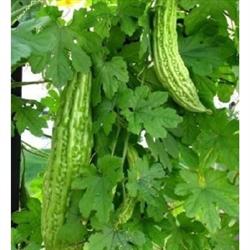 Bitter melon is an annual climbing herbaceous plant with a relatively developed root system and many lateral roots, and it is tolerant of fertilizer but not of poor soil. Based on the characteristic that bitter melon is tolerant of fertilizer but not of poor soil, sufficient base fertilizer should be applied. Generally, 1500 kg of decomposed pig and cattle manure, etc., and 30 kg of phosphate fertilizer are applied per mu. For spring bitter melon, less fertilizer can be applied during the seedling stage, while for summer bitter melon, frequent topdressing should be emphasized from the moment the cotyledons are fully open. During the flowering and fruiting period, 1-2 heavy fertilizer applications should be made. Generally, at flowering, 25 kg of decomposed cake fertilizer or 40 kg of high-efficiency organic mixed fertilizer per mu should be applied in combination with earthing up. When fruiting begins or after the first harvest, 75 kg of compound fertilizer per mu should be applied once as a supplemental fertilizer, and thereafter, human and animal manure urine should be applied once after each harvest. During the peak fruiting period, calcium superphosphate should be applied once additionally to extend the harvest period and promote improvements in yield and quality.