Sowing Methods and Key Cultivation Techniques for Oil Beans (Phaseolus vulgaris)
Select early-maturing, mid-maturing and late-maturing varieties with excellent seed quality and high yield. The main varieties include Purple Flower Oil Bean, Diyoudou Wang, Large Horse Hoof Oil Bean, Peanut Oil Bean, August Green, Early-Maturing Ground Oil Bean, Late Oil Bean, etc. 1. Sowing methods (1) Seedling raising: For early spring greenhouse cultivation, nutrient pot seedling raising in a greenhouse should be adopted, with seedling raising...
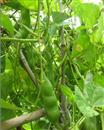
Select early-maturing, mid-maturing and late-maturing varieties with excellent seed quality and high yield. The main varieties include Purple Flower Oil Bean, Diyoudou Wang, Large Horse Hoof Oil Bean, Peanut Oil Bean, August Green, Early-Maturing Ground Oil Bean, Late Oil Bean, etc.
1. Sowing methods
(1) Seedling raising: For early spring greenhouse cultivation, nutrient pot seedling raising in a greenhouse should be adopted, with seedling raising carried out in early March.
(2) Seedbed soil preparation: Use 60% field soil, 30% decomposed organic fertilizer and 10% decomposed manure powder, then heat-sterilize the prepared seedbed soil.
(3) Seed treatment: When sowing, select large, plump seeds, soak them in 1% formalin for 20 min, then rinse them clean with clear water.
(4) Germination acceleration: 2-3 d before sowing, soak the seeds in clear water for 3-4 h, then place them at 30°C to accelerate germination; sow once the seeds begin to sprout.
(5) Sowing: Water the nutrient pots thoroughly; after the water has drained down, place 3-4 seeds in each nutrient pot and cover with 1.5 cm of soil.
(6) Temperature management during the seedling stage: After sowing and before emergence, keep it at 20°C-25°C during the day and 15°C-16°C at night; after emergence, keep it at 15°C-20°C during the day and 13°C at night.
(7) Water management during the seedling stage: Bean seedlings are relatively drought-tolerant. After emergence, water appropriately according to seedling growth and soil moisture conditions; do not let the soil become too dry or too wet.
(8) Timely planting out: Plant out when the soil temperature inside the shed is above 10°C, generally in early to mid-April.
(9) Planting density: Plant spacing x row spacing of 30 cm x 60 cm, with 120,000-150,000 plants retained per hectare.
2. Direct seeding cultivation techniques in the field
(1) Site and preceding crop selection: Choose wheat stubble or corn stubble with organic matter >= 3%, avoid continuous cropping or alternating cropping as much as possible, carry out summer and autumn plowing and harrowing, harrow the stubble and subsoil deeply to form ridges, and bring the field to a sowing-ready state.
(2) Timely sowing and rational close planting
Timely sowing: When the air temperature steadily passes 8°C-10°C, sowing is generally carried out in early May. Before sowing, soak the seeds in warm water for 3-4 h, remove them and place them at 3°C to accelerate germination; sow when the seeds are just about to sprout. If conditions permit and the soil is dry at sowing time, plant with water in the holes, and cover with plastic film after sowing.
Rational close planting: Depending on the variety, plant spacing and row spacing differ. For late-maturing varieties, plant spacing and row spacing should be larger; for early-maturing varieties, they should be appropriately denser. Generally, plant spacing x row spacing is 30 cm x 60 cm, with 6,000-8,000 plants retained per 667 m2.
(3) Scientific fertilization: Apply 30,000 kg of organic fertilizer, 300 kg of biological fertilizer, 15 kg of biological potassium and 15 kg of biological phosphorus per hectare. When the beans begin to vine, apply 7.5 kg of liquid biological potassium per 667 m2 as a top dressing; this can both promote rapid growth of vines and pods and promote early maturity of the beans and increase early yield.
3. Strengthen field management
(1) Cultivation and earthing up: After emergence, cultivation and earthing up should be carried out to loosen the soil, which helps raise ground temperature and promote root growth.
(2) Irrigation and top dressing: Local springs are often dry. To ensure the moisture needed for seed germination, plant with water in the holes when the soil is dry at sowing time. After the seedlings emerge and before flowering, generally do not irrigate; in dry years, appropriate irrigation may be given, but not too much, so as to avoid excessive vegetative growth of stems and leaves. After beans enter the flowering and fruiting stage, they need large amounts of water and nutrients; combined with field management, foliar fertilizer spraying can also be carried out.
(3) Preventing flower drop: When beans are exposed to high temperatures above 30°C, windy weather, soil that is too dry or too wet, insufficient nutrients, or unfavorable conditions such as weak light, flower drop can occur. Therefore, field management should be strengthened to prevent flower and pod drop. Trials have shown that applying biological potassium fertilizer can reduce the occurrence of flower and pod drop.