Three key pests to focus on controlling when growing cowpeas
The vigorous growth period of long cowpeas falls in a season of high temperatures and abundant rain, so pests and diseases occur severely. If management cannot keep up, it easily leads to reduced quality and lower yields. In terms of control measures, agricultural control should be the main approach, with chemical control as a supplement, to ensure the quality and safety of the product. 1. Rust disease occurs in August to September, mainly...
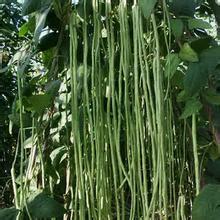 The vigorous growth period of pole cowpeas coincides with high temperatures and abundant rain, and pest outbreaks are severe. If management cannot keep up, it very easily leads to reduced quality and lower yields. In terms of control measures, agricultural control should be the main approach, with physical and pesticide control given equal importance.
1. Bean pod borer
For the bean pod borer, June to October each year is the larval damage period. The adults are phototactic, and eggs are laid singly on young pods, flowers and leaf stalks. Newly hatched larvae bore into young pods or flowers to feed, causing flowers and pods to drop. Older larvae bore into the cowpea pods to feed, and the damaged pods often rot after rain. The larvae have the habit of hiding by day and emerging at night and are photophobic. During the day they hide in flower organs, cowpea pods or curled leaves, expelling frass to plug the bore holes. Apart from occasional activity on overcast and rainy days and a few appearing during the day, they generally begin crawling out from the bore holes to become active in the evening and stop their activity outside by the next morning.
Control measures: 1. Remove fallen flowers and pods in the field, and pick off damaged curled leaves and cowpea pods to reduce the source of insects. 2. Set up black light lamps to trap and kill adults by taking advantage of their phototactic habit. 3. For pesticides, choose 5% fipronil 2000-fold solution, 40% fenvalerate 6000-fold solution, 2.5% deltamethrin 3000-fold solution and other pesticides, spraying once every 10 days.
2. Leafminer
The larvae burrow into the leaves to cause damage, feeding on the leaf mesophyll and leaving only the upper and lower epidermis, forming winding tunnels and affecting plant growth. The leafminer mainly damages peas, common beans, cowpeas, cabbage, cauliflower, Chinese cabbage, rapeseed, radish, lettuce, tomato, eggplant, potato, etc.
Control measures: 1. Use sticky insect traps to trap and kill adults. 2. Adults mainly lay eggs on the underside of leaves, so when spraying pesticide solution, focus on spraying the underside of the leaves. When larval damage begins, choose an insecticide with both systemic and contact action, such as 48% chlorpyrifos emulsifiable concentrate 800-1000-fold solution, etc., and spray continuously 2-3 times.
3. Red spider mite
The red spider mite on cowpeas is also called the bean leaf mite. August to September is the peak occurrence period. Adults and nymphs suck the young leaves, and after the leaves are damaged they shrivel and easily fall off. In the early stage of occurrence, the leaf surface loses green, turns white and then turns red, and the fine silk webs on the underside of the leaves can directly show the scope and area of occurrence. After occurrence, immediately use a sprayer to spray a pesticide encirclement ring, whose range should be slightly larger than the area of occurrence, and then thoroughly spray the plants within the encirclement ring to prevent the spread of the red spider mite.
Control measures: 1. Pay attention to pest monitoring. If a small amount of damage is found, promptly remove the damaged leaves and burn them. In case of dry weather, pay attention to timely irrigation and fertilization to promote plant growth and inhibit leaf mite proliferation. 2. Use selective acaricides for general control, carried out before the pod-setting stage and after the cowpea pods are harvested, focusing on uniform spraying on the underside of the leaves. You can spray 20% compound liuyangmycin emulsifiable concentrate 1000-fold solution, 1.8% abamectin emulsifiable concentrate 1500-2000-fold solution, 15% pyridaben emulsifiable concentrate 3000-fold solution, 20% mitek emulsifiable concentrate 2000-fold solution, etc. Note to rotate the pesticides, and advocate the use of high-efficiency, low-toxicity biological pesticides.