How to grow overwintering tomatoes? Key points of the two-nets-and-one-film cultivation technique
In recent years, with the rapid development of protected cultivation areas, winter vegetable production has basically met market demand; conversely, the production of high-grade summer vegetables has shown a gap. Since 2001, our county has used the "two nets and one film" technique to conduct trials and demonstrations of summer tomato cultivation in greenhouses, achieving success with significant benefits...
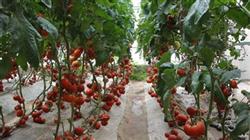
In recent years, with the rapid development of protected cultivation areas, winter vegetable production has basically met market demand; conversely, the production of high-grade summer vegetables has shown a gap. Since 2001, our county has used the "two nets and one film" technique to conduct trials and demonstrations of summer tomato cultivation in greenhouses, achieving success with significant benefits. The yield of firm-fruited tomatoes can reach 5000-8000 kg per mu.
I. Cultivation facilities
Using existing solar greenhouses (there must be ventilation openings on the back wall), greenhouses and other facilities, adopt two-nets-and-one-film covering cultivation (that is, cover the frame with plastic film, cover the film with shade net, and install insect-proof net at the ventilation openings) to create a fully enclosed safe production environment. Construction of a dedicated shed: the shed runs east-west, with a span of 10-16 m, a length of more than 50 m, a height of 2.5-3 m, and an area of about 1 mu.
II. Functions of the two nets and one film
1. Save costs and increase efficiency, easy to promote. Long service life (3-5 years), many application seasons, low depreciation cost, reducing the costs of pesticides, watering, fertilizing, etc.
2. Improve the vegetable growing environment and reduce the harm of disastrous climate. Disastrous climates in summer such as strong light, high temperature, heavy rain, strong wind and drought often cause reduced production of summer and autumn vegetables, resulting in a shortage of vegetables in the off-season. After adopting the "two nets and one film" technique, the soil temperature at the bed surface drops by 5-7°C, the air temperature in the shed drops by 3-4°C, and the light intensity drops by 30%-50%, preventing high-temperature heat damage, avoiding direct impact of heavy rain on the soil surface, and playing a role in preserving moisture, regulating air temperature, preventing drought, improving the rhizosphere environment, and promoting germination and uniform seedling emergence.
3. Avoid insects and prevent diseases. Pests cannot enter the shed, fundamentally eliminating the occurrence of pests from the source and reducing the contamination of vegetables by chemical pesticides.
4. Increase yield and value, with significant benefits. Generally increases yield by 20%-50%, brings early-autumn vegetables to market 10-30 days earlier, and increases tomato income by 2000-3000 yuan per mu.
5. Improve product quality. First, it reduces the amount of pesticides used; second, it lowers the crude fiber content and improves vegetable quality; third, the appearance is fresh and tender, improving marketability.
III. Variety selection
In summer tomato production, because the flowering and fruiting period of tomatoes is in the hot and rainy season, excellent varieties with vigorous growth, high resistance to viral diseases, heat tolerance, storage and transport tolerance, no fruit cracking and good quality should be used. Through cultivation trials in recent years, those that have achieved good benefits include Baili, Gelei, Bailing, Katerina, etc.
IV. Cultivation cropping seasons
1. Spring-summer cultivation: Using greenhouse cultivation, planting can be done at the end of March or early April, harvesting begins in early June, the peak harvest period can be reached in July, and continuous harvesting can last until the end of October.
2. Summer-autumn cultivation: After greenhouse cucumbers are harvested in May, do not remove the film before planting tomatoes; harvest begins from late July to early August, and the yield peak forms from late August to early September.