How to prevent and control lettuce virus disease? Aphid control is key
Virus disease is a major disease of lettuce and stem lettuce, occurring commonly, and currently there is no ideal chemical control available either domestically or abroad. Prevention should be the main approach, adopting agricultural control measures and timely control of aphids. Virus disease is caused by virus infection, and in the field it is mainly transmitted by aphids and through sap contact during farming operations. Diseased plants...
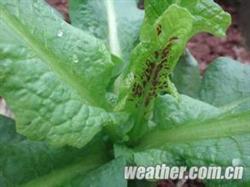
Virus disease is a major disease of lettuce and stem lettuce, occurring commonly, and currently there is no ideal chemical control available either domestically or abroad. Prevention should be the main approach, adopting agricultural control measures and timely control of aphids.
Virus disease is caused by virus infection, and in the field it is mainly transmitted by aphids and through sap contact during farming operations. Diseased plants increase as air temperature rises; when the average temperature over a ten-day period reaches above 18°C and there is prolonged water shortage, the virus disease develops rapidly. Under high temperature and drought, insufficient fertilizer, extensive management, weak plant growth, many weeds and many aphids, the disease is severe.
1. Symptom identification. When infected at the seedling stage, light green or yellowish-white irregular mottling appears on the first true leaf, and the leaf margin is irregular or notched. The second and third true leaves show clear veins, followed by yellow-green mottling or mosaic. When infected at the mature plant stage, the symptoms are similar to those at the seedling stage, but some leaves are wrinkled, the fine veins turn brown, and there are brown necrotic spots; some leaf margins curl inward, and there is a stunting phenomenon.
2. Control measures
1. Select disease-tolerant or disease-resistant varieties such as purple-leaf lettuce. Collect seeds from disease-free plants. Eradicate field weeds. Apply sufficient decomposed manure, increase phosphorus and potassium fertilizer, water timely, and increase watering frequency during dry weather.
2. For lettuce and stem lettuce in protected cultivation, aluminized polyester reflective film can be hung at sowing and transplanting. For open-field transplanting, silver-gray reflective film can be laid as mulch, or silver-gray reflective film strips can be hung in the field to repel aphids. Use shade nets in the field to lower the temperature. The seedbed can be disinfected with 50% thiophanate-methyl at 8-9 grams per mu.
3. When aphids are found, spray 200-fold Shaoguanmycin solution plus 0.01% neutral laundry powder; or 200 ml of 0.65% santonin, add 60-80 kg of water and spray. You can also use 10% aphid-killing smoke agent at 350 grams per mu each time, or 22% dichlorvos smoke agent, or 20% aphid-killing smoke agent at 250 grams per mu each time, fumigating in a closed greenhouse in the evening.
For chemical control of aphids, spray 20% cypermethrin-malathion emulsifiable concentrate 1000-fold solution, or 21% miehsaibi emulsifiable concentrate 4000-fold solution, or 2.5% tianwangxing emulsifiable concentrate 3000-fold solution, or 10% imidacloprid wettable powder 3000-fold solution, or 25% zuiyauwei wettable powder 2000-fold solution, once every 7-10 days, spraying 2-4 times in succession.
4. For seedling-stage prevention, spray 5% junduqing aqueous solution 300-fold, or antiviral agent No. 1 aqueous solution 300-fold, or potassium permanganate 1000-fold solution, or 20% virus A wettable powder 500-fold solution, or 1.5% zhibingling emulsifiable concentrate 800-1000-fold solution, once every 7-10 days, spraying 3-4 times in succession.