Lettuce needs sufficient nutrients during the stem swelling stage
Lettuce belongs to the Asteraceae family, the genus Lactuca, and is an annual or biennial herbaceous plant. Lettuce can be divided into two types: leaf lettuce and stem lettuce. Leaf lettuce is also called shengcai (lettuce), and stem lettuce is also called wosun (celtuce) or xiangsun. The flesh of celtuce is tender, and the stem can be eaten raw, served cold, stir-fried, dried, or pickled. Leaf lettuce is mainly grown for its leaves or leaf heads. The stems and leaves of lettuce contain lactucin...
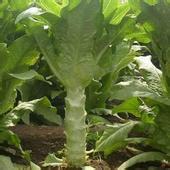
Lettuce belongs to the Asteraceae family, the genus Lactuca, and is an annual or biennial herbaceous plant. Lettuce can be divided into two types: leaf lettuce and stem lettuce. Leaf lettuce is also called shengcai (lettuce), and stem lettuce is also called wosun (celtuce) or xiangsun. The flesh of celtuce is tender, and the stem can be eaten raw, served cold, stir-fried, dried, or pickled. Leaf lettuce is mainly grown for its leaves or leaf heads. The stems and leaves of lettuce contain lactucin, which tastes bitter; the bitterness is strong under high temperature and drought. It can enhance gastric juice, stimulate digestion, and increase appetite, and also has analgesic and hypnotic effects.
Cultivation techniques. 1. Sowing: Sow evenly, press lightly once after sowing, firm with a treadle, water with cap manure, and keep the seedbed soil moist before emergence. Seedlings emerge 7-10 days after sowing; after a week of fertilizer and water management, thin the seedlings to a plant spacing of 2-3 cm. Stem lettuce for autumn sowing is sown in early autumn, when the temperature is high and cultivation is difficult, so low-temperature treatment should be used. Soak the seeds in cold water for 6-7 hours, then place them in the lower layer of a household refrigerator, keeping them at 5-8 degrees; after 2-3 days, when 60% of the seeds have sprouted, they can be sown. The growing period of leaf lettuce is shorter than that of stem lettuce; apart from being difficult to cultivate in severe heat and cold, it can be grown at other times. 2. Transplanting: The seedling age of lettuce is 30-50 days, and it is transplanted when it has 4-5 true leaves. Spring stem lettuce is generally transplanted in November; from December to January of the following year, transplanting is not suitable because the soil and air temperatures are too low and germination is difficult. Late-sown seedlings can be transplanted in early February of the next year. The row and plant spacing is generally 16-20 cm square for early-maturing varieties and 26-33 cm square for late-maturing varieties. 3. Field management: Spring lettuce has a long growing period; after transplanting, the temperature is low, the seedlings grow slowly, and the absorption and use of water and nutrients before the new year is also low. Generally, water once after transplanting, apply fertilizer once after the plants survive, and apply a heavy fertilizer again before freezing to prevent frost damage. After the new year, topdressing should be applied to promote leaf cluster growth. When the flower stem begins to swell, supply sufficient nutrients and water to help form a thick, tender stem.
Autumn lettuce is very prone to bolting under conditions of high temperature, dryness, and fertilizer deficiency. Therefore, in management, water and fertilizer should be applied frequently and evenly to promote rapid, thick, and plump tender stems.