How to Apply Topdressing to Lettuce: Detailed Explanation of Application Techniques
Lettuce is topdressed a total of 3 times throughout its whole growth period. The first topdressing is carried out 15 days after seedling establishment, applying 12 kg of urea per 667 sq m (1 mu) to promote seedling tillering and sturdy growth; the second topdressing is carried out at the early head-forming stage. The third topdressing is carried out at the mid head-forming stage to promote full and swollen heads. Each time per 667 sq m (...
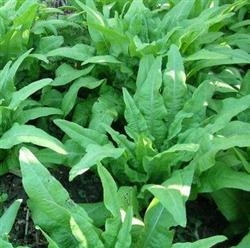
Lettuce is topdressed a total of 3 times throughout its whole growth period. The first topdressing is carried out 15 days after seedling establishment, applying 12 kg of urea per 667 sq m (1 mu) to promote seedling tillering and sturdy growth; the second topdressing is carried out at the early head-forming stage. The third topdressing is carried out at the mid head-forming stage to promote full and swollen heads. Each time, apply 12 kg of urea per 667 sq m (1 mu), and use 0.3% potassium dihydrogen phosphate as a foliar spray fertilizer, which helps increase yield. The foliar spraying should be done after 3 p.m.
Stem lettuce has strict requirements for fertilizer and water. Spring lettuce is sown after September of the previous year, and growth stops for a period before winter. After transplanting and seedling establishment, apply a quick-acting nitrogen fertilizer, using 7.5 kg of urea per 667 sq m (1 mu), to promote an increase in leaf number and expansion of leaf area. After turning green the following year, the leaf area rapidly increases and forms a rosette shape, so a quick-acting nitrogen fertilizer should be topdressed once, applying 10 kg of urea per 667 sq m (1 mu), with topdressing combined with watering. After watering, stem thickening accelerates and the demand for fertilizer and water increases; generally, 10 kg of urea per 667 sq m (1 mu) can be applied, along with 10 kg of potassium dihydrogen phosphate. Fertilization can also be done in small amounts multiple times, because during the stem thickening period the soil should be watered as soon as it becomes slightly dry; spraying 1000 mg/L of maleic hydrazide on the leaves can inhibit bolting.
For autumn lettuce, in addition to applying sufficient basal fertilizer, water lightly and frequently after transplanting until seedling establishment; after seedling establishment, apply a quick-acting nitrogen fertilizer, with 7.5 kg of urea per 667 sq m; at the "rosette" stage, apply the second fertilizer, combining it with watering and applying 10 kg of urea or 15 kg of diammonium phosphate per 667 sq m (1 mu) to accelerate leaf differentiation and leaf area expansion. When the stem begins to thicken, apply the third fertilizer, combining it with watering and applying 10 kg of urea per 667 sq m (1 mu) plus a 0.3% potassium dihydrogen phosphate foliar spray. As in spring, to prevent bolting and increase stem weight, spray 500-1000 mg/L of maleic hydrazide or 6000-10000 mg/L of chlormequat.