Small whole seed potatoes work well for planting
Planting autumn potatoes is currently an effective measure for drought resistance and loss compensation. Autumn potatoes are generally sown from mid-August to early September. Because seed potatoes produced in most of China's seed potato production areas are on the large side, cutting into pieces is commonly used for potato planting in order to reduce costs and save on seed quantity. But in recent years, using small...
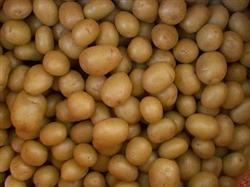
Planting autumn potatoes is currently an effective measure for drought resistance and loss compensation. Autumn potatoes are generally sown from mid-August to early September. Because seed potatoes produced in most of China's seed potato production areas are on the large side, cutting into pieces is commonly used for potato planting in order to reduce costs and save on seed quantity. But in recent years, planting small whole potatoes of 20-50 grams has become increasingly worth advocating, and compared with traditional cutting into pieces, whole-potato planting has many advantages.
First, it produces uniform emergence and full, strong seedlings. With cut-piece planting, if the soil has little water or is very damp, if the soil temperature is too low or too high, or if the seed potatoes have been stored too long and their physiological age has entered the decline phase, they are prone to drying out or rotting, and under poor production conditions it is hard to keep a full stand. With small whole potatoes, however, because the whole potato has a thick suberized skin on the outside, at planting time this helps preserve the water and nutrients inside the tuber, and under adverse conditions such as overly dry or overly wet soil it can ensure emergence to the greatest extent. Emergence is generally 92%-98%, which is 18%-37% higher than the emergence rate when cut pieces are used as seed.
Second, it can give play to apical dominance and achieve high yield. Whole potatoes mostly sprout from the apical buds, and because the apical buds are thick and strong, the apical dominance of the seed potato can be fully exerted. With whole-potato planting, multiple main stems can emerge from the top, and each main stem can produce 3-5 tubers; the greater number of main stems increases the number of tubers set, achieving high yield. According to reports, potatoes grown from small whole seed potatoes generally yield 15%-50% more than those grown from cut pieces, and the increase can reach double in the highest cases; the tubers are large and uniform, raising economic value, while the starch extraction rate also increases noticeably.
Third, it can reduce the spread of disease. Many viruses, such as potato virus X and spindle tuber viroid, and bacterial diseases, such as ring rot, bacterial wilt, and late blight, can be spread further from diseased seed potatoes by the knife used to cut them. Whole-potato planting can prevent the occurrence of these diseases.
This is especially true for autumn potatoes, since at planting time the temperature is high and the humidity is great. If cut pieces are used for planting, once the seed potatoes are cut, if the wounds cannot heal quickly, the cut surfaces are easily infected by bacteria and rot, very easily causing large-scale seed rotting, which leads to gaps and broken rows in the field, so whole potatoes must be used for planting.
The small seed potatoes used for planting should be specially produced by methods such as close planting, late sowing, and early harvesting, and small whole potatoes should not be selected from ordinary seed potatoes for use. The selection standards for small whole potatoes are: smooth, young and tender skin, bright color, relatively deep buds, and the tuber shape characteristic of the variety. Strictly discard small old potatoes with rough, aged skin, dull gray color, relatively shallow buds, deformed and odd shapes, and cracking. Small whole potatoes with black or brown areas at the navel end must also be discarded.