Potato watering has its own rules
During the growth of potatoes, which stage should be watered less, which stage should be watered more, and which stage should not be watered at all are matters of great particularity. This issue is discussed below. Potatoes are generally not watered from the time the seedlings push through the soil until flowering, and are subjected to moisture stress to promote root development; only in cases of extreme drought should a small amount of water be given. Cultivation experts, in loam soil with good water retention...
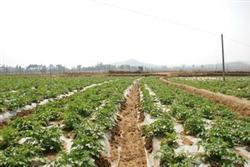
During the growth of potatoes, which stage should be watered less, which stage should be watered more, and which stage should not be watered at all are matters of great particularity. This issue is discussed below. Potatoes are generally not watered from the time the seedlings push through the soil until flowering, and are subjected to moisture stress to promote root development; only in cases of extreme drought should a small amount of water be given. Cultivation experts have conducted many comparative trials in loam soil with good water retention, and potatoes subjected to controlled-water root promotion yielded 20%-25% more than those watered without root promotion. This is because the root mass of controlled-water root-promoted plants is 2.5-3 times that of watered, non-root-promoted plants. Only with a well-developed root system can potatoes absorb more nutrients and water from the soil, and synthesize and accumulate more photosynthetic substances. Root promotion in potatoes can prevent excessive vegetative growth from consuming nutrients, forming short internodes, thick stems, thick leaves, and short plants, developing into strong seedlings and enhancing resistance to wind and rain, lodging, and pests and diseases. Potatoes begin to be watered at the early flowering stage. From early flowering until the stems and leaves stop growing, tuber growth is greatest, and the plants' demand for water is also very high. On the other hand, the inorganic elements needed for potato growth, such as nitrogen, phosphorus, and potassium, must be dissolved in water before they can be absorbed by the roots. If the soil lacks water, no matter how abundant the nutrients are, the plants cannot use them. Usually the soil water-holding capacity should be maintained at 60%-80%. At this time, because water is plentiful, it often also causes excessive growth in the middle and late stages of potatoes, consuming nutrients and causing lodging, leading to reduced yield. For this reason, chemical regulation must be carried out. When potato plant height is 50 cm-55 cm, spray 50 g of 15% wettable paclobutrazol powder per mu, and water 4 days after application, which can achieve an obvious height-control effect. Stop watering about 10 days before potato harvest, which can improve quality and make them more resistant to storage.