What are the reasons for long potato stolons and few tubers per plant
Recently, many potato growers have called in, reporting that this year's potato crop, compared with previous years, shows longer stolons and fewer tubers per plant, and asking what the cause is. This has to be explained starting from the morphological structure and growth characteristics of the potato plant and the weather conditions in our province during this year's potato growing season. Potato...
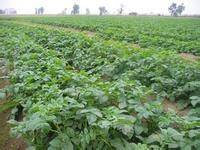
Recently, many potato growers have called in, reporting that this year's potato crop, compared with previous years, shows longer stolons and fewer tubers per plant, and asking what the cause is. This has to be explained starting from the morphological structure and growth characteristics of the potato plant and the weather conditions in our province during this year's potato growing season.
The potato plant is divided into aboveground and underground parts. The aboveground part has aboveground stems, pinnately compound leaves, flower buds and fruits; the underground part has underground stems, roots, stolons and tubers. Whether the aboveground part sets fruit depends on the variety and external environmental conditions; the same variety will differ between years and between planting dates in the same year as to whether it flowers and fruits. The product obtained from cultivated potatoes is the tuber produced underground, and the tuber is formed by the swelling of the tip of the stolon; tubers share many characteristics of aboveground stems. Stolons, tubers and aboveground stems can be said to have no essential difference, and under certain environmental conditions they can transform into one another. For example, lateral branches in the leaf axils aboveground can form aerial tubers, and the apical buds of tubers covered with shallow soil often also grow branches bearing green leaves.
Stolons are borne at the node parts of the underground stem and are lateral branches that grow prostrate from the axillary buds on the stem nodes. The potato prefers cool conditions and is a crop that likes low temperatures. The formation and growth of its underground tubers require a loose, well-aerated, cool and moist soil environment. Temperature requirements: the optimum temperature for tuber growth is 16°C~18°C, and when the air temperature is above 25°C the tubers stop growing; the optimum temperature for stem and leaf growth is 15°C~25°C, and growth stops above 39°C.
In most areas of Henan Province, potatoes are generally sown after sprouting and covering with plastic film from late February to early March, emerge in early April, and form tubers from late April to early May. This year, in most areas of Henan Province, high temperatures above 25°C began to appear in late April, sometimes reaching 30°C, and this period is exactly the tuber formation and swelling stage of potatoes. Under high temperature conditions, stems and leaves grow luxuriantly; after the air temperature rises above 25°C, the tubers at the tips of the stolons stop swelling and growing, while stem and leaf growth can still proceed normally. At this time, all the organic nutrients produced by the leaves are used for the growth of stolons, stems and leaves, thus causing excessive vegetative growth of stems and leaves, long stolons, and some even emerging through the soil surface to become aboveground branches, resulting in few tubers per plant.
To avoid this phenomenon, the following points should be noted in future potato cultivation:
Sow early at the right time. Prepare the land, apply fertilizer and sow early at the right time, so that the entire growth period of the potato falls in a relatively cool season with lower air temperatures, and tuber formation and swelling avoid the high-temperature period.
Pay attention to hilling. The hilling depth is generally not less than 12 cm. If the soil covering at sowing is not thick enough, hill the soil 1~2 times as the seedlings grow after emergence. If the soil covering is too thin, the ground temperature fluctuates sharply and stolons easily emerge through the soil surface.
Topdressing nitrogen fertilizer should not be too late. Nitrogen fertilizer promotes stem elongation; topdressing too late or in excess is unfavorable to the swelling of stolons and affects tuber formation.