What pesticide is effective for controlling pumpkin mosaic virus disease?
Symptoms: Mainly manifested as uneven chlorophyll distribution, with yellow patches or mottled mosaic of alternating light and dark areas on the leaf surface, sometimes with increased chlorophyll concentration along the leaf veins, forming alternating dark green bands; in severe cases, the leaf surface becomes uneven and bumpy, with the veins wrinkled and deformed. Generally, symptoms on new leaves are more obvious than on old leaves. In severe cases, the stems and vines and terminal leaves become twisted and shrunken....
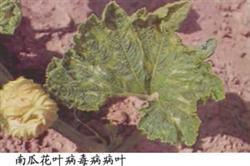
Symptoms: Mainly manifested as uneven chlorophyll distribution, with yellow patches or mottled mosaic of alternating light and dark areas on the leaf surface, sometimes with increased chlorophyll concentration along the leaf veins, forming alternating dark green bands; in severe cases, the leaf surface becomes uneven and bumpy, with the veins wrinkled and deformed. Generally, symptoms on new leaves are more obvious than on old leaves. In severe cases, the stems and vines and terminal leaves become twisted and shrunken. Infected fruit shows chlorotic spots or tumor-like protrusions or deformity on the fruit surface. After flowering and fruiting, the disease tends to worsen.
Pathogen: Melon mosaic virus causes the mosaic symptoms; for its characteristics, see melon virus disease. Pumpkin mosaic virus has a relatively narrow host range, infecting only cucurbits and legumes. The virus particles are spherical, 25-30 nm in diameter; the dilution end point of the virus sap is 10000-1000000 times, the thermal inactivation point is 70-80°C, and the survival period in vitro is more than 28 days. In addition, cucumber mosaic virus can also cause mild mosaic symptoms; see cucumber virus disease.
Transmission routes and disease occurrence conditions: Melon mosaic virus is carried by seeds and transmitted by cotton aphids and green peach aphids. Pumpkin mosaic virus is mainly transmitted through sap rubbing, or by the cucumber leaf beetle, the 11-spotted leaf beetle, and others. In the field, a high rate of seed-borne virus, extensive and careless management, and many insect pests lead to more severe disease occurrence.
Pollution-free control methods:
(1) Select virus-resistant varieties such as Jinli. Select and keep seeds from disease-free plants to prevent seed transmission of the virus.
(2) Strengthen field management and control aphids, leaf beetles, and other pests in a timely manner.
(3) Soak commercial seeds in 10% trisodium phosphate for 20 minutes, then wash with water before sowing.
(4) At the early stage of disease onset, begin spraying 24% mixed fatty acid copper (Duxiao) aqueous solution at 800 times dilution, or 20% moroxydine hydrochloride and copper acetate (Dukexing) wettable powder at 500 times dilution, 7.5% Keduling aqueous solution at 700 times dilution, 10% mixed fatty acid copper aqueous solution at 100 times dilution, 5% Junduqing (bacteriostatic film) aqueous solution at 400 times dilution, once every about 10 days, for 2-3 consecutive applications.