Reasons and Solutions for Large-Scale Yellowing of Pumpkin Leaves
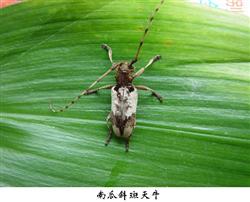
Scientific name Apomecyna histrio (Fabricius), belonging to the order Coleoptera, family Cerambycidae. Synonym Apomecyna alboguttata Megerle. Also known as the four-spotted pumpkin longhorn beetle, squash vine longhorn beetle, stem borer. It is a major pest of cucurbit vines. Distributed in Guizhou, Yunnan, Sichuan, Guangxi, Guangdong, Hunan, Zhejiang, Fu...
 Large-scale yellowing of pumpkin leaves generally has physiological causes and infectious causes. If the yellowed leaves do not show disease spots, it is mostly due to excessive water content in the soil, insufficient light, and too little oxygen in the soil, causing asphyxiation and death of the cucumber root system, a sharp drop in the root system's ability to absorb nutrients, which leads to increased ethylene content in the plant, and the chlorophyll in the leaves rapidly decomposes, manifesting as leaf yellowing. However, the yellowing of the above-mentioned leaves is generally relatively uniform (apart from pre-existing disease spots). The solution is to spray the leaves with 0.02 PPM brassinolide and foliar fertilizer, using brassinolide to improve the plant's stress resistance and foliar fertilizer to rapidly replenish the nutrients the plant urgently needs. Foliar fertilizers can include options such as humic acid Kangbao, seaweed extract Wodebao, Lujin, Nongfukang, etc. In addition, if the leaves wilt from bottom to top, and the mesophyll tissue between the leaf margins and veins turns yellow, then gradually spreads to the entire leaf. You can select a plant and cut open the stem; if the vessels turn brown, the plant is infected with Verticillium wilt. In the early stage of the disease, you can use 70% thiophanate-methyl·thiram wettable powder at 600 times dilution or 50% carbendazim wettable powder at 500 times dilution to spray the stems and leaves and drench the roots, applying 250 milliliters of solution per plant, once every 5 days, for 2 to 3 consecutive applications.