6 Key Points of Small Arch Shed Cultivation Technology for Pumpkin in Early Spring
Main causes of pumpkin fruit abortion: excessively high temperatures are unfavorable for pumpkin fruit setting and fruit enlargement, causing fruit abortion; excessive fertilizer and water, especially after pumpkin harvest, when pruning cannot keep up, causing excessive vegetative growth of pumpkin plants and fruit abortion; pest and disease damage causing fruit abortion. To prevent pumpkin fruit abortion, the following measures can be taken: First, ...
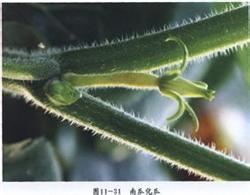 Western pumpkin, commonly known as small red pumpkin or small golden gourd, belongs to the Cucurbitaceae family. Because of its high starch content, it is both mealy and sweet, with powdery flesh and excellent flavor, making it a premium product among pumpkins. Western pumpkin is especially rich in vitamins A, C and E, and therefore has excellent medicinal and health-care benefits. In recent years, with the arrival of an aging population in China and the strengthening of people's health awareness, consumer demand for pumpkin has increased year by year. According to surveys, the income per mu from growing pumpkin is about 2000 yuan. Below, the high-yield cultivation technology for early spring small arch shed pumpkin is introduced for growers' reference.
I. Select superior varieties. Varieties should be selected that have excellent quality, attractive appearance, bright skin color, mealy and sweet taste, and uniform fruit shape. Examples include Dong Sheng and Jin Hong Sheng bred by Taiwan Nongyou Company.
II. Land preparation and fertilization. The planting plot should be loam soil with deep and fertile soil layers, loose texture, good aeration and convenient drainage and irrigation. During spring plowing in mid-March, apply 1000 kg of decomposed dry chicken manure and 50 kg of nitrogen, phosphorus and potassium ternary compound fertilizer per mu.
III. Timely planting. Make planting beds from the evenly plowed and finely raked soil. For short-vine types, the bed back width is 0.6 m and the plastic film width is 0.8 m; for long-vine types, the bed back width is 0.8 m and the plastic film width is 1.0 m. For long-vine types, the planting density is 750-850 plants, with a row spacing of 1.8 m and a plant spacing of 0.45-0.50 m; for short-vine types, the planting density is kept at 1300-1500 plants, with a row spacing of 1 m and a plant spacing of 0.45-0.50 m. Then use a hole punch to make holes according to the marks, cover with plastic film, and press the two sides of the film firmly with soil. The planting time is selected from late March to early April during several consecutive sunny days, with an average daily temperature above 15°C. Break the film and take out the seedlings for planting, press the soil firmly around the seedling holes, water as you plant, and finally insert bamboo poles for the arch, cover with arch film, stretch it out and press it tight.
IV. Field management. The suitable temperature during the vegetative growth period is 20-25°C, and the suitable temperature during the flowering and fruiting period is 25-27°C. Too high or too low a temperature is unfavorable for growth. When the temperature inside the arch shed is higher than 28°C at noon, ventilation can be carried out. For long-vine varieties, the double-vine pruning method should be used, while short-vine types can be allowed to grow freely. For long-vine varieties, keep 1 fruit per vine, set the fruit at 7-9 leaves, and remove all fruits before the 7th leaf. For short-vine varieties, the first fruit produced must be removed, and thereafter keep 2 fruits per plant. Generally, when there is a bee source and good weather for wind pollination, artificial pollination is not necessary. Otherwise, artificial supplementary pollination should be carried out. On a sunny morning when there is no dew, remove the male flower, take off the petals, and gently smear the anther onto the stigma of the female flower; 1 male flower can pollinate 2 female flowers. After pollination, cover the female flower with the male flower or a leaf to prevent rain. When the fruit is set firmly and has reached the size of a goose egg, apply topdressing, applying about 30 g of compound fertilizer per plant. When the fruit grows to 0.5 kg, a second topdressing can be applied according to soil fertility. In dry weather, water 2 times during the vine elongation stage and the fruit enlargement stage. When the fruit gradually turns from yellow to red, turn the fruit 120 degrees for the first time, and turn it again after 5-7 days. When turning the fruit, combine it with padding the fruit, and try to keep the fruit body in a sunny position.
V. Pest and disease control. Pumpkin grows vigorously, and diseases generally rarely occur throughout the whole growth period. When melon aphids occur, 2.5% Kung Fu emulsifiable concentrate at 2000 times dilution can be used; for mites, abamectin at 2000 times dilution can be sprayed. The main diseases are viral disease and powdery mildew. For powdery mildew, 75% chlorothalonil at 600 times dilution can be used; for viral disease, Shen Sha at 500 times dilution can be used; for bacterial leaf spot, 72% agricultural streptomycin at 3000 times dilution can be used for control.
VI. Timely harvest. After pumpkin matures, it should be harvested in time to prevent subsequent fruit setting from being affected. Generally, the first batch of products can be harvested 60 days after planting the seedlings. The mature commercial fruit is thick and oblate, orange-red, with a waxy powder luster. When picking the fruit, scissors can be used, leaving 2-3 cm of the fruit stalk.