How to prevent fruit abortion in greenhouse zucchini
Water-soluble fertilizer is a type of fertilizer suitable for application with irrigation water, and its nutrient components have good water solubility. Some of these products are formulated according to the nutrient requirements of zucchini, making them dedicated fertilizers for zucchini. These fertilizers generally contain not only nitrogen, phosphorus and potassium nutrients, but also boron, zinc, iron, calcium, magnesium and other medium and trace elements needed by crops...
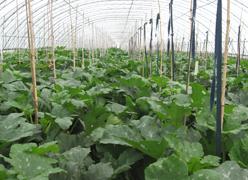 If greenhouse zucchini is improperly managed, fruit abortion often occurs. In the early stage of zucchini fruit abortion, there are no obvious symptoms, and once discovered in the later stage, the affected fruit is beyond saving. Therefore, prevention should be strengthened in production.
Zucchini fruit abortion is a physiological disorder, and its causes are relatively complex: high temperature and drought or low temperature and high humidity in the greenhouse weaken the absorption capacity of the root system, especially hindering the root system's absorption of certain trace elements such as boron, magnesium and molybdenum, which reduces plant photosynthesis and causes disordered and imbalanced nutrient distribution within the plant; insufficient base fertilizer causes nutrient deficiency. Taking the following measures in production can effectively control the occurrence of fruit abortion.
1. Strictly control temperature and humidity. Watering greenhouse zucchini should generally be done in the morning on sunny days, with small amounts of water applied frequently, avoiding flood irrigation. 3 days before each fruit harvest, a small amount of water should be applied once. After watering, on the premise of controlling the greenhouse temperature at 25°C-28°C during the day, increase ventilation to remove moisture, keeping the relative humidity inside the greenhouse at 70%-80%.
2. Strengthen light transmission measures. During the peak fruiting period, grass mats should be uncovered early and covered late every day to maintain sufficient light duration. During continuous rainy and snowy weather, in addition to taking corresponding warming measures, grass mats should still be uncovered and covered as usual to make full use of scattered light and maintain a certain level of photosynthesis in the plants.
3. Apply quick-acting fertilizers as topdressing. During the peak and late fruiting periods, combined with watering, apply 200 kg of decomposed organic fertilizer or 15 kg of quick-acting potassium dihydrogen phosphate per mu each time, and spray a highly efficient concentrated foliar fertilizer containing multiple elements, Penshibao, once every 7-10 days. This can effectively prevent fruit abortion and significantly increase yield.
4. Apply hormone stimulation. From 7-9 am every day, apply gibberellin to the stigma and fruit stalk of female flowers opening that day, which can effectively stimulate rapid expansion of zucchini, induce nutrients to be supplied in a concentrated manner, prevent fruit abortion, and also ensure large and uniform fruit.
5. Spray rare earth compound fertilizer. After each fruit harvest, spray 1500-fold amino acid rare earth compound fertilizer once to regulate nutrient distribution in zucchini plants, having the dual effect of increasing yield and preventing fruit abortion.