Detailed Explanation of Onion Transplanting Techniques and Precautions
I. Scientific Fertilization After the spring regrowth, the first fertilization should be carried out to supplement nutrients for the growth of the onion root system, and at the same time lay the foundation for the vigorous growth of the aboveground part later. Fertilization should be based mainly on fully decomposed organic fertilizer, applying 1000 kg per mu, plus 20 kg of superphosphate and 10 kg of potassium sulfate. ...
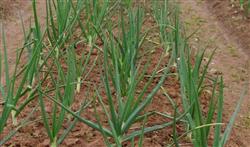 Onions should not be continuously cropped with other onion and garlic vegetables, and continuous cropping is taboo. For autumn planting, the previous crop is solanaceous fruits, melons, beans, and early autumn vegetables; for spring planting, idle winter land is mostly used. The onion root system is shallow and small, with a relatively weak absorption capacity, and it requires fine and meticulous soil preparation.
I. Seedling selection and grading. Before transplanting, the work of seedling selection and grading should be done well, eliminating diseased seedlings, dwarfed seedlings, leggy seedlings, branched seedlings, and seedlings with soft leaf sheath bases and yellowing leaves that have grown too large; select seedlings with well-developed root systems and robust growth. And plant them separately according to seedling height and the thickness of the stem base.
II. Timely transplanting. The transplanting time for onions is divided into autumn planting and spring planting. For autumn planting, transplant about 40 days before the arrival of severe cold, so that the root system has already resumed growth before overwintering. For spring planting, it should be as early as possible, and transplanting can be done once the soil thaws, in order to strive for a longer growth period.
III. Appropriate planting depth. Onions are suitable for shallow planting. If planted too deep, the leaves will grow too vigorously, causing the false stem part to thicken and affecting bulb expansion. However, if planted too shallow, they are prone to lodging after watering, which affects seedling recovery, and the plants are short, the bulbs form early, and some bulbs are exposed, discoloring or cracking after sun exposure, reducing quality. Generally, the planting depth is based on covering the small bulb, about 2 cm or so. The planting depth is related to the planting period and soil texture. Spring planting should be shallow, and autumn planting can be slightly deeper. In the case of heavy clay soil, if planted too deep, the expansion of the bulb will be affected by the resistance of the soil, reducing yield, so shallow planting is suitable; sandy soil can be slightly deeper.
IV. Proper close planting. Onion plants are upright, and proper close planting has a significant yield-increasing effect. Generally, the planting row spacing is 15~18 cm, and the plant spacing is 10~13 cm, and 30,000~40,000 plants can be planted per mu (667 sq m). The planting density of red-skinned varieties should be smaller than that of yellow-skinned varieties.