Why onions are suited to cultivation in sandy loam soil
Onion is a commonly used vegetable that tolerates transport and stores well. Onions are easy to grow and manage, and the economic return is between 1000 and 2000 yuan per mu. Trials have shown that raising strong seedlings is the key measure for increasing yield. 1. Rational fertilization In terms of fertilization, apply sufficient base fertilizer to ensure that the seedlings do not need topdressing in the early stage,...
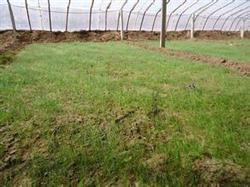 Choose a plot with flat terrain, good irrigation conditions, groundwater salinity below 0.2%, neutral soil with high fertility, sandy loam texture, and no continuous cropping. For the variety, choose the American Improved 502 round onion variety. Seedling raising: generally, raising seedlings 1-2 days around "White Dew" is most suitable. Too early makes premature bolting likely, while too late reduces yield. After preparing the bed, irrigate thoroughly; after the water infiltrates, mix the seeds with fine sandy soil at a ratio of 1:10 and broadcast sow, then cover with fine soil about 1 cm thick; after covering with soil, broadcast phoxim granules to prevent underground pests. The seed rate for the seedbed is 2 kg/mu, producing about 25000 seedlings. Transplanting: generally, transplanting around late October (Frost's Descent) is suitable. Apply 5000 kg of decomposed organic fertilizer per mu, 50 kg of diammonium phosphate, and 50 kg of superphosphate; after fertilizing, plow deep 30 cm, and while preparing the land, spray trifluralin emulsifiable concentrate to control weeds and broadcast phoxim granules to control underground pests. When selecting seedlings, choose seedlings about 20-25 cm tall, with a stem diameter of 0.6-0.9 cm (not exceeding 1 cm), and with 4-5 leaves. Seedlings that are too large easily cause bolting and flowering; seedlings that are too small are easily killed by freezing during overwintering. Row spacing 20 cm, plant spacing 15 cm, planting 22000 seedlings per mu. It is best to bury the small bulb by 1 cm and ensure the seedlings do not float after watering. Management from transplanting to before green-up: water immediately after transplanting, and after the water infiltrates, cultivate in time. Before the soil freezes, water thoroughly with winter water (mid-November), and cover with plastic film. In winter, do a good job of protecting the film; when holes are found, seal them tightly in time to strictly prevent freezing damage to the seedlings.