What are the key points of radish pest and disease control techniques
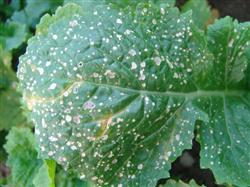
This disease mainly damages cruciferous vegetables such as Chinese cabbage, bok choy, cabbage, and radish. It occurs commonly across the country, and is severe in northern regions. (1) Symptoms: It mainly damages the leaves. At the early stage of the disease, small grayish-brown round spots are scattered on the leaf surface, which then gradually expand into irregular round lesions, with the center turning grayish-white, and 1 to...
 I. Main diseases:
1. Radish black heart disease: Black rot is a disease caused by the black rot fungus, with the main symptoms being blackening of the center of the root and blackening and rotting of the vascular bundles of the fleshy root. Seeds can be soaked in warm water at 50 for 30 minutes, or in a 100-fold thiram solution for 2 hours, and a 800-fold amobam solution can be sprayed. For control, a mixture of 4000-fold new biomycin, or 50% DT 500-fold, or agricultural streptomycin 3000-4000-fold and 50% carbendazim 500-fold can be sprayed, once every 10 days, for 2-3 consecutive sprays.
2. Downy mildew: After rain or in the early stage of the disease, a 600-fold 53% Gold Ridomil, 500-600-fold 72% metalaxyl mancozeb, 600-fold 66.8% Medok, 500-700-fold 70% Antracol (zinc-rich), 600-fold Daconil, and 600-fold Pencco, etc., can be sprayed.
3. Soft rot:
(1) Apply lime to the soil, broadcasting 40 kg of quicklime per mu, pay attention to draining excess water, do not apply excessive nitrogen, and apply more phosphorus, potassium, and organic fertilizer;
(2) Pay attention to pest control to reduce insect wounds, do not damage roots when transplanting seedlings, and harvest in time;
(3) Before the disease occurs or in the early stage of the disease, use 600-800-fold 30% copper oxychloride suspension, or 600-800-fold 77% Kocide wettable powder, or 4000-fold 72% agricultural streptomycin sulfate soluble powder; choose one of the above solutions for root drenching, 0.3-0.5 kg per plant, once every 10 days, for 2-3 consecutive drenchings.
4. Viral disease: In the early stage, 500-fold 1.5% Zhibingling, or 500-fold 20% Virus A wettable powder, or 200-fold 2% ningnanmycin can be sprayed 2-3 consecutive times. If aphids are found, 1000-fold 40% dimethoate emulsifiable concentrate can be sprayed for control. Prevent high temperature and drought.
II. Main pests:
Radish pests include yellow-striped flea beetle, small cutworm, cabbage caterpillar (cabbage white butterfly larva), and heartborer (cabbage webworm larva), etc.
1. Yellow-striped flea beetle: In the larval stage, after irrigation, a 500-fold 90% trichlorfon solution can be used for root drenching, or 800-fold dimehypo can be applied as a drench, or Lorsban granules can be broadcast on the ground; for adults, pesticide control is used, and during the peak occurrence of adults, per mu, choose 1500-2000-fold 2.5% Kung Fu emulsifiable concentrate, or 4000-fold 2.5% Decis emulsifiable concentrate, or 1000-1500-fold 48% Lorsban, etc., for spraying and killing.
2. Small cutworm: At sowing, Lorsban granules, fipronil, etc., can be mixed with fine sand and spread in the sowing furrow. When seedlings emerge, 800-fold 50% phoxim, or 2000-fold 25% Decis, or 8000-fold 20% fenvalerate emulsifiable concentrate, or 800-fold trichlorfon crystals, etc., can be used for root drenching or soil treatment. Grass piles can also be used for trapping and killing: crush vegetable leaves, spray with 400-500-fold 90% trichlorfon crystals, and scatter beside the roots in the evening; the insecticidal effect is very good.
3. Aphids: When the aphid-bearing rate reaches 10% or there are an average of 3-5 aphids per plant, pesticide control should be sprayed: 800-1000-fold 40% dimethoate solution, or imidacloprid-type products (Pushi Ya, Yashijing, Dagongchen, Yibianjing) can be sprayed alternately according to the per-mu dosage.