Key Techniques for Spring Cultivation of Cherry Tomatoes
Cherry tomatoes have high economic value and can be cultivated in spring using plastic greenhouses. 1. Variety selection. Choose early-maturing varieties such as Jinzhu and Shengnv. 2. Raising strong seedlings. Prepare nutrient soil with a ratio of 70% garden soil and 30% decomposed organic fertilizer, then add 5-10% human urine and feces, 0.1% compound fertilizer, and 0.2% superphosphate and mix well...
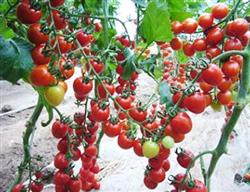
Cherry tomatoes have high economic value and can be cultivated in spring using plastic greenhouses.
1. Variety selection. Choose early-maturing varieties such as Jinzhu and Shengnv.
2. Raising strong seedlings. Prepare nutrient soil with a ratio of 70% garden soil and 30% decomposed organic fertilizer, then add 5-10% human urine and feces, 0.1% compound fertilizer, and 0.2% superphosphate and mix well, and spray with carbendazim solution for disinfection. Each mu of field requires 3-4 sq m of seedbed and 5-10 grams of seeds. Before sowing, soak the seeds in 1% potassium permanganate solution for 10 minutes, rinse with clean water, then soak in warm water for 6 hours, remove and drain the water, wrap in wet gauze, and place at around 25°C to promote germination; sow after the seeds show white sprouts. In November-December, raise seedlings in nutrient pots inside the greenhouse, covering with 0.5 cm of nutrient soil after sowing. Maintain a relatively high temperature before emergence, and pay attention to ventilation after emergence. At the 2-leaf-1-heart stage, select a sunny evening for transplanting, and water after transplanting to settle the roots. After the transplanted seedlings survive, control moisture and appropriately increase ventilation to control excessive vegetative growth. Harden the seedlings 1-2 weeks before field planting.
3. Land preparation and field planting. From late February to early March of the following year, choose land where solanaceous vegetables have not been grown for 3 years, with convenient irrigation and drainage, good ventilation, and strong water and fertilizer retention capacity for field planting. Cultivate with deep furrows and high beds; the bed width (including furrow) is 1.3-1.4 m, and a 6 m wide greenhouse can accommodate 4 beds. Apply sufficient base fertilizer during land preparation: 4000-5000 kg of decomposed farmyard manure, 1000-1500 kg of human urine and feces, and 25 kg of superphosphate or 30 kg of compound fertilizer per mu. Cover the greenhouse early before field planting, spread plastic film after fertilizing and preparing the land, and close it to raise the temperature. Plant 2 rows per bed with a plant spacing of 40 cm, about 2500 plants per mu. After field planting, seal the film holes tightly with wet soil, water with diluted manure water, and set up small arch sheds.
4. Fertilization and watering. Keep the greenhouse closed for insulation in the early stage after field planting. After transplant recovery, maintain the daytime greenhouse temperature at around 25°C and the nighttime temperature above 10°C. After survival, timely cultivate and loosen the soil to promote transplant recovery. After transplant recovery, do not water and practice seedling hardening to promote deep root growth. During the vigorous growth period, irrigate timely according to soil moisture to keep the soil moist. Pay attention to drainage on rainy days. Appropriately earth up in the late growth stage. After the first cluster of fruits sets, apply fertilizer once every 10 days, applying thin fertilizer frequently, with 20 kg of decomposed cake fertilizer or 10 kg of compound fertilizer per mu each time.
5. Trellising and pruning. When the seedlings are 30-40 cm tall, tie the vines; the trellis height is 2 m. Use single-stem pruning, keeping only the main stem, and pinch side branches after leaving 1-2 leaves. In the middle and late growth stages, release the branches so that the middle and upper parts of the plant can grow and set fruit normally.
6. Flower and fruit management. Keep 40-50 flowers per cluster, and after fruit set keep 30 fruits per cluster. When flower drop occurs due to too low or too high temperature, spray flowers with a 25-50 mg/kg solution of 4-CPA.
7. Pest and disease control. Pay attention to controlling gray mold, leaf mold, early blight, leafminers, aphids, and other pests and diseases.
8. Harvesting. Generally harvested from late April to early August. Varieties prone to fruit cracking should be harvested appropriately earlier; varieties not prone to cracking can be harvested after color change and ripening if not for long-distance transport. Do not leave the fruit stalk when harvesting to avoid fruit collision and compression.