Six Common Lotus Root Diseases and Their Control Methods
I. Main Disease Types June and July are the peak growing period for lotus roots and also the peak period for various diseases, so doing a good job of disease control is key. As an instructor in the agricultural science and technology system, I propose lotus root disease control techniques to guide demonstrators and lotus root farmers in production. 1. Lotus root rot, also known as black root disease, lotus root...
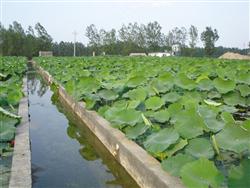 I. Lotus root brown spot disease. A common disease of the lotus leaf, producing light brown spots on the leaves and causing localized drying of diseased leaves. Control: rational close planting to ensure ventilation and light penetration in the lotus field; appropriately increase phosphorus and potassium fertilizer to improve plant resistance, and promptly remove diseased plant residues. In the early stage of the disease, spray with 25% carbendazim 600-fold solution, or 75% chlorothalonil 1000-fold solution.
II. Lotus root black spot disease. Also known as brown streak disease, it occurs only on the leaves, and in severe cases the spots merge and the leaves turn yellow and withered. Control: thoroughly remove diseased and residual leaves from the field in winter and burn them in a centralized manner. In the early stage of the disease, remove diseased leaves and spray for control. Commonly used are 70% thiophanate-methyl 1000-fold solution, or 65% zineb 600-fold solution, or 1:1:160-200 Bordeaux mixture, sprayed once every 10-15 days, for a total of 2-3 sprays.
III. Lotus root rot. Also known as wilt disease, it infects the underground stem and causes rot, and in severe cases the whole field turns yellow and withered, as if burned by fire. Control: implement a 2-3 year crop rotation in severely diseased fields. Commonly used are 70% thiophanate-methyl 1000-fold solution or 75% chlorothalonil 800-fold solution for seed soaking by spraying, covering with agricultural film and sealing for 24 hours, then drying before planting. Deep plow the lotus field and apply 150 kg of lime per mu. When the disease occurs, 0.5 kg of 75% chlorothalonil mixed with 30 kg of dry soil can be evenly spread into the shallow-water field.
IV. Lotus root streak virus disease. After infection, symptoms can appear on both the lotus leaves and underground rhizomes. Large polygonal to irregular light brown necrotic spots appear on the leaves, and dark brown anthracnose streaks appear on the epidermis of the rhizomes. Control: select disease-resistant varieties, promptly control aphids (the virus transmission vector), and in the early stage of the disease spray 1.5% plant virus inhibitor emulsion 1000-fold solution.
V. Lotus leaf wilt disease. Affected lotus leaves turn scorched yellow and wilt, affecting lotus root growth and causing yield reduction. Control: keep the lotus field clean and prevent oil pollution from contaminating the lotus field. Sewage and soapy water can also cause lotus leaves to wilt and die. Lotus roots are very sensitive to herbicides, and herbicides must never be applied in lotus fields.
VI. Common pests and diseases. These include aphids, bagworms, pear green stinging caterpillars, and brown stinging caterpillars, which damage the standing leaves and flower buds. They can be sprayed with 90% trichlorfon 800-1000-fold solution, or 40% dimethoate 2000-fold solution. Water maggots suck the sap of lotus root roots, stems, and leaves, causing lotus leaves to turn yellow. Once found, lime can be applied to drive them away and kill them, at 10-15 kg per mu.