Timely prevention and control of lotus root rot: detect early, prevent and control early
Q: The lotus roots I grow at home were growing very well at first, but now the leaves have begun to dry up. I have used several kinds of pesticides but none of them worked. What exactly is going on? What pesticide can cure it? At present, the main leaf disease of lotus root is lotus root rot, the number one disease in lotus root production, mainly damaging the underground stems and...
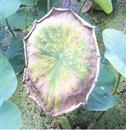
Q: The lotus roots I grow at home were growing very well at first, but now the leaves have begun to dry up. I have used several kinds of pesticides but none of them worked. What exactly is going on? What pesticide can cure it?
At present, the main leaf disease of lotus root is lotus root rot, the number one disease in lotus root production, mainly damaging the underground stems and the upper leaves. The pathogen mostly invades through wounds, absorbing roots or growing points. The leaves sprouting from diseased stems are pale green in color, with brown drying starting from the leaf margins, until the petiole finally dies and the underground stem rots. It generally occurs easily in old lotus root fields with a shallow plough layer and shallow water and in continuously cropped fields. The pathogen spreads with flowing irrigation water, and the disease mostly occurs from July to September.
Comprehensive control methods: crop rotation. Plant in the same field for at most two years, and adopt paddy-upland rotation to reduce the amount of soil-borne inoculum.
Select disease-free seed lotus roots and disinfect the seed lotus roots. Bacteria carried by seed lotus roots are the main source of inoculum for rot. Before planting the lotus roots, soak the seed lotus roots in 60% carbendazim or wettable thiophanate-methyl 800-fold solution, or 75% chlorothalonil 800-fold solution, for 30 minutes, remove and air-dry, then plant.
Remove diseased plants and treat the lotus root field soil. Thoroughly remove diseased plants and diseased residues from affected lotus root fields, and bury them deep or burn them in a centralized manner. More than one week before planting, apply 50-100 kg of lime nitrogen per mu or 1 kg of 55% dexon to disinfect the lotus root field soil, which both sterilizes and cleans the field and accelerates the decomposition of organic fertilizer.
Rational fertilization. Base fertilizer should be mainly organic fertilizer, and the fertilizer must be fully decomposed. For soil with strong acidity and strong reducibility. During the growth period, pay attention to the combined application of nitrogen, phosphorus and potassium fertilizers. Where conditions permit, additional silicon fertilizer should be applied, and supplementary application of trace fertilizers such as boron, zinc and molybdenum is encouraged. Never apply chemical nitrogen fertilizer alone, so as to improve the disease resistance of the plants.
Apply pesticides in a timely manner for control. In the early stage of the disease, spray with 70% thiophanate-methyl wettable powder 800-1000-fold solution, or with 60% carbendazim wettable powder plus 75% chlorothalonil 600-800-fold solution. Spray on the leaf surface or petioles, spraying 2-3 times in succession, which can effectively reduce or control the spread of this disease.