Detailed Explanation of Yam Planting Methods and Technical Key Points
Yam, also known as shanyao or Chinese yam, is a perennial twining herb. Traditional Chinese medicine holds that yam has multiple effects such as strengthening the spleen, tonifying the lungs, consolidating the kidneys, and boosting essence. As a highly nutritious food, yam contains large amounts of starch and protein, various vitamins, glucose, crude protein amino acids, choline, allantoin, and more. Among these, an important...
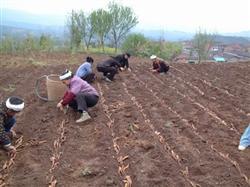
Yam, also known as shanyao or Chinese yam, is a perennial twining herb. Traditional Chinese medicine holds that yam has multiple effects such as strengthening the spleen, tonifying the lungs, consolidating the kidneys, and boosting essence. As a highly nutritious food, yam contains large amounts of starch and protein, various vitamins, glucose, crude protein amino acids, choline, allantoin, and more. Among these, the important nutritional component diosgenin is a precursor substance for synthesizing female hormones, with effects of nourishing yin and tonifying yang and enhancing metabolism; the mucilage and digestive enzymes contained in the fresh tubers, composed of polysaccharide-protein components, can prevent cardiovascular fat deposition and aid gastrointestinal digestion and absorption. Because yam has relatively high economic value and good market prospects, it has attracted the attention of many farmer friends in vegetable cultivation in recent years. China Agriculture Network now summarizes the main cultivation technical key points of yam as follows.
I. Biological Characteristics
Yam prefers warmth and moisture, dislikes waterlogging, and fears drought. It is suitable for planting in fertile, loose, deep, well-drained sandy loam. The stems and leaves prefer high temperatures and dryness and fear frost, with an optimum growth temperature of 25-28°C. The tubers are extremely drought-tolerant and are best suited to well-drained, fertile sandy loam. Clay soil easily causes the tubers to have many fibrous roots and large roots, irregular shapes, and a tendency to develop flat heads and branching. Yam prefers organic fertilizer, but manure must be fully decomposed and thoroughly mixed with the soil; otherwise, once the tender tissue at the tuber tip touches raw manure or manure clumps, it will cause branching and even necrosis due to dehydration. In the early growth stage, nitrogen fertilizer should be supplied to favor stem and leaf growth; in the middle and late growth stages, in addition to appropriately supplying nitrogen fertilizer to keep the stems and leaves from declining, phosphate and potassium fertilizers should also be increased to favor tuber enlargement. After emergence, the tuber needs little water in the early growth stage, which favors the tuber growing deep into the soil and tuber formation; during the vigorous tuber growth stage, water must not be lacking.
II. Growth Process
From bud germination to tuber harvest, yam can be divided into the following four stages:
1 Germination stage. From the sprouting of yam planting sets to emergence takes about 35 days, while yam segments take about 50 days. The bud tip extends upward to produce sprouts, and the bud base produces tubers. When the tuber reaches 1 to 3 cm in length, the sprouts break through the soil.
2 Vine-throwing and plant-establishing stage. This stage lasts 60 days, with growth mainly in stems and leaves and very little tuber growth.
3 Vigorous tuber growth stage. From budding to basically stable stem and leaf growth takes about 60 days. In this stage, both stem and leaf growth and tuber growth are extremely vigorous, but the growth center is the tuber.
4 Dormant stage. The stems and leaves decline due to frost, and the tubers enter the dormant stage.
III. Cultivation Techniques
1 Cultivation season of yam
It begins with planting before the last frost in early spring and ends at the first frost in late autumn and early winter.
2 Propagation materials
The main propagation materials for yam are: yam planting sets, segments, and bulbils. The original propagation source of yam comes from bulbils. In the first autumn, select large bulbils and store them over winter; in the second spring, sow them in rows in the open field half a month before frost, or first force sprouts in a seedbed and then plant. Yam tubers easily produce adventitious buds and can be propagated by cutting into pieces. Flat-tuber types mostly have only the stem end of the tuber able to sprout, so when cutting, the vertical cutting method is used, with each piece weighing about 100 grams. Any part of a long-column type tuber can sprout, and it can be propagated by cutting into segments 10-15 cm long, called yam segments. The long-column type tuber has a latent bud at its top, so this section is often cut for propagation and is commonly called a yam planting set.
3 Land preparation, bed making, and sowing
Yam tubers grow deep into the soil, so local deep plowing or trenching should be carried out. For rotation, open trenches at 1 m spacing, with a trench width of 25 cm and a depth of 0.5-1 m, depending on the variety; for intercropping, open trenches at 2-3 m spacing. The trench soil is best plowed before winter, and in early spring, as the soil thaws, turn the soil into the trenches. Finally, make beds 1 m wide for planting. The sowing method is generally single-row drilling: first open a 10 cm deep trench in the center of the bed, then place yam planting sets or segments flat in the trench at 15-20 cm spacing, and cover with 8-10 cm.
4 Field management
Pest and disease control ① Anthracnose. In the early stage of yam anthracnose, small yellow spots appear on the leaves, later expanding into irregular lesions with brown edges and small black dots scattered in the center; in the later stage, some lesions perforate. The pathogen's acervuli and conidia overwinter on diseased leaves. The disease is severe from June to August, and plants often turn yellow and drop leaves. Control methods: when harvesting in winter, remove diseased plant residues and fallen leaves; usually open drainage ditches well to reduce field humidity; before onset, spray 1:1:100 Bordeaux mixture for protection; in the early stage of onset, spray with 50% thiophanate-methyl 1000-fold solution. ② Brown spot disease. Yam brown spot disease, also called "leaf blight," is an important disease of yam. In the early stage of onset, yellow or yellowish-white lesions with inconspicuous edges appear on lower leaves; in the later stage, the lesion margins turn brown and slightly raised, the central part is light brown, with scattered small black granules, sometimes cracking and perforating. When there are many lesions, the entire leaf can turn brown and die. The fungus overwinters as mycelium or acervuli attached to damaged parts, and in the following spring forms spores that spread with wind and rain. It generally begins to occur in mid-to-late July, causes severe damage in August, and is likely to occur under humid and rainy conditions. Control methods: practice crop rotation. Clean the field and eliminate overwintering inoculum sources. After onset, immediately prune diseased leaves, then spray 65% zineb once every 7 days, for 2-3 consecutive sprays, which can achieve a certain control effect. ③ White grubs. During the tuber root growth period of yam, they often bite the tuber roots; after damage, the tuber roots grow poorly, and after processing and scraping the skin they become yellow-brown. They do not cook soft, the taste becomes bitter, and after drying they are hard, with inferior quality. Control methods: during land preparation, 30 kg of tea seed cake can be broadcast per mu; if white grubs cause damage during the growing period, drench with 90% refined trichlorfon 1000-fold solution to kill them. ④ Red spider mites. Adult mites often gather on the undersides of leaves to suck sap, causing leaves to turn from green to yellow and finally drop, resulting in early decline of the plants. Control methods: in the early stage of onset, spray with 25% Zhongke Meiling 1500-2000-fold solution to kill them; after 5 days, spray once more with 35% fenbutatin oxide 1200-fold solution, which can kill both eggs and adult mites.
After emergence, if cut pieces or cut segments sprout several seedlings, thin out the weak seedlings early and retain 1-2 strong ones. Side branches at the base of the main stem hinder ventilation and light penetration and should be removed. During the period when bulbils form in large numbers, in order to avoid excessive nutrient consumption, part of them can be removed early.
After sowing and before trellising, basal manure can be applied, combined with quick-acting nitrogen fertilizer. Topdress 1 to 2 times during the plant-establishing stage to ensure the needs of plant establishment. At budding, when stems, leaves, and tubers begin vigorous growth, apply a heavy application of nitrogen-phosphorus-potassium compound fertilizer once. Intertillage and weeding are carried out in combination with topdressing and watering. Intertillage should be shallow, and weeds near the plants should be pulled by hand to avoid damaging the root system. During the vigorous tuber growth period, keep the soil moist. Yam is a drought-tolerant crop, but for high yield, appropriate watering is also necessary. Generally, before and after the first topdressing, if there is a long drought without rain and the soil turns fully white, lightly water 1-2 times, just until the soil surface is moistened; later, at the turn of summer and autumn, if hot and dry weather persists for more than 1 week, also water with cool water in the early morning to resist drought. Yam is even more afraid of waterlogging, so in rainy seasons, clear ditches and drain promptly to achieve no standing water in the field.
5 Harvest
It can be harvested when the stems and leaves turn yellow after the first frost.