Wheat sharp eyespot must be controlled early in spring with thifluzamide
In recent years, the area of direct-seeded rice in northern Jiangsu and other places has been relatively large, resulting in a generally late wheat sowing period. To ensure the yield of late-sown wheat, the seeding rate is often greatly increased, with high-rate fields using 20-30 kg of seed per mu. The wheat seedlings in the field grow too densely, and as spring temperatures rise, the wheat quickly resumes growth, and the field canopy density...
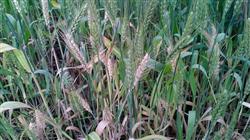
In recent years, the area of direct-seeded rice in northern Jiangsu and other places has been relatively large, resulting in a generally late wheat sowing period. To ensure the yield of late-sown wheat, the seeding rate is often greatly increased, with high-rate fields using 20-30 kg of seed per mu. The wheat seedlings in the field grow too densely, and as spring temperatures rise, the wheat quickly resumes growth, and the field canopy density will further increase, favoring the occurrence of sharp eyespot. In November and December 2011, rainfall in northern Jiangsu was sufficient and field humidity was high. Sharp eyespot had already occurred in some fields, with obvious black spots on wheat leaf sheaths. It is expected that after temperatures rise this year, wheat sharp eyespot will be more severe than last year.
Early-spring chemical control is an important means of controlling wheat sharp eyespot. At present, jinggangmycin, jinggang wax bacillus, jinggang Bacillus subtilis and other pesticides are mostly used in production, but these pesticides have a short residual period, and farmers often wait until after the disease appears before starting to apply them, resulting in poor efficacy. Thifluzamide is a benzamide fungicide registered for the control of rice sheath blight. It is highly selective and has good control efficacy against diseases such as rust, smut and sharp eyespot, with a residual period of 30-45 days.
In recent years, the author has carried out research on the application of thifluzamide on wheat. Experimental data show that before wheat stem elongation and jointing, on March 5 and March 15, using 10 ml and 20 ml of 24% thifluzamide suspension concentrate per mu respectively, the control efficacy against sharp eyespot 30 days after treatment was 94.38%, 97.78% and 97.41%, 97.41% respectively, and the white head rate was 0 in all cases; whereas after wheat jointing, on April 5 and April 15, using the same pesticide treatments, the control efficacy against wheat sharp eyespot all decreased significantly. The experimental results show that before wheat jointing is the best period for controlling sharp eyespot. Using 10-20 ml of 24% thifluzamide suspension concentrate per mu can effectively control the occurrence of sharp eyespot, reduce white heads, and have an obvious yield-increasing effect.