How to prevent and control wheat take-all? Seed dressing is a key step
Wheat take-all, also known as black foot disease, is a devastating disease in wheat production. After wheat is infected, tillering decreases, the rate of earing drops, and the 1000-grain weight declines; in mild cases, yield is reduced by 10%-20%, and in severe cases by more than 50%, or even total crop failure. Wheat can be affected throughout its entire growth period, but it is most severely damaged at the seedling stage and when the seedlings are 15 cm tall...
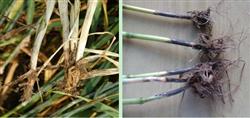
Wheat take-all, also known as black foot disease, is a devastating disease in wheat production. After wheat is infected, tillering decreases, the rate of earing drops, and the 1000-grain weight declines; in mild cases, yield is reduced by 10%-20%, and in severe cases by more than 50%, or even total crop failure. Wheat can be affected throughout its entire growth period, but it is most severely damaged at the seedling stage and when the seedlings are 15 cm tall. The severity of the disease is affected by many factors: continuous cropping and repeated cropping make the disease more severe; sandy soil with good aeration and a tendency toward alkalinity makes the disease more severe; soil lacking fertilizer makes the disease severe; rainy springs and high soil moisture favor the disease. Once wheat has the disease, spraying pesticides afterward has very poor results. The best method for preventing and controlling wheat black foot disease is to use chemical seed dressing before sowing wheat, which is economical, effective, and easy to carry out.
According to production trials, use 20 milliliters of 12.5% quintozen per mu; in heavily diseased fields, the dosage can be increased to 30 milliliters, add 500-700 milliliters of water, mix evenly, and then dress 10 kilograms of wheat seed; alternatively, use 15-20 milliliters of 4.8% silthiopham with 500 milliliters of water to dress 10 kilograms of wheat seed, stir thoroughly and evenly, pile and cover for 6-12 hours, dry in the shade, and then sow. Using the above chemical seed dressings can all achieve very good preventive effects, and the chance of wheat being infected with black foot disease is significantly reduced.