Detailed Explanation of Key Technical Points for Yam Cultivation
When yams are grown in the ordinary way, they are prone to developing many hairs, rough skin, curvature and branching, which seriously affect the yield and marketability of the yams. However, using plastic casing tubes to cultivate yams can not only solve the above problems and improve the marketability of the yams, but also greatly reduce the number of damaged yams, while also having high yield and qual...
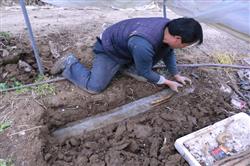 Grasping several main links in production management will greatly improve the economic returns of yam cultivation. In yam cultivation management, the focus should be on applying base fertilizer, loosening the soil, treating the yam seed, timely topdressing, disease control, and taking measures to promote the growth of the rhizome as much as possible.
1. If the soil is loose, the tubers expand easily.
Soil looseness is crucial for the elongation and expansion of the rhizome. The planting trench should be dug to a depth of about 1 m. Sandy loam is loose and breathable, warms up quickly, and supports good early seedling growth, which is favorable for tuber elongation; heavy clay soil is cold and hard with poor aeration, which is not favorable for root elongation, but it has good fertility and lasting strength. Regardless of the soil type, more than 1000 kg per mu of cow or horse manure or crushed crop straw (wheat straw and rice husks are also acceptable) can be mixed in, which both increases soil organic matter and improves soil permeability. Large stones, bricks and tiles, and gravel in the soil should be removed to avoid damaging the rhizome. Digging the trench is best done before the soil freezes, which helps weather the soil and form a good soil structure. Irrigation should be done as early as possible to help raise the soil temperature sooner.
2. Base fertilizer should be applied in full, and plastic film should be used for mulching.
Apply more than 3000 kg per mu of fully decomposed chicken or duck manure or pig or sheep manure as base fertilizer, more than 50 kg of potassium sulfate compound fertilizer, and about 50 kg of diammonium phosphate. If conditions permit, add 100 kg of biological bacterial fertilizer and soybean cake fertilizer, and 1 kg each of boron, zinc, and iron micronutrient fertilizers, mix thoroughly with the soil, and then fill it into the planting trench. After watering thoroughly, sowing can be done only when the soil temperature rises to 15 degrees. After sowing, plastic film should be used to cover the soil to raise temperature and preserve moisture. The film should be removed at the end of May to favor the downward growth of the tubers.
3. Seedlings must be treated to prevent both disease and insects.
After sowing, yams are prone to infection by root rot and damping-off. The simplest method is to treat the yam seed. You can soak the yam seed in 1000 times fludioxonil (Celest) or 1500 times azoxystrobin, and spray the trench with the solution before sowing to ensure that the yam seedlings do not die during the seedling stage.
There are many underground pests in spring, mainly mole crickets, wireworms, white grubs, and cutworms. A relatively effective method is to spray 1500 times phoxim along the trench. Or use high-concentration thiamethoxam (Cruiser) to spray the trench to control underground pests, with better results and higher safety.
4. Protect stems and leaves in the mid-term, with three points to note.
When yams reach the middle growth stage, there are many rainy days and high humidity, which easily triggers anthracnose, brown spot disease, Cercospora leaf spot, brown rot, and viral disease. You can spray 1500 times azoxystrobin plus 600 times copper hydroxide, once every 15 days, for a total of 2-3 sprays. Brown rot can be treated by drenching the roots with the above method, especially after heavy rain. For viral disease, the key is to control whiteflies and mites well. Pay attention to topdressing chemical fertilizer; in the middle growth stage, topdressing 2-3 times is enough, with about 25 kg of potassium sulfate compound fertilizer applied per mu each time. Pay attention to removing yam beans in time to reduce nutrient consumption.