How to Grow Spring Cucumbers for High Yield? Detailed Cultivation Key Points
Select suitable varieties. Choose varieties with strong parthenocarpy, low fruit-setting position, many female flowers, disease resistance, good quality and high yield under early spring low-temperature conditions, such as Changchun Mici, Jinyan cucumber, etc. Seed germination and sowing and transplanting. Seed germination should be carried out 2-3 days before sowing. During the germination process, the seeds should be turned frequently so that they are evenly exposed...
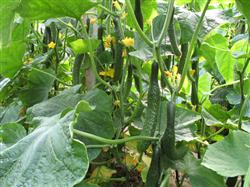
Select suitable varieties. Choose varieties with strong parthenocarpy, low fruit-setting position, many female flowers, disease resistance, good quality and high yield under early spring low-temperature conditions, such as Changchun Mici, Jinyan cucumber, etc.
Seed germination, sowing and transplanting. Seed germination should be carried out 2-3 days before sowing. During the germination process, the seeds should be turned frequently so that they are evenly exposed to temperature, and germination can begin in about 24 hours. When the seeds are found to have slightly exposed sprout tips, the temperature can be lowered appropriately and maintained at about 25°C, and after 2-3 days the seeds will germinate completely. Sow after germination is complete. When sowing, place the sprout end downward, and it is best to make the sprouts face the same direction. Cover with soil immediately after sowing. When transplanting after the seedlings grow, choose a sunny day for transplanting. One month before transplanting, begin preparing plastic film for arching over the frame so as to raise the soil temperature as early as possible.
Strengthen management. First, temperature management inside the greenhouse. Early spring weather is changeable and temperatures are low, making it very easy to suffer from the threat of cold air, so early transplanting should consider multi-layer film covering, or temporary heating with a stove. About one week after transplanting, the greenhouse should be kept closed to preserve heat and moisture and promote seedling recovery. Second, humidity management. On sunny days, the relative humidity inside the spring cucumber greenhouse should generally be controlled at 55%-65% during the day, and can be maintained at 85%-90% at night. On cloudy days, maintain 70%-85% during the day and 90%-95% at night. Third, fertilizer and water management. In the early stage after seedling transplanting, water the seedlings sufficiently to promote early establishment. After establishment until the later stage of plant development, watering should be controlled to carry out seedling hardening.
Disease control. In addition to paying attention to crop rotation, soil disinfection, and keeping greenhouse humidity from becoming too high, Bordeaux mixture can be sprayed for downy mildew; a 200-fold wettable sulfur powder suspension can be sprayed for powdery mildew; and an 800-fold solution of 80% zineb can be sprayed for anthracnose, all with good results.