Detailed Explanation of Key Management Techniques for Spring Cucumber Cultivation
I. Careful Soil Preparation and Applying Organic Fertilizer in Layers. Cucumber seedlings have a high water content in their roots and stems and are brittle and prone to breaking; they fear waterlogging but cannot tolerate drought. Therefore, when preparing the soil, the ground should be level and slightly sloped to one side to facilitate drainage and irrigation, with no large clods and rich in organic matter. When plowing and harrowing, apply sufficient decomposed chicken manure and cake fertilizer in layers, ...
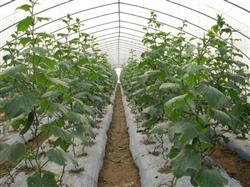 Cucumber is one of the vegetables people love. It contains various sugars, free amino acids, vitamins, cucurbitacin, and calcium, phosphorus, iron, etc. Among these, cucurbitacin has anti-tumor effects. Cucumber also has the effects of clearing heat and promoting diuresis, detoxifying, relieving sore throat and feverish abdominal pain. Cucumbers are generally planted at 3500 plants per mu, with a yield of 5000-8000 kg per mu and an income of about 3000 yuan per mu.
The cucumber cultivation process mainly consists of "seed selection - seedling raising - soil preparation - fertilization - transplanting - trellising and vine guiding - fertilizer and water management - pest and disease control" and other steps.
1. Variety selection. For spring protected seedling raising and open-field cultivation, suitable varieties include Jinchun No. 4 and No. 5, Jinyou No. 4 and No. 6, Jinlv No. 4 and No. 6, Zhongnong No. 6 and No. 8; or Xiangyuan No. 3 and No. 1, Xiangchun No. 3 and No. 4, etc. For spring protected forcing cultivation, suitable varieties include Zhongnong No. 9, No. 12 and No. 7, Jinchun No. 1 and No. 2, Jinza No. 2 and No. 4; or Xiangyuan No. 3 and No. 1, Xiangchun No. 3, Chunyuan No. 4, etc.
2. Sowing and seedling raising. For open-field cultivation, sow from mid-March to late April, using electric heating or cold bed seedling raising. For protected forcing cultivation, sow from mid-January to mid-February, using electric heating seedling raising. The seeding rate is 150 g per mu.
Before sowing, soak the seeds in warm water for 15 minutes, wash and air-dry them, then germinate them or sow directly. Maintain the soil temperature at around 28°C, and seedlings will emerge in 4-5 days. Nutrient pot seedling raising is recommended; for those temporarily planted in seedbeds, after the cotyledons unfold, transplant them to the seedbed at a spacing of 10×10 cm. The seedbed temperature should be 18-28°C during the day and not lower than 12°C at night. When the seedlings have 1 leaf and 1 heart, apply once a 10% concentration of strained manure water; at 2 leaves and 1 heart, spray once a 0.1-0.2% potassium dihydrogen phosphate solution and apply once a 20% concentration of strained manure water. Within 6-7 days before transplanting, pay attention to hardening the seedlings.
3. Soil preparation and fertilization. Do not practice continuous cropping on the same land; choose loamy soil plots with convenient transportation and good drainage and irrigation conditions. When plowing, apply 100 kg of lime per mu; when preparing the soil, apply 2000-3000 kg of human manure per mu and 60 kg of compound fertilizer. Spray the bed surface with 600-fold Dexon solution to reduce disease occurrence. The bed surface can be covered with film to increase temperature.
4. Transplanting. For ground-covered and open-field cultivation, transplant from early April to late April; for protected forcing cultivation, transplant before mid-March. About 3500 plants per mu; after transplanting, water well to settle the roots.
5. Cultivation management.
(1) Facility regulation. In March, temperatures are extremely unstable, with occasional hail. For facility regulation, pay attention to keeping warm and protecting seedlings, controlling moisture to prevent disease and freezing. In April, temperatures rise rapidly, with occasional cold air cooling and hail; pay attention to prevention. For protected cultivation, open early and close late on sunny days to keep seedlings robust. When the local temperature stably passes above 10°C, the shed can be removed and the film taken off.
(2) Trellising and vine guiding. When the vine is 0.3 m long, begin inserting stakes, setting posts, and tying vines. After trellising, promptly tie the vines and guide them; tie vines once every 2-3 days, in the afternoon on sunny days, and let them climb along the horizontal bars. To increase the early fruit-setting rate of cucumbers, in the early stage, use 1:50 cucumber fruit-setting agent to spray the flower stigma or fruit stalk.
(3) Fertilizer and water management. Spring cucumber plants grow and develop quickly and bear many fruits, so fertilizer and water must be supplied evenly and continuously. During the vegetative growth period, apply 20% concentration manure water 3 times as seedling-promoting fertilizer. During the harvest period, after every 2 harvests, apply once a 30% concentration fruit-strengthening fertilizer. Use 0.2% potassium dihydrogen phosphate for foliar topdressing 1-2 times to delay the senescence of functional leaves.
(4) Pest and disease control. Before the five-leaf stage, use 1000-fold 80% trichlorfon solution to control damage by the yellow squash beetle; after transplanting and survival, use 600-fold watermelon continuous cropping agent to drench the roots once to prevent soil-borne diseases such as Fusarium wilt; during the flowering period, spray leaves 3-4 times with 400-fold 40% Yishuangling wettable powder, which can effectively suppress the damage of downy mildew.
(5) Harvesting. For protected forcing cultivation, harvesting generally begins from late April to early May; for ground-covered and open-field cultivation, harvesting begins in early to mid-May. The harvest interval is 2-3 days once in the early stage and 1-2 days once in the middle and late stages.