Detailed Explanation of Off-Season Cultivation Techniques for Water Spinach (Kangkong)
Because of the high temperature and frequent rain after the start of summer, a kind of white rust disease easily occurs. Its control methods include the following three points: (1) Select disease-free seeds and treat the seeds: select a disease-free plot for seed production, soak newly bought seeds in 50°C warm water for 25 minutes, and sow after cooling. (2) Strengthen garden management: choose high-lying land with good drainage...
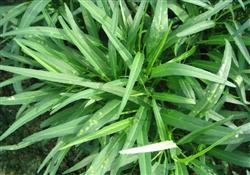 Water spinach, also known as kangkong, is one of the leafy vegetable varieties favored by the general public. It is produced in large quantities in summer and autumn. In winter and early spring, because the temperature is relatively low, it is not suitable for its growth. However, in recent years, through trial cultivation in facilities such as small arched sheds and film greenhouses, success has been achieved. It can be marketed and supplied around the Spring Festival and also achieves good economic benefits. The main cultivation methods are briefly introduced as follows:
1. Variety: Mainly choose the Thai pointed-leaf variety, and local or Guangxi willow-leaf (pointed-leaf) varieties can also be used for cultivation.
2. Planting time: Generally, sowing can be done from mid to late November until mid to late February of the following year.
3. Planting method: Broadcast sowing, row sowing, or spot sowing can be used.
4. Seed rate: 3-4 kg per mu.
5. Facilities: Mainly small arched sheds and film greenhouses; glass greenhouses are even better if conditions permit.
6. Main cultivation techniques:
1. Finely prepare the land, with level beds and fine soil;
2. Apply sufficient base fertilizer: mainly decomposed organic fertilizer, applying 500-1000 kg of pig or cattle manure per mu or 150-200 kg of natural organic fertilizer, together with compound fertilizer or an appropriate amount of N fertilizer;
3. After sowing, cover with soil 2-3 cm; if the emergence rate is low after seedlings emerge, replant or transplant in time;
4. For small arched shed cultivation, pay attention to the temperature and humidity inside the shed. After seedlings emerge, do a good job of ventilation and hardening the seedlings. During the seedling stage, the film at both ends can be uncovered for ventilation and air exchange to control temperature and humidity. After one true leaf, the film should be uncovered at noon on sunny days to harden the seedlings. When the temperature is relatively high, the seedling hardening time is longer; when the temperature is low, it can be appropriately shortened. At the same time, note that after uncovering the film, water should be applied in time (especially for the first and second seedling hardening) to avoid dry leaf tips caused by imbalanced temperature and humidity, which affects quality. Film greenhouses and greenhouses should also be ventilated and aired in time to adjust to suitable temperature and humidity;
5. After the seedlings grow to 2 true leaves, if the fertilizer is insufficient, topdress in time, mainly with quick-acting N fertilizer (such as urea or compound fertilizer), and rinse with clean water in time after fertilizing.
6. Harvesting: Harvest can be done 25-30 days after sowing. It can be pulled up all at once and then replanted. If spot sowing or row sowing is used, picking can be used. A plant spacing of 15 x 20 cm is suitable. At the same time, topdress 1-2 days before picking or in time after picking;
7. Pay attention to preventing and controlling diseases and insect pests:
① Diseases: Mainly leaf spot, anthracnose, and damping-off, which can be controlled with agents such as carbendazim, thiophanate-methyl, and chlorothalonil;
② Insect pests: Cabbage caterpillars, aphids, flea beetles, etc., which can be controlled with low-toxicity insecticides such as high-efficiency methomyl, deltamethrin, and trichlorfon;
③ After spraying, harvesting should only be done after 7-10 days or more.