Detailed Explanation of Key Techniques for Cultivating Sweet Potato Shoots as Sprouts
Sweet potato shoots, also known as sweet potato leaves or sweet potato vine tips, belong to the genus Ipomoea in the family Convolvulaceae. They are a variety selected through artificial selection for consumption, consisting of the tender stem tips at the top of sweet potato seedlings. In Hong Kong, China and even worldwide, they are hailed as the "Queen of Vegetables," "Longevity Vegetable," and "Anti-Cancer Vegetable," and are a truly green vegetable product. Nutritional components...
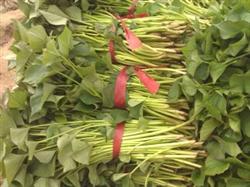
Sweet potato shoots, also known as sweet potato leaves or sweet potato vine tips, belong to the genus Ipomoea in the family Convolvulaceae. They are a variety selected through artificial selection for consumption, consisting of the tender stem tips at the top of sweet potato seedlings. In Hong Kong, China and even worldwide, they are hailed as the "Queen of Vegetables," "Longevity Vegetable," and "Anti-Cancer Vegetable," and are a truly green vegetable product.
Nutritional components and health benefits: Sweet potato shoots are rich in nutrients. The 10-15 cm tips of sweet potato vines, together with tender leaves and petioles, are collectively called stem tips. For every 100 grams, sweet potato stem tips contain abundant protein, carotene, vitamins, iron, and calcium. According to laboratory analysis: the crude protein content of stem tips is 21.1%-15.1% of dry weight, comparable to pork and beef. The protein content of stems, leaves, and stem tips is 2.7%, carotene is 5580 international units/100 grams, vitamin C is 41.07 mg/kg, calcium is 74 mg/kg, iron is 4 mg/kg, vitamin B1 is 3 mg/kg, niacin is 6 to 10 mg/kg, and B6 is 2.1 mg/kg. According to testing by the Chinese Academy of Preventive Medicine, when stem tips were compared with 13 vegetables including celery, cabbage, spinach, Chinese cabbage, rapeseed, Chinese chives, cucumber, eggplant, carrot, and tomato, among 14 nutritional components, stem tips ranked first in 13 items including protein, fat, calories, fiber, carbohydrates, calcium, iron, phosphorus, carotene, vitamin C, B1, B2, and niacin.
Sweet potato stem tips contain abundant mucilaginous protein, which protects the lubrication of the human digestive tract, respiratory tract, joint cavities, and membranes, as well as the elasticity of blood vessels. This substance can prevent arteriosclerosis caused by the deposition of lipids on arterial walls, can prevent the atrophy of connective tissue in organs such as the liver and kidneys, and can improve body immunity. In addition, it has health benefits such as raising platelet counts, stopping bleeding, preventing night blindness, promoting intestinal peristalsis, and preventing constipation. Currently, the United States lists sweet potato stem tips as one of the longevity vegetables with great development prospects. Japan, the United States, and other countries even classify sweet potato stems as longevity food or space food, and Germany calls sweet potato leaves and tips the Queen of Vegetables. It has health benefits such as lubricating the intestines, promoting bowel movements, and lowering blood pressure.
Cultivation methods: Sweet potatoes have broad adaptability, strong stress resistance, drought tolerance, tolerance to poor soil, and strong absorption capacity, regeneration capacity, and pest and disease resistance. Therefore, in the South Asian subtropical region, they remain green throughout the year and grow vigorously. Adopt fully organic cultivation, build a shade shed, and use black shade netting with a 45% shading rate for shaded cultivation. For planting material, sweet potato stem segments or tender stem tips can be selected for direct cuttings. Water to maintain moisture. In summer and autumn, harvesting can begin after 15 days, and in winter and spring after about 30 days. Developing and processing sweet potato stem tips into green vegetables and health foods will greatly increase their added value. One planting allows year-round harvesting, with a general yield of over 3000-5000 kg per mu.
Harvesting standards: The harvested shoots should be 10-15 cm in length, with tender green and glossy stems and leaves, free of pests and diseases, free of yellow leaves, free of decay, and free of other contamination spots;
Packaging, processing, and fresh-keeping treatment: Vacuum packaging with refrigerated fresh-keeping.